

Positioning Business Sustainability: FEB UNS Accounting Study Program Presents Prof. Hooy Chee Wooi in a General Lecture
Sustainability refers to a business’s ability to maintain operations while generating economic profit. The topic of sustainability has become increasingly relevant, especially in relation to the Sustainable Development Goals (SDGs). Responding to this, the Accounting Study Program, Faculty of Economics and Business (FEB), Universitas Sebelas Maret (UNS) organized a general lecture on sustainability.
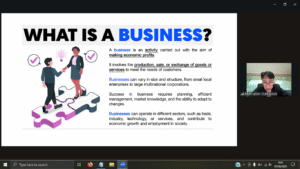 The lecture, entitled “Positioning Business Sustainability,” was conducted virtually on Wednesday, 3 September 2025, featuring Prof. Hooy Chee Wooi from Universiti Sains Malaysia (USM). In his presentation, Prof. Hooy discussed the objectives of business activities, the necessary steps to ensure business sustainability, and how to position the sustainability concept within a business.
Opening the event, Prof. Tri Mulyaningsih, S.E., M.Si., Ph.D., Vice Dean for Academic and Research Affairs of FEB UNS, warmly welcomed the lecture. She emphasized that discussions on sustainability are essential, as many sectors in business, economics, and finance are now required to report on their sustainability practices. “This is a very engaging and important topic for students to learn how to position business sustainability. We extend our gratitude to Prof. Hooy for sharing his insights, and we hope this discussion will be beneficial for all participants,” said Prof. Tri.
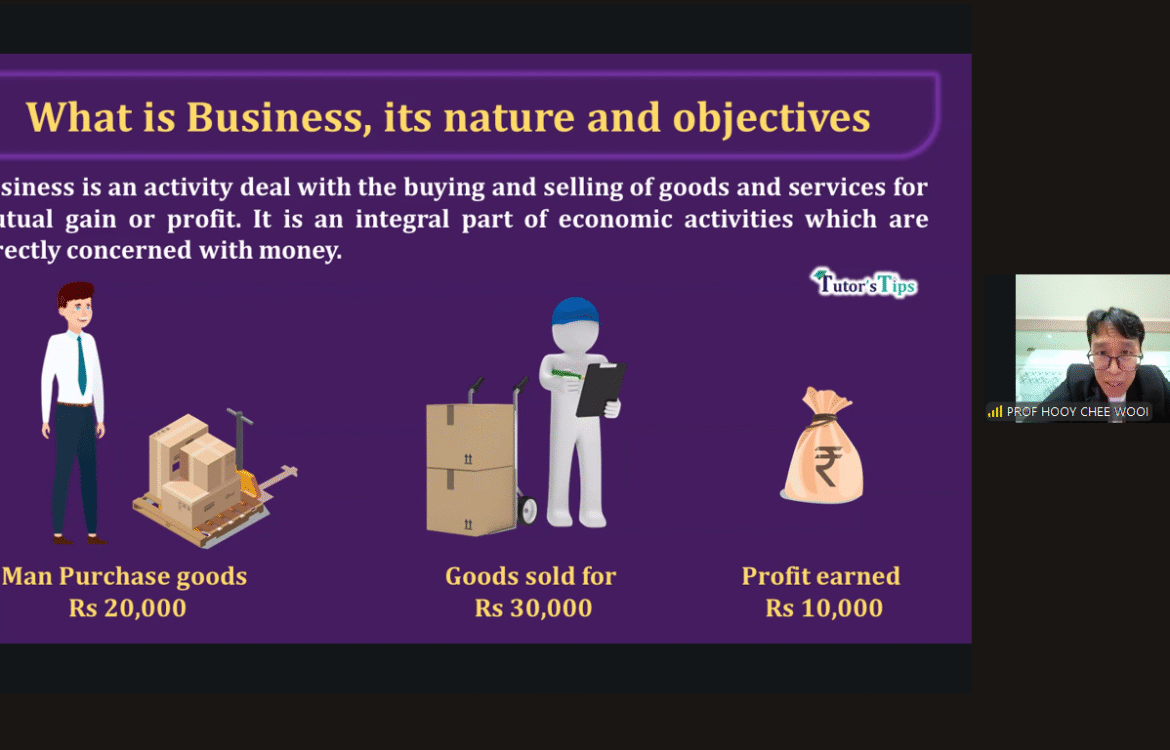
Beyond sustainability, Prof. Hooy also elaborated on the fundamental activities of business, describing it as a process aimed at generating economic profit, including production, sales, and the exchange of goods and services to meet customer needs. “Business involves many parts and roles. To achieve success, a company must have good planning, effective management, market knowledge, and the ability to adapt,” explained Prof. Hooy.
 He further outlined strategies for ensuring business sustainability, which include clear business planning, strong financial management, market understanding, adaptability, flexibility, and investment in talent and organizational culture. With technological advancement, businesses also need to adopt automation and data-driven decision-making. Additional measures include risk management, maintaining a solid customer base, market growth, strong governance, and strategic collaboration.
According to Prof. Hooy, profitability is the foundation of business sustainability. Once profitability is secured, compliance with laws becomes critical, followed by adherence to ESG (environmental, social, and governance), CSR (corporate social responsibility), SDGs, and ethics.
“From the producer’s perspective, business sustainability means surviving in the long term. From the customer’s perspective, it refers to long-term value creation. Balancing both requires businesses to deliver long-term value to stakeholders, communities, and the environment by integrating environmental, social, and governance considerations into strategy, operations, and decision-making,” he noted.
Concluding the lecture, Prof. Hooy highlighted that businesses today should not merely follow the principle of “doing good by doing well,” but rather shift to “doing well by doing good.”
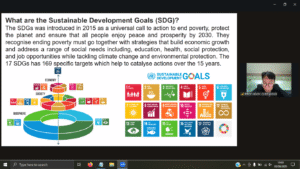
By offering in-depth discussions on positioning business sustainability, this general lecture directly supports the achievement of the Sustainable Development Goals (SDGs). Business sustainability, which goes beyond profit and incorporates ESG aspects, aligns with the SDGs’ objectives of promoting inclusive economic growth, environmental protection, and social well-being. Through the understanding and application of these concepts, students and business practitioners are expected to contribute actively to sustainable development that balances profitability with social and environmental responsibility.