

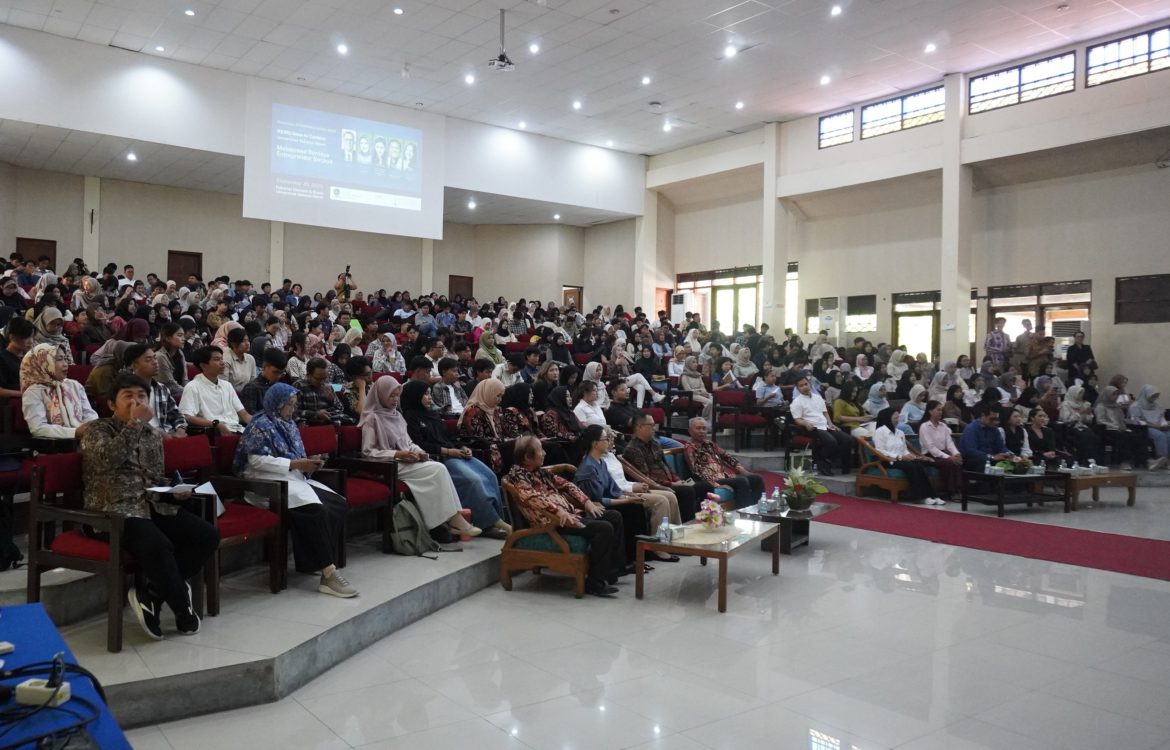
Empowered Students, Successful Entrepreneurs: FEB UNS Entrepreneurship Laboratory and Kamar Entrepreneur Indonesia Host Inspirational Talk Show
The Entrepreneurship Laboratory, Faculty of Economics and Business (FEB), Universitas Sebelas Maret (UNS), in collaboration with Kamar Entrepreneur Indonesia (KEIND), organizes the “Idea Generation Talk Show” under the theme “Empowered Students, Successful Entrepreneurs.” The event took place at the Suhardi Building, FEB UNS, on Monday (29/9), as part of the 4th National Working Meeting (Rakernas) of KEIND 2025.
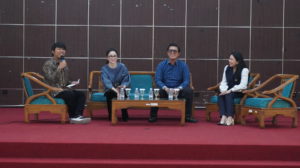 The event was attended by Prof. Tri Mulyaningsih, S.E., M.Si., Ph.D., Vice Dean for Academic and Research Affairs of FEB UNS; Afda Rizal Armashita, Chairman of KEIND; and Astrid Widayani, Chairman of KEIND Central Java and Deputy Mayor of Surakarta.
The talk show featured three inspiring speakers from various industries: Hendy Setiono (Deputy Chair for Entrepreneurship at KEIND – CEO & Founder of Baba Rafi Enterprise), Dini Fronitasari (Deputy Chair for Digital Technology at KEIND – Founder of Goritna Tech), and Redita Aliyah (Deputy Chair for Tourism Industry at KEIND – CEO of Merapi Park Group). The session was moderated by Miftachul Ma’Arif, S.E.I., M.M., LSS.Cp, Head of the Entrepreneurship Laboratory, FEB UNS. In her remarks, Astrid Widayani emphasized that the theme “Empowered Students, Successful Entrepreneurs” is not merely a slogan, but a call to action for the younger generation to play a significant role in shaping the nation’s future.
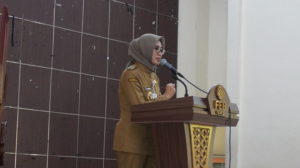
Astrid Widayani, Chairman of KEIND Central Java and Deputy Mayor of Surakarta
“Indonesia is entering a demographic bonus period, where the productive-age population will exceed 60% of the total population. The question is, will this be an automatic advantage or a challenge? The answer lies with all of you, the students. The demographic bonus can be a double-edged sword. If young people are empowered, have leadership qualities, an entrepreneurial mindset, and the courage to innovate, then this bonus will become a golden leap toward Indonesia Emas 2045,” she stated.
She encouraged students to take small steps early, build networks, and not fear failure. “Many successful entrepreneurs started in garages or dorm rooms with simple ideas that were once underestimated. The key is to take action when others hesitate. Don’t wait for perfection to start, because failure is part of the journey to success,” she added.
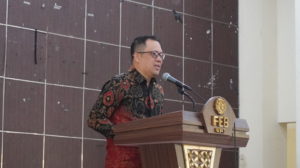
Afda Rizal Armashita, Chairman of KEIND
Astrid further explained that the Surakarta City Government, aligned with the national Asta Cita, is prioritizing the development of the creative and digital economy, as well as empowering MSMEs. Programs such as the Surakarta Integrated Business Service Center (PLUT) are designed to support young entrepreneurs through product packaging, branding, startup classes, and access to financing. “This opportunity is wide open, especially since UNS is located close to PLUT. I encourage students to take advantage of these facilities to foster more young entrepreneurs,” she said.
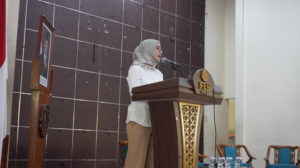
Prof. Tri Mulyaningsih, Vice Dean for Academic and Research Affairs, FEB UNS
Afda Rizal Armashita emphasized KEIND’s commitment to nurturing young entrepreneurs through the KEIND Goes to Campus program. “With 30,000 members, we aim to inspire students not only to seek jobs after graduation but also to create new opportunities. Today, we have brought nationally recognized entrepreneurs as real examples,” he explained.
Prof. Tri Mulyaningsih highlighted the need for collaboration in fostering entrepreneurial spirit among students. “This activity enhances students’ knowledge and capacity in entrepreneurship. Moving forward, we are ready to collaborate to equip students with MSME mentoring competency certifications,” she remarked.
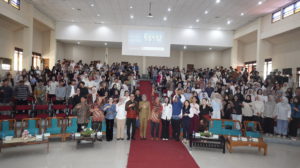 Through this talk show, FEB UNS students are expected to gain inspiration from national entrepreneurs and become future drivers of Indonesia’s entrepreneurial ecosystem, contributing to the vision of Indonesia Emas 2045. The activity also aligns with several Sustainable Development Goals (SDGs), particularly SDG 4 (Quality Education), SDG 8 (Decent Work and Economic Growth), SDG 9 (Industry, Innovation and Infrastructure), SDG 11 (Sustainable Cities and Communities), and SDG 17 (Partnerships for the Goals).