FEB UNS Students Join Export Preparation Training with Ministry of Trade
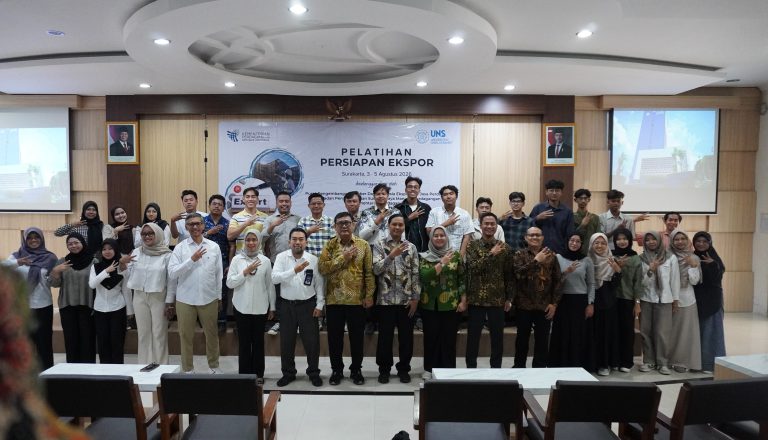
The Export-Import Laboratory of the Faculty of Economics and Business (FEB), Universitas Sebelas Maret (UNS), in collaboration with the Center for Human Resource Development on Export and Trade Services (PPEJP), Agency for Human Resource Development on Trade Service, Ministry of Trade, organized Export Preparation Training on 3–5 August 2026 at the Teleconference Room, Soedarah Soepono Building, FEB UNS. The training was opened with a report by Wasiyanto, Head of the PPEJP Training Team, followed by remarks from the Dean of FEB UNS, Prof. Bhimo Rizky Samudro, S.E., M.Si., Ph.D., and an official opening speech by the Head of the Center for Human Resource Development on Export and Trade Services, Drs. Abu Amar, M.M.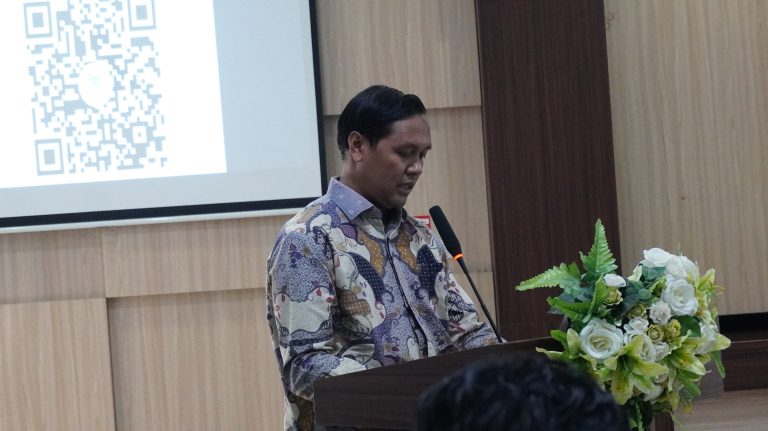
In his report, Wasiyanto explained that the training was part of the implementation of the existing partnership between the Ministry of Trade and UNS, as well as the Campuspreneur program initiated by the Ministry of Trade. He explained that participants would not only attend three days of training but would also take a competency assessment on the following day.
“This training is organized to improve the capacity of trade human resources, particularly students, by introducing and developing their understanding of international trade, with the hope that they will eventually become exporters. After completing the training, participants will also take a competency assessment organized by the PPEJP Professional Certification Institute (LSP),” said Wasiyanto.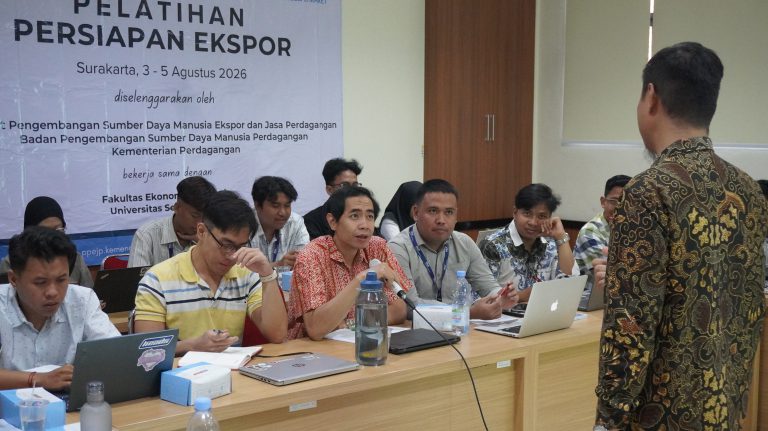
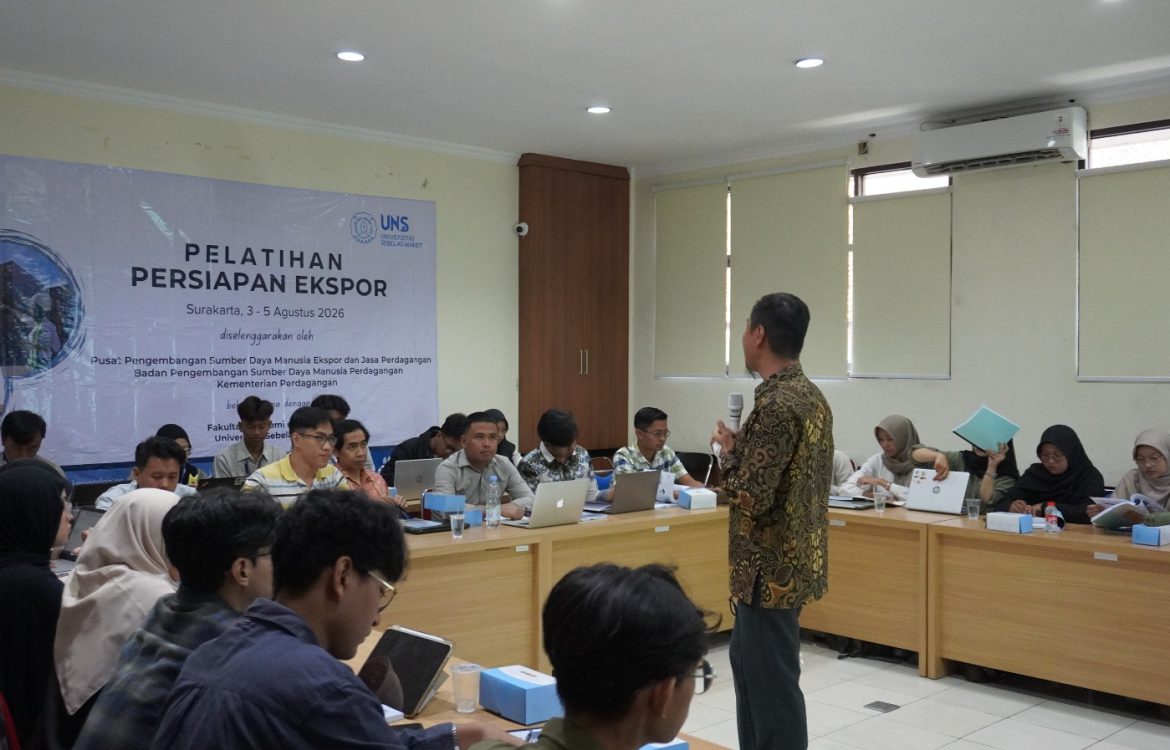
A total of 30 participants came from various study programs at FEB UNS, including the Master of Management, Management Study Program, Master of Accounting, and Development Economics Study Program. Throughout the training, participants received comprehensive materials covering export product identification, HS Code classification, international market research and mapping, export pricing strategies, business correspondence, product promotion, negotiation techniques, international payment methods, and export financing. In addition to lectures, participants took part in practical exercises, case studies, and simulations to strengthen their understanding before taking the competency assessment.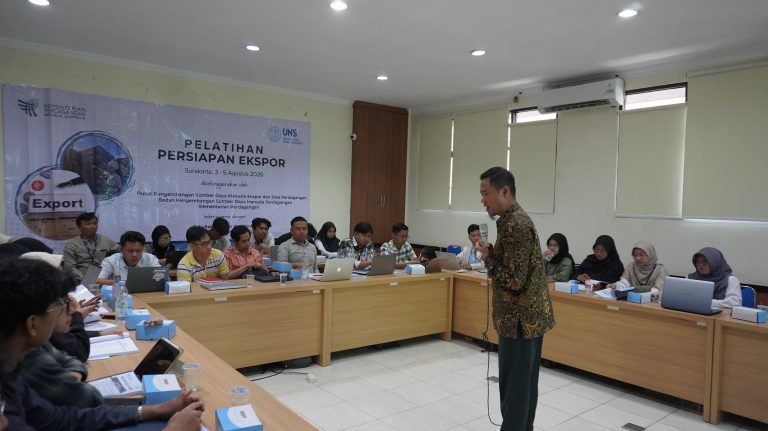
Dean of FEB UNS, Prof. Bhimo Rizky Samudro, appreciated the continued partnership between FEB UNS and the Ministry of Trade, which has been maintained for several years. He emphasized that the collaboration should continue to be strengthened to respond to developments in international trade while providing broader benefits for students.
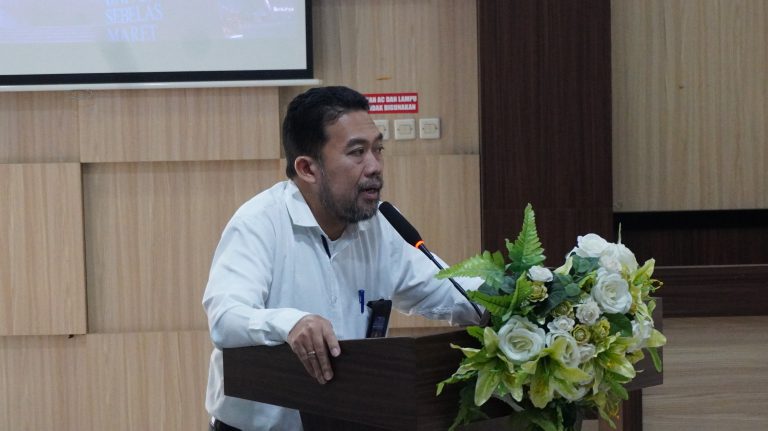 “Laboratories at FEB UNS are now increasingly integrated, allowing students from various study programs to participate. Opportunities like this provide valuable preparation for students, not only by expanding their knowledge but also by developing competencies beyond those represented by their academic degrees,” said Prof. Bhimo.
He also encouraged all participants to complete the training and pass the competency assessment so that the knowledge and skills gained could serve as valuable preparation for addressing challenges in global trade.
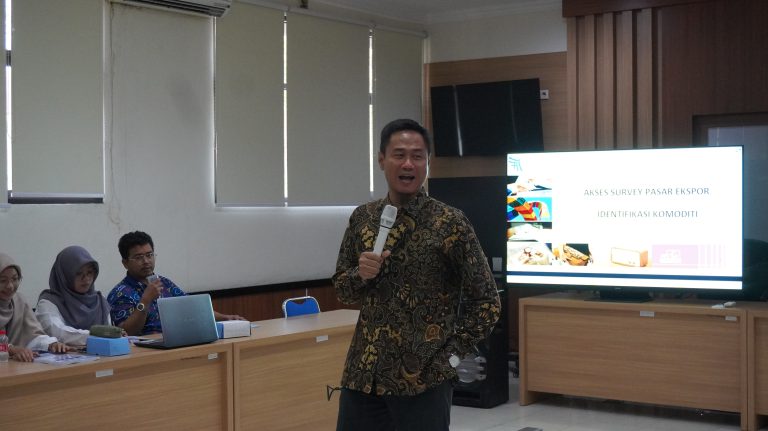 Meanwhile, the Head of the Center for Human Resource Development on Export and Trade Services, Drs. Abu Amar, M.M., emphasized that opportunities to become exporters are open to everyone regardless of educational or professional background. According to him, the most important aspects are understanding the regulations, mechanisms, and procedures governing international trade.
“Becoming an exporter is not limited by one’s field of study or profession. Anyone can become an exporter as long as they have the necessary knowledge. Export trade involves regulations that must be understood, both in Indonesia and in the destination country,” explained Abu Amar.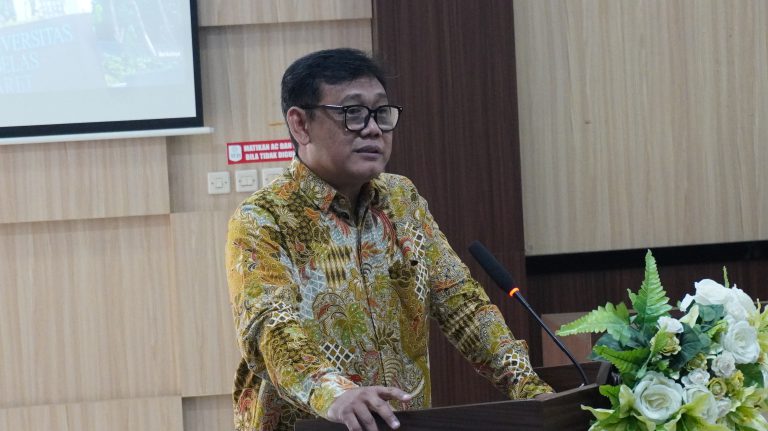
He added that the training was designed not only to provide technical knowledge but also to develop a global mindset, the ability to utilize the digital ecosystem, product quality and consistency, and business networks. “Build collaborations because trade is based on trust between sellers and buyers. With strong networking, opportunities to grow in international markets will become greater,” he advised the participants.
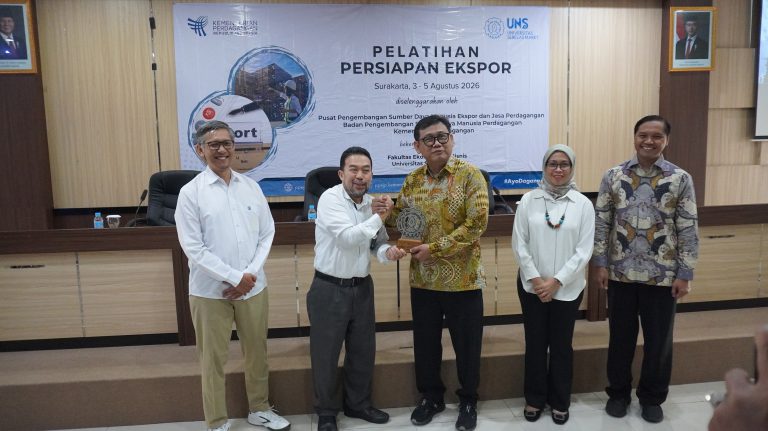 Through this training, FEB UNS and the Ministry of Trade expect to develop young human resources with competencies in export activities, the ability to identify international market opportunities, and the readiness to contribute to the competitiveness of Indonesian products in global markets.
The program also supports the achievement of the Sustainable Development Goals (SDGs), particularly SDG 4 (Quality Education) through the development of student competencies, SDG 8 (Decent Work and Economic Growth) through strengthening the capacity of prospective exporters, and SDG 17 (Partnerships for the Goals) through collaboration between higher education institutions and the government.