

LPPM and FEB UNS Collaboration Discuss Korea’s Startup Ecosystem and Economic Transformation
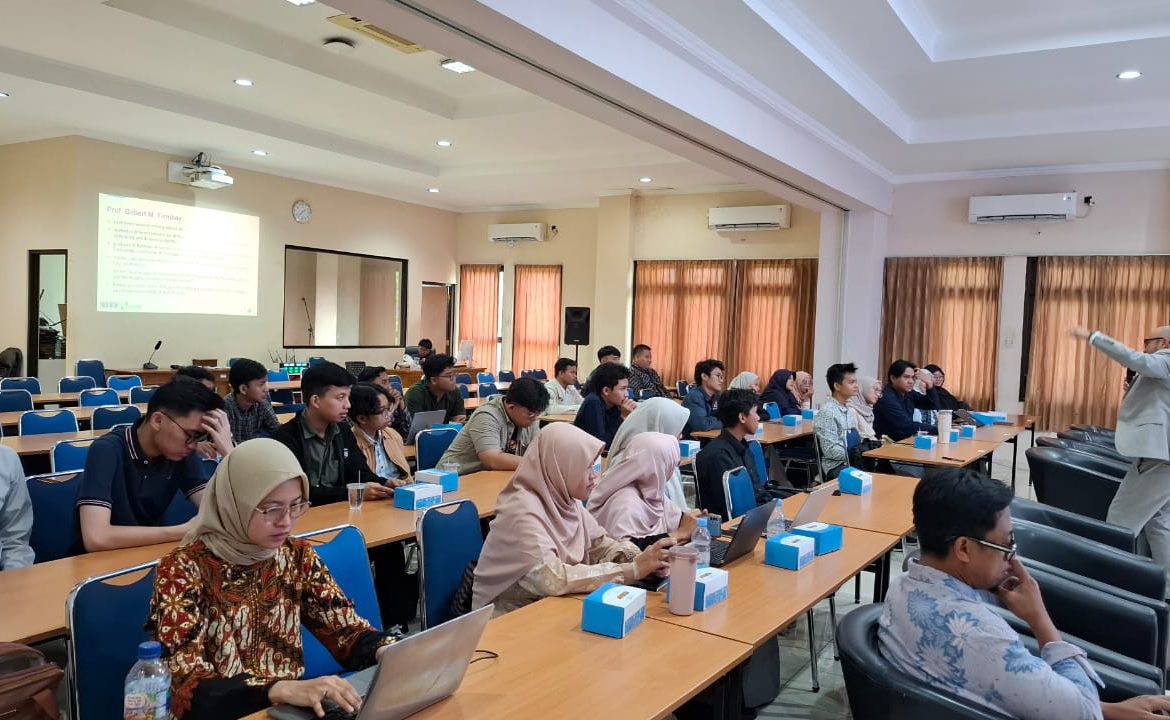
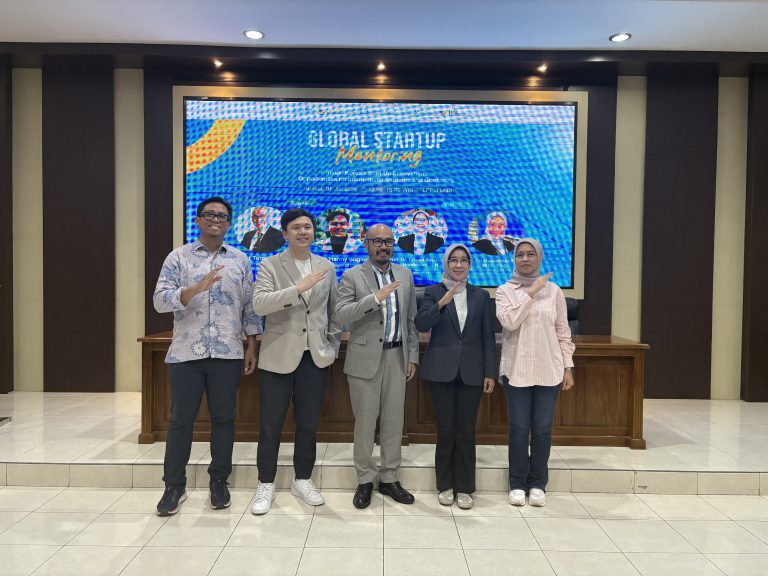
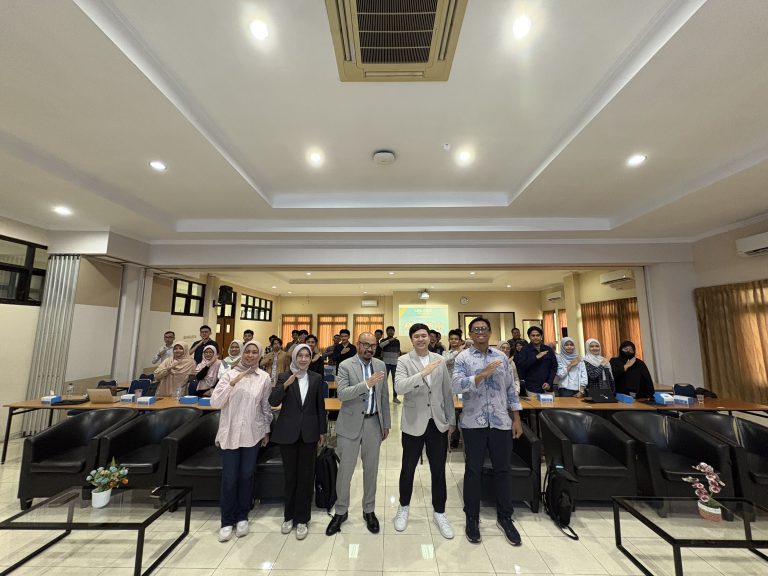
The Institute for Research and Community Engagement (LPPM) and the Faculty of Economics and Business (FEB), Universitas Sebelas Maret (UNS), jointly organized the Special Lecture for the 2026 Sebelas Maret Startup Academy (SEMESTA) Incubation Program, titled “Inside Korea’s Start-Up Ecosystem: Opportunities for International Students and Graduates,” on Friday (31/7). The event featured Gilbert Tumibay, Ph.D., Assistant Professor at SolBridge International School of Business, and Ignatius Hanny Sugiarto, Regional Manager at Woosong University and a SolBridge alumnus, who shared their experiences and insights into the development of South Korea’s startup ecosystem and economic transformation with participants of the UNS startup incubation program.
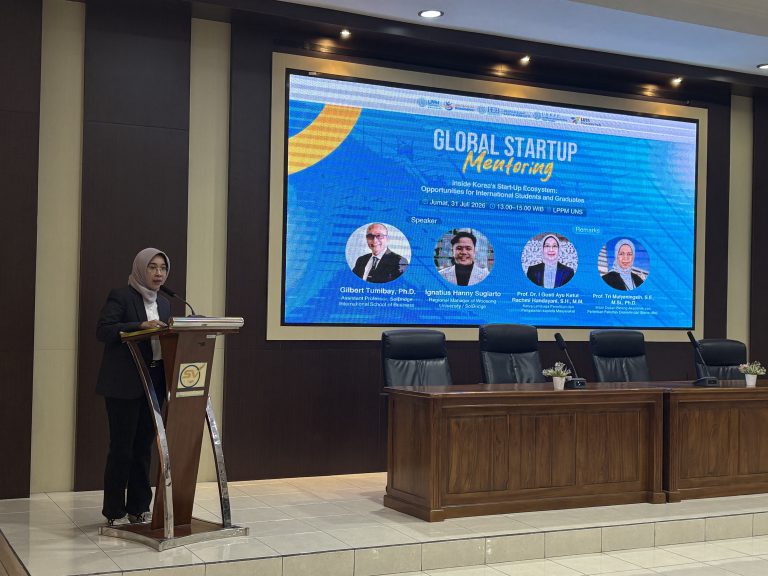
Head of LPPM UNS, Prof. Dr. I Gusti Ayu Ketut Rachmi Handayani, S.H., M.M
Opening the event, Head of the Institute for Research and Community Engagement (LPPM) UNS, Prof. Dr. I Gusti Ayu Ketut Rachmi Handayani, S.H., M.M., expressed her appreciation to all parties who contributed to the implementation of the incubation program, including the leadership of FEB UNS, the Research Product Downstreaming and Commercialization Unit, and the Business Incubator. She also expressed her gratitude to the two speakers for sharing their experiences and insights into South Korea’s startup ecosystem with SEMESTA 2026 participants.
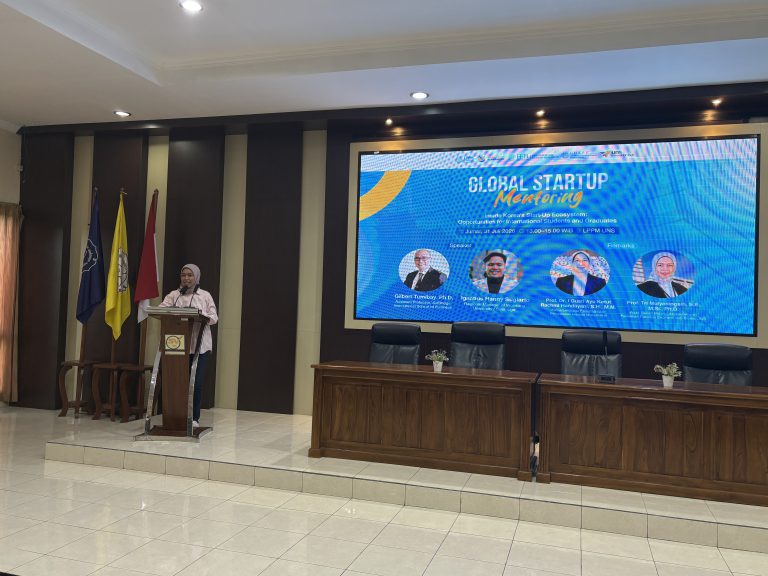
Vice Dean of Academic and Research Affairs FEB UNS, Prof. Tri Mulyaningsih, S.E., M.Si., Ph.D.
Prof. Ayu explained that SEMESTA identifies potential startups each year to participate in an intensive incubation process lasting approximately eight months. During this period, participants receive business assistance, product development support, and guidance to help them produce market-ready products. According to her, the participants are innovative talents with significant potential for further development. “Congratulations to all startup founders participating in this activity. Start developing a global mindset as you develop your innovations and businesses,” Prof. Ayu encouraged the participants.
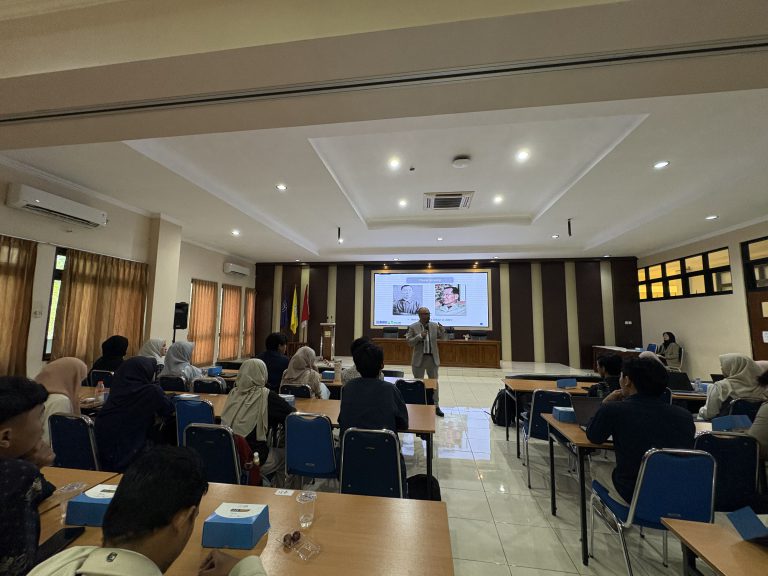
Gilbert Tumibay during material presentation
Vice Dean for Academic Affairs and Research, Prof. Tri Mulyaningsih, S.E., M.Si., Ph.D., stated that the collaboration in organizing the special lecture provided a valuable opportunity for UNS-supported startups to learn directly from South Korea’s experience in developing innovation and entrepreneurship. Based on her experience working at the Embassy of the Republic of Korea in Jakarta, Prof. Tri explained that one of the most valuable lessons she gained was that South Korea’s success has been supported not only by technological advancement but also by a strong work culture and the ability to develop local potential into products recognized internationally, as demonstrated by the growth of Korea’s popular culture industry. “I learned many things from the character of Korean society, particularly their discipline at work. These values have been an important factor in supporting South Korea’s progress,” Prof. Tri stated.
She hoped that the participants would make the most of the opportunity by gaining as much knowledge as possible from the speakers to further develop their respective startups.
During the main session, Gilbert Tumibay presented the history of South Korea’s economic transformation, which enabled the country to recover within approximately five decades following the Korean War in the 1950s. Under the 18-year leadership of President Park Chung-hee, development centered around the Han River region gave rise to the “Miracle on the Han River,” which became a major milestone in South Korea’s economic recovery through the growth of large corporations that eventually became global market players.
 Gilbert explained that one of the success stories of South Korea’s industrialization can be seen in the journey of Chung Ju-yung, founder of Hyundai. Coming from a modest background without formal education, he began his career working in the fields before establishing a rice trading business and an automobile repair shop, eventually building a globally recognized automotive company.
According to Gilbert, one important lesson from the development of large business groups (chaebols), such as Hyundai and Samsung, is the importance of investment in education. The second and third generations of these companies pursued education at leading universities, including at the master’s and doctoral levels, as preparation for maintaining business continuity. In addition to human resource quality, South Korea’s success has also been supported by government policies, research and development (R&D) investment, and the strengthening of the entrepreneurship ecosystem. Through these approaches, South Korean companies have developed into leading global players in strategic sectors, including electric vehicle batteries, steel, semiconductors, display panels, and electronic components used in various global technology products.
In his presentation, Gilbert also compared the economic growth dynamics of South Korea and China. According to him, China’s large population provides an advantage through a domestic market capable of absorbing innovation on a very large scale. This condition offers a lesson for Indonesia, which has a population of approximately 280 million. With its large domestic market, Indonesia has opportunities to promote national industrial growth and develop innovative products capable of competing in global markets.
 Regarding regional development, Gilbert explained how South Korea developed Sejong Smart City as a planned city while relocating several government centers to reduce congestion in Seoul. The development has been supported by modern transportation infrastructure, including the KTX high-speed railway connecting Seoul, Daejeon, and Busan, as well as the development of Pangyo Techno Valley as a center for collaboration among research, technology, industry, and entrepreneurship.
Through the Special Lecture, SEMESTA 2026 participants gained insights into various factors supporting South Korea’s economic transformation, including character development, investment in education, research and innovation, government support for industry, and the importance of developing an integrated and globally competitive startup ecosystem. These insights are expected to inspire UNS-supported startups to develop innovations that generate added value and respond to future development challenges.
The activity also supported the achievement of the Sustainable Development Goals (SDGs), particularly SDG 4 (Quality Education) through the development of entrepreneurial capacity and knowledge, as well as SDG 9 (Industry, Innovation and Infrastructure) through the development of sustainable innovation, research, and startup ecosystems.