

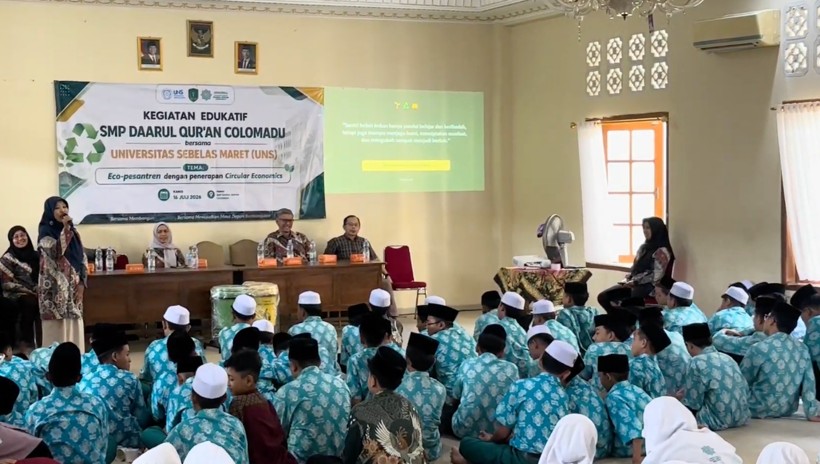
Toward Eco-pesantren: Applied Microeconomics Research Group Promotes Waste Sorting and Circular Economy at Daarul Qur’an Colomadu
Mitigating the increasing volume of domestic waste following the implementation of the Free Nutritious Meals (Makan Bergizi Gratis/MBG) program in the education sector, the Community Engagement Team of the Applied Microeconomics Research Group (RG) at Universitas Sebelas Maret (UNS) initiated a community-based educational program. The program focused on developing environmentally responsible behavior among students at Daarul Qur’an Colomadu Junior High School, Karanganyar Municipality. The activity was funded through the 2026 Research Group Grant scheme.
The program was led by Prof. Tri Mulyaningsih, S.E., M.Si., Ph.D., together with FEB UNS expert lecturers, including Prof. Dr. Yunastiti Purwaningsih, M.P.; Mulyadi, Ph.D.; Arif Rahman Hakim, Ph.D.; Lely Ratwianingsih, M.Sc.; Selfia Bintariningtyas, M.Si.; Ayya Agmulia A.I., M.E.; and Ika Alicia Sasanti, M.E.
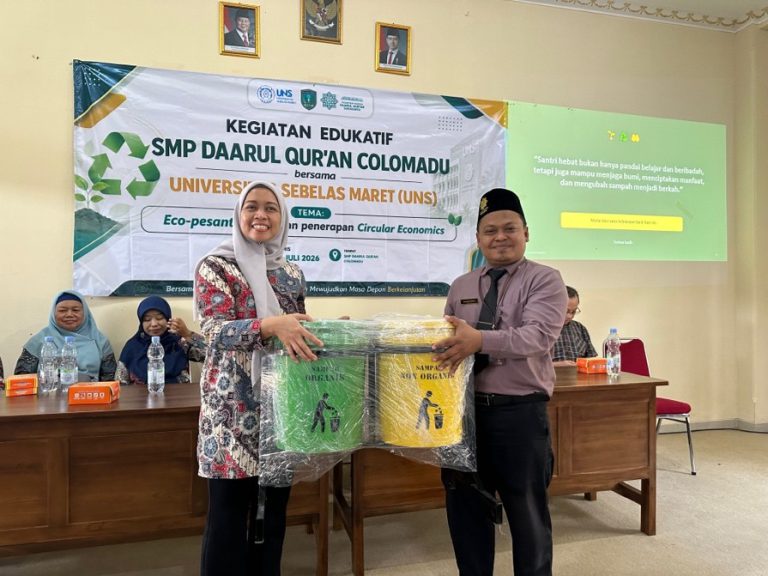
Prof. Tri Mulyaningsih presents waste sorting bins to the Principal of Daarul Qur’an Colomadu Junior High School, Ustadz Makhfudin, S.Pd.
The Community Engagement program emphasized the importance of developing environmental awareness from an early age at the school level, particularly in response to waste generated by the students’ daily nutrition program. As practical support for the school’s sanitation facilities, the Applied Microeconomics Research Group provided two waste sorting bins specifically designed to classify different types of waste systematically at the source. The provision of these facilities was accompanied by knowledge transfer on effective waste sorting methods and practices for 169 active students at the boarding school.
“Our applied microeconomics intervention focuses primarily on behavioral change among the community members. We equip the students with practical skills in waste sorting and encourage them to develop environmentally responsible habits in their daily lives. In addition, we introduced the fundamental concept of the circular economy. The aim is to broaden the perspectives of the students and the management of the pesantren (t/n: an Islamic boarding school) regarding the concrete contributions they can make independently to reduce waste and create economic value within their own environment,” explained Prof. Tri Mulyaningsih.
Principal of Daarul Qur’an Colomadu Junior High School, Ustadz Makhfudin, S.Pd., expressed his appreciation for the contribution from UNS academics.
“The presence of the Applied Microeconomics Research Group from UNS has provided a highly practical and educational solution. The waste sorting education and provision of sorting bins have greatly supported our efforts to maintain a hygienic school environment. Furthermore, the introduction to the circular economy has provided new inspiration for our students and the pesantren to begin contributing to environmental sustainability,” he said.
This Community Engagement activity represents the implementation of the Tri Dharma of Higher Education in supporting the achievement of the Sustainable Development Goals (SDGs) at the local level. The program specifically contributes to SDG 4 (Quality Education), SDG 12 (Responsible Consumption and Production), and SDG 17 (Partnerships for the Goals) by promoting environmentally responsible practices within the school community.