


Taxation Laboratory FEB UNS Strengthens Students’ Digital Tax Literacy through Coretax Training
The Taxation Laboratory of the Faculty of Economics and Business (FEB), Universitas Sebelas Maret (UNS), organized a Computerized Tax Training: Coretax on Friday, 26 September 2025, at Laboratory D, Soedarah Soepono Building. This activity is part of the faculty’s program to strengthen graduates’ job readiness, particularly for undergraduate Accounting students who have completed or are currently taking Taxation courses. The training featured Rika Arindina Wati, S.Ak., BKP., CTA. (MNCo), who lead the session for Coretax application usage and mastery.
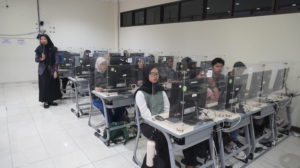
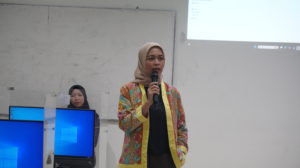 The training covered both introductory and hands-on sessions on Coretax, including simulations of electronic tax return (SPT) filing and reporting, e-invoice creation, and the use of various digital tax administration features. Through computer laboratory practice, participants gained integrated learning experiences that combined taxation theory with the technical skills required in the professional field.
 In her opening remarks, Prof. Tri Mulyaningsih, S.E., M.Si., Ph.D., Vice Dean for Academic and Research Affairs of FEB UNS, emphasized the importance of mastering tax technology for accounting students. “Tax reporting now uses the Coretax application, thus, accountants must understand the process as well as mastering the skill to use the application. We encourage students to actively participate in training to gain both knowledge at the same time completing and earning the competency certification,” she stated.
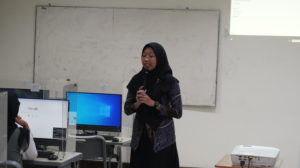 Prof. Tri also highlighted the faculty’s commitment to strengthen the role of laboratories as centers for practical learning activities. “Starting this year, there will be more laboratory-based training, not only in taxation but also in logistics, capital markets, and other areas. This is part of the faculty’s commitment to providing learning experiences relevant to industry needs,” she added.
The training is expected to enhance participants’ technical skills in operating tax software while building their confidence in facing future professional practices. This activity supports the Sustainable Development Goals (SDGs), particularly Goal 4 (Quality Education) by advancing technology-based student skills, and Goal 8 (Decent Work and Economic Growth) by preparing adaptive and competent graduates ready to meet the demands of the digital taxation industry.