

MESP Study Program FEB UNS Curriculum Reviews: Strengthening Data-Based Learning and Development Challenges
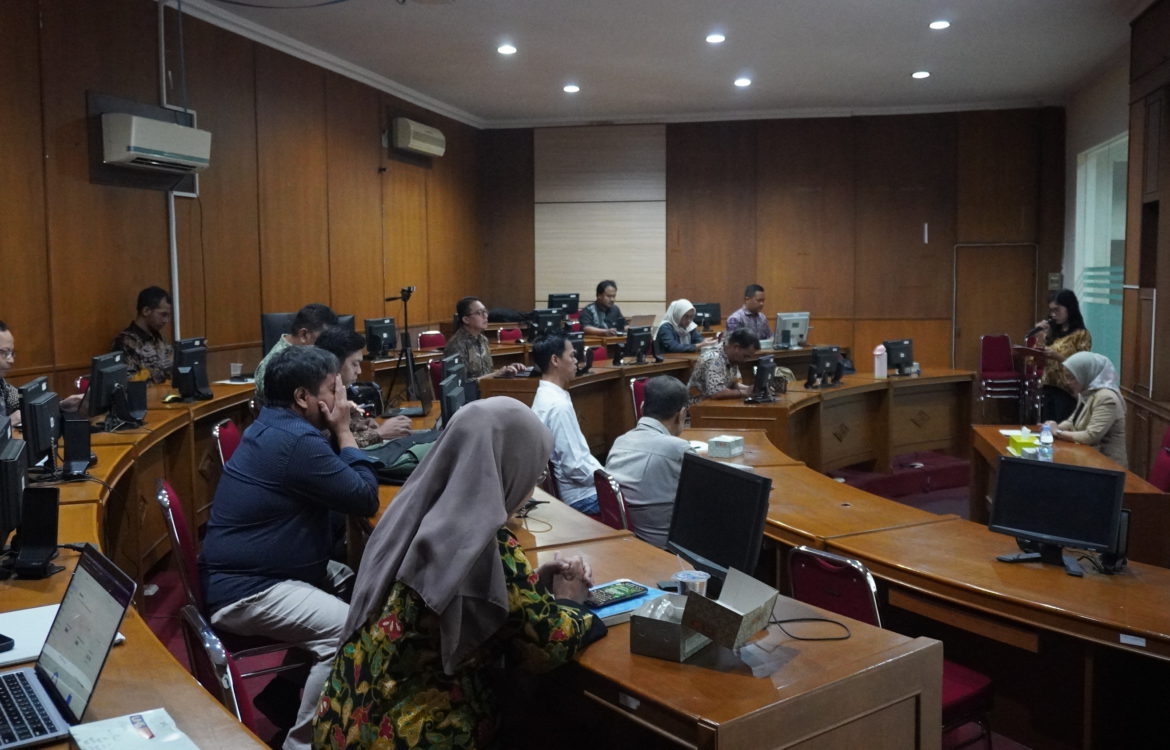
Master of Economics and Development Studies (MESP) Study Program, Faculty of Economics and Business (FEB), Universitas Sebelas Maret (UNS), organized a Curriculum Review activity on Thursday, 4 December 2025, at the Teleconference Room of the Bachtiar Effendi Building, FEB UNS. This occasion shows MESP Study Program’s continuous effort to ensure that the curriculum remains aligned with academic developments, labor market needs, and national as well as regional development challenges.
The Head of the MESP Study Program FEB UNS, Prof. Dr. Suryanto, S.E., M.Si., emphasized that curriculum review constitutes a strategic step to improve the quality of learning at the master’s level. The MESP curriculum is directed to be not only theoretically sound but also applied and data-oriented, enabling graduates to contribute effectively to the formulation and evaluation of development policies.
The activity featured Mulyo Widodo from Statistics Indonesia (Badan Pusat Statistik/BPS) as a resource person, who presented the linkage between MESP courses and strategic statistical indicators. In his presentation, he explained that courses such as Intermediate Microeconomics and Macroeconomics, Econometrics, Development Economics, Regional Economics, as well as Natural Resource and Environmental Economics play an essential role in equipping students with analytical skills to address issues of inflation, Gross Regional Domestic Product (GRDP), poverty, inequality, unemployment, the Human Development Index (HDI), and sustainable development indicators.
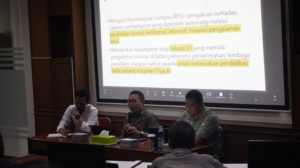
Another resource person, Amirullah Setya Hardi, delivered a presentation on the Recognition of Prior Learning (RPL) for the MESP Study Program FEB UNS. He explained that RPL provides recognition for learning outcomes obtained through formal, non-formal, and informal education, as well as professional experience. In accordance with the Regulation of the Ministry of Higher Education, Science, and Technology (Permendiktisaintek) Number 39 of 2025, MESP students may apply for recognition of up to 21 credits from a total study load of 56 credits.
 The discussion proceeded in an interactive manner, addressing the advancement of graduate learning outcomes, the distinctive features of the MESP FEB UNS curriculum, and the refinement of strategic issues such as sustainable development, institutions, human resources, and the use of technology and statistical data. The forum also highlighted the importance of an adaptive curriculum for both fresh graduates and professionals.
Through this activity, the MESP Study Program FEB UNS expects to continue producing competent, critical, and highly competitive master’s graduates who can support national and regional development. This curriculum review activity also supports the achievement of the Sustainable Development Goals (SDGs), particularly SDG 4 (Quality Education), SDG 8 (Decent Work and Economic Growth), and SDG 10 (Reduced Inequalities) through the advancement of economics education and data-based policy development.