

Strengthening Student Roles in Village Development, FEB UNS Village Development Lab Collaborates with the Ministry of Villages, Development of Disadvantaged Regions, and Transmigration
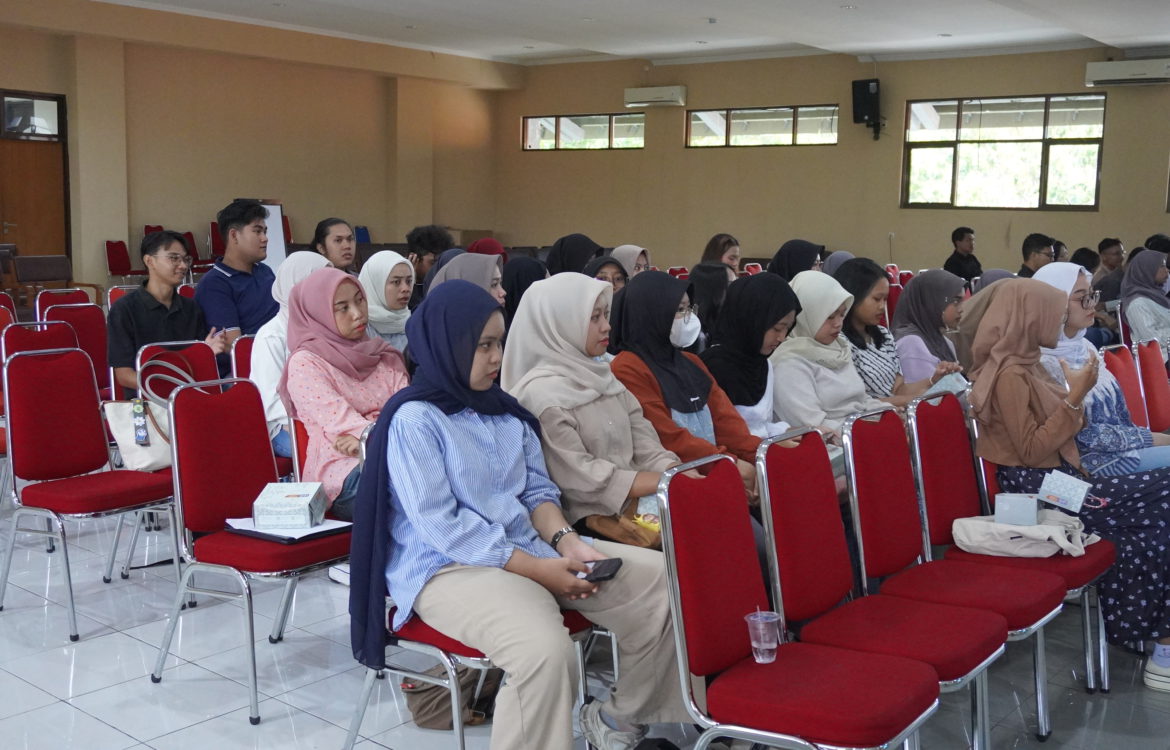
The Village Development Laboratory of the Faculty of Economics and Business (FEB), Universitas Sebelas Maret (UNS), held a Workshop on Data Collection and Verification for the Rural Area Development Index (IPKP) of the Ministry of Villages, Development of Disadvantaged Regions, and Transmigration (Kemendes PDTT) on Wednesday, 24 September 2025. The workshop was conducted in a hybrid format at the 5th Floor Auditorium of Soedarah Soepono Building, FEB UNS, and via Zoom Meeting. The main speaker was Dr. Dwi Rudi Hartoyo, S.Sos., M.Si., Director of Village and Rural Advocacy & Cooperation, Kemendes PDTT.
The workshop opened with remarks by Prof. Tri Mulyaningsih, S.E., M.Si., Ph.D., Vice Dean for Academic and Research Affairs of FEB UNS. In her address, Prof. Tri highlighted the importance of students gaining new insights into village surveys and data management. She also expressed appreciation for the collaboration between the Village Development Lab and Kemendes in examining various village research and policy issues.
 “Development projects in Indonesia are currently directed toward empowering villages to create job opportunities and improve community welfare. Therefore, students need to develop skills related to village development so that they can contribute meaningfully after graduation,” she stated.
Head of the Village Development Lab, Dr. Yogi Pasca Pratama, S.E., M.E., Ph.D., added that the collaboration with Kemendes aims to equip students with certifications, knowledge, and specific skills to face the challenges of rural development. This initiative is expected to open broader opportunities for graduates to contribute to the rural development sector.
 In his presentation, Dr. Dwi Rudi Hartoyo outlined the direction of rural area development policies under the 2025–2029 National Medium-Term Development Plan (RPJMN). Future village development will emphasize economic, social, and ecological transformation based on local potential. The main strategies include providing basic services and infrastructure, strengthening human resource capacity and digital governance, transforming local economies through agriculture, tourism, and village-owned enterprises (BUMDes), and developing thematic areas that strengthen village–city linkages.
 Dr. Dwi Rudi further emphasized the significance of inter-village collaboration to increase efficiency, expand market access, and create new economic growth centers at the regency level. Through these efforts, village development can drive national economic growth while maintaining social and ecological resilience.
Through this workshop, the Village Development Lab of FEB UNS seeks to strengthen the role of higher education institutions in supporting sustainable rural development and preparing students to become future agents of village development.
This activity is also in line with efforts to support the achievement of Sustainable Development Goals (SDGs), particularly Goal 4 (Quality Education) and Goal 8 (Decent Work and Economic Growth), by enhancing the capacity of young generations to engage in development based on local potential.