

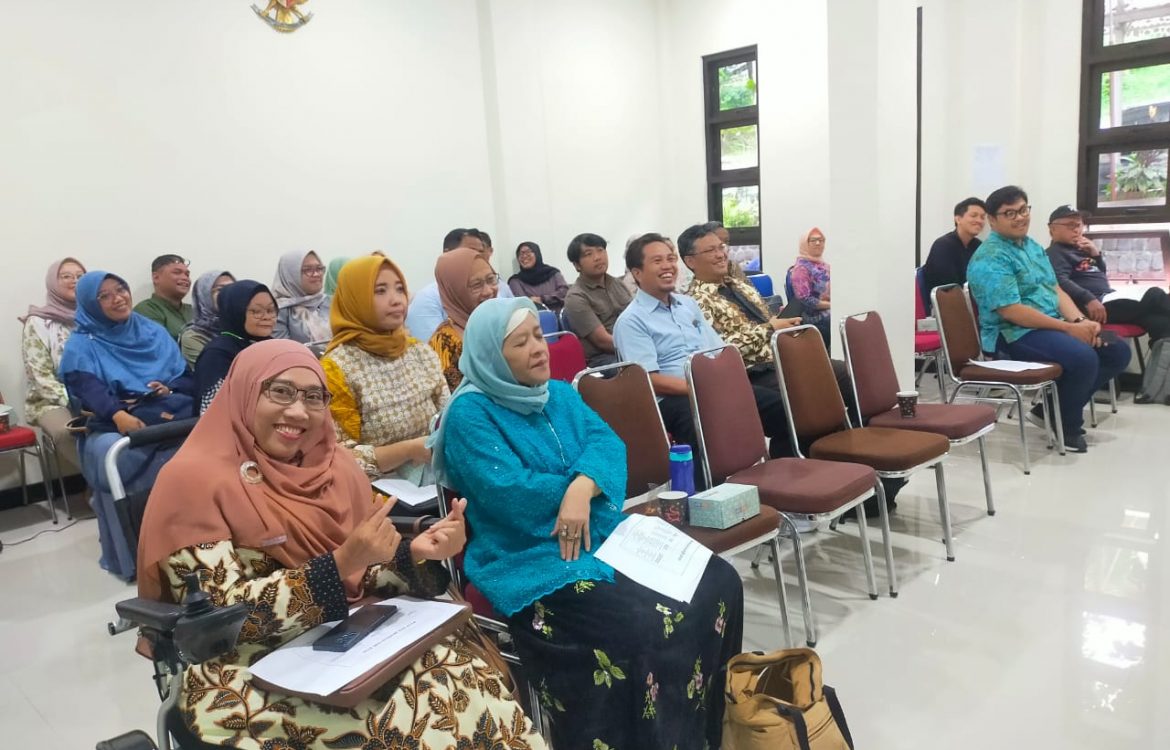
P4M FEB UNS Launches Six Strategic Programs for 2025
The Center for Research and Community Engagement Development (P4M) of the Faculty of Economics and Business (FEB), Universitas Sebelas Maret (UNS), held a coordination and communication meeting with all Research Groups (RG) within FEB UNS on Thursday, January 30, 2025, at the FEB Coordination Room. Prof. Tri Mulyaningsih, S.E., M.Si., Ph.D., Vice Dean for Academic and Research Affairs, stated in her remarks that the meeting aimed to communicate various aspects related to research and community engagement activities to the faculty members of FEB. Prior to the meeting, Prof. Tri conducted a situational analysis to guide the direction of the discussion.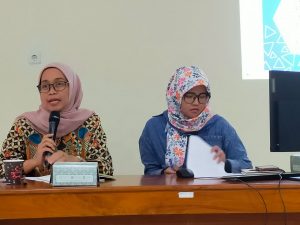
She outlined four key objectives for the session. First, to inform particularly new lecturers that conducting research and community engagement is a professional obligation alongside teaching duties. Each lecturer is expected to be involved in at least one research or community service activity per semester, either as the lead or a team member. UNS facilitates this through Research Groups (RGs). Second, as UNS progresses toward becoming a research-based university, all academic activities—including teaching—are expected to be research-oriented. Third, for lecturers with a master’s degree who plan to pursue doctoral studies, experience in RG-based research at the university level is essential. Lastly, UNS has provided various incentives to encourage academic members to engage in research, making the need to support these activities even more important.
“The Academic Affairs Division and P4M are working in collaboration to encourage lecturers to strengthen their research capacity. We are developing a faculty-level research system to make the process of conducting research more accessible and of higher quality. The core objective is to establish a more effective research ecosystem. The six programs developed by P4M are expected to improve the quality of input, processes, and research outputs,” Prof. Tri emphasized.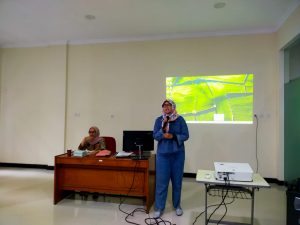
Dila Maghrifani, S.E., B.Sc., M.Sc., Ph.D., Head of P4M, presented the six main programs formulated in collaboration with the Dean’s Office. “In 2025, P4M FEB UNS has launched six programs: a working paper forum, the development of a faculty research roadmap, a writing and publication support clinic, creation of a database of external funding sources, proposal strengthening, and the management of research internship students,” she explained.
The working paper forum will be a recurring academic activity held monthly in person, designed to enhance research quality. Each RG will be responsible for organizing one session and will invite both internal and external speakers. The content may include research dissemination, publication outcomes, or academic discussions. The research roadmap development aims to align faculty research and community engagement activities with long-term institutional goals. The writing and publication support clinic is specifically targeted at lecturers currently on study leave and those who have overdue publication requirements, as well as young faculty members considering doctoral studies abroad. This program will emphasize output with durations ranging from one to three months until journal submission.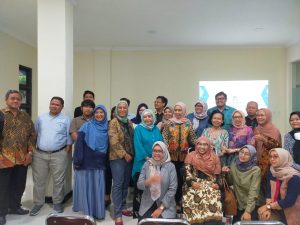
The external funding database will be developed and shared through RG group chats, P4M’s official website, social media, and direct messaging. The proposal strengthening program will involve collaboration between RGs and laboratory heads to develop proposals, seek external funding, and foster collaboration among faculty members across different research groups. The final program focuses on the management of research internship students, where undergraduate interns are integrated into the faculty research group activities. Each RG may submit filling request for intern students to support administrative-related within the research and community engagement activities.
“P4M’s role is to support the implementation of these initiatives so that faculty members are better supported in conducting meaningful research. These six programs are designed to improve the overall research ecosystem and will benefit from further input and discussion to ensure their successful implementation,” Dila added.
During the session, P4M also introduced its latest guidelines for research and community engagement activity. Participants actively engaged in discussions and provided constructive feedback on the proposed programs.