

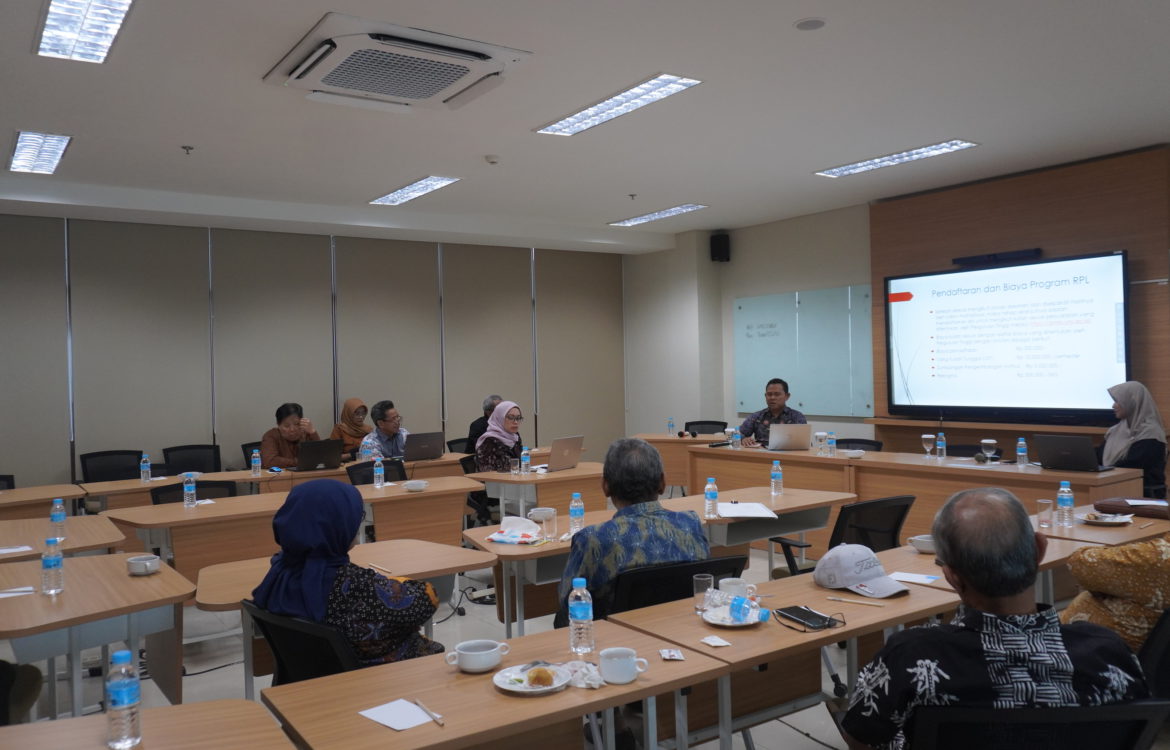
Master of Accounting Program FEB UNS Prepares RPL Scheme for Professionals
The Faculty of Economics and Business (FEB), Universitas Sebelas Maret (UNS) organized a drafting session for the Recognition of Prior Learning (RPL) scheme for the Master of Accounting Study Program (Maksi) on Thursday, 2 October 2025, at UNS Tower. The event was attended by the Vice Dean for Academic and Research Affairs FEB UNS, Prof. Tri Mulyaningsih, S.E., M.Si., Ph.D.; Head of the Master of Accounting Study Program, Lulus Kurniasih, S.E., M.S.Ak., Ph.D.; Head of the Learning System Development Unit LPPMP, Dr. Budi Legowo, S.Si., M.Si.; and teaching staff.
In her remarks, Prof. Tri explained that the RPL program is based on the UNS Rector’s Regulation No. 12 of 2025. RPL enables the recognition of learning outcomes obtained through both formal education and work experience. “For the undergraduate level, we have implemented RPL through credit transfer. At the master’s level, RPL may take the form of credit recognition from work portfolios that align with the program curriculum. However, RPL does not apply to the doctoral level,” she emphasized.
 Prof. Tri added that the RPL program at FEB UNS, particularly in the Master of Accounting and Master of Economics and Development Studies (MESP) programs, is designed to optimize new student admissions. “Since 2024, there has been a decline in student numbers. Therefore, the faculty needs to open new opportunities to make the programs more effective. Hopefully, RPL combined with the fast-track program will attract more students and offer flexibility that meets the needs of the professional world,” she stated.
 Meanwhile, Lulus Kurniasih, Ph.D., explained that the RPL curriculum is structured to support students with relevant work experience so they can complete their studies more efficiently. “Out of the total 56 credits required to earn a Master of Accounting degree, a maximum of 21 credits can be recognized through RPL. Consequently, students only need to complete 35 credits, consisting of 9 credits of core courses and 26 credits of thesis,” she explained.
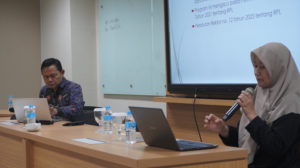 The RPL assessment process involves portfolio evaluation by an assessment team, additional assessments such as interviews or examinations if needed, and final decisions by the RPL Committee. Learning will be conducted in a hybrid format, both offline and online, with flexible scheduling outside regular working hours.
Prospective students interested in the RPL program are required to prepare administrative documents, including their latest educational certificate, work portfolio, English proficiency test results, TPA results, and the RPL application form. Once the assessment process is complete, registration is carried out through the official UNS SPMB portal. The fees include registration, institutional development contributions, and recognition fees.
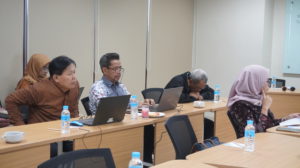 On this occasion, Dr. Budi Legowo provided guidance on the RPL mechanism to ensure that the curriculum design and assessment procedures align with UNS academic quality standards. His input serves as an important contribution to the preparation of the RPL draft at both the faculty and program levels. Through this drafting process, FEB UNS reaffirms its commitment to introducing academic innovations that respond to the evolving professional landscape while expanding access to higher education.
This initiative aligns with the Sustainable Development Goals (SDGs), particularly Goal 4 (Quality Education), Goal 8 (Decent Work and Economic Growth), and Goal 9 (Industry, Innovation, and Infrastructure).