

FEB UNS Rural Development Laboratory Explores Opportunities for Village Development Collaboration Based on Local Wisdom in East Nusa Tenggara
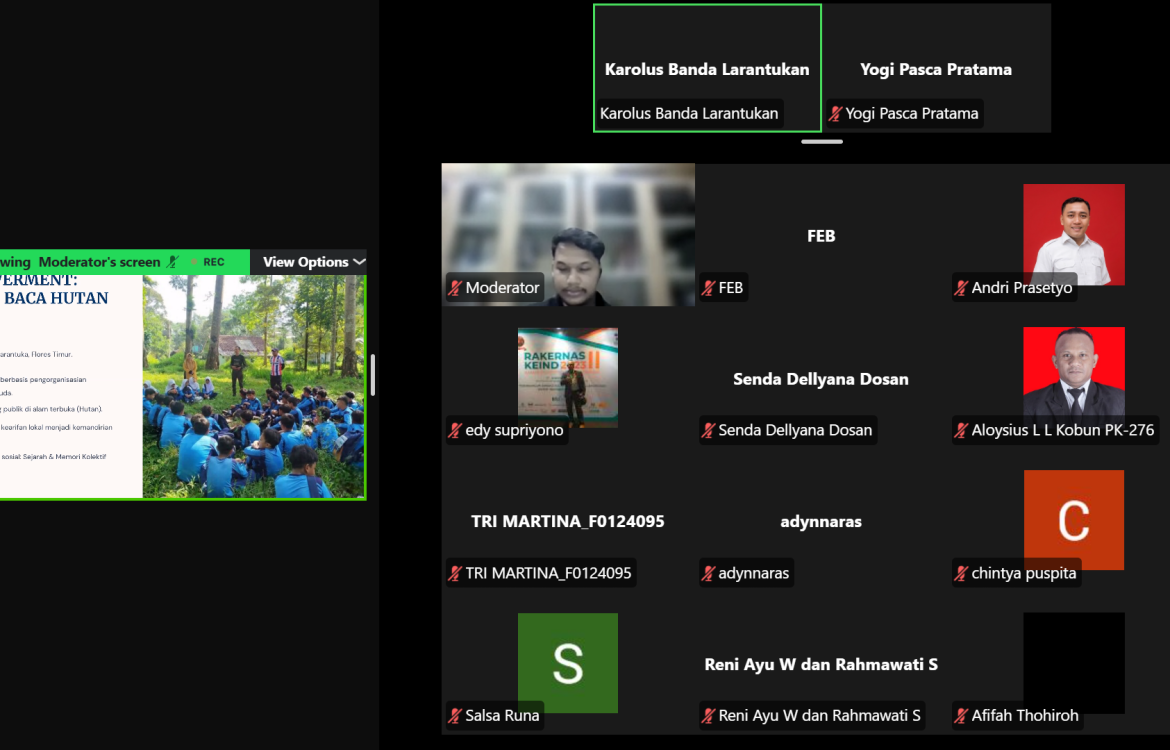
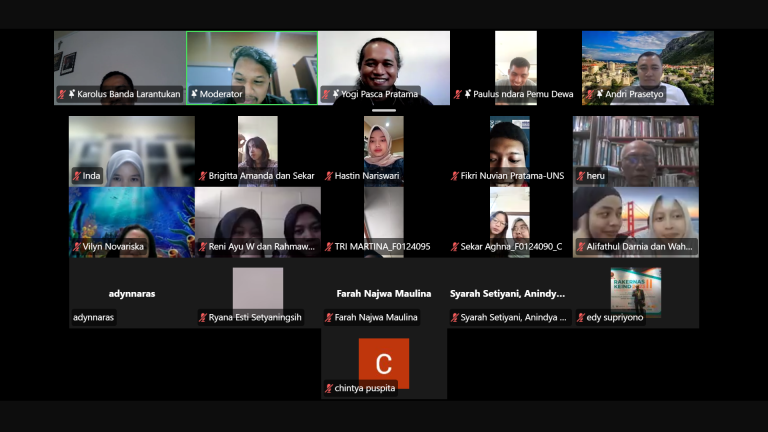
The Rural Development Laboratory of the Faculty of Economics and Business (FEB), Universitas Sebelas Maret (UNS), continued its Practitioner–Academic Sharing Session series through an online Zoom Meeting on Monday, 29 June 2026. The session, titled “Village Development Synergy: Exploring Collaboration, Local Issues, Research Opportunities, and Community Empowerment Based on Local Wisdom in East Nusa Tenggara (NTT),” featured Karolus Banda Larantukan, S.Fil., M.Hum., an academic and literacy practitioner from East Nusa Tenggara.
In his opening remarks, Yogi Pasca Pratama, S.E., M.E., Ph.D., Head of the Rural Development Laboratory at FEB UNS, explained that the event was designed to create a platform for dialogue and cross-regional collaboration to better understand the diverse local dynamics of NTT. According to Yogi, many forms of local wisdom that are often taken for granted by local communities actually hold considerable potential to support village development.
“We believe that local wisdom should not be viewed as an obstacle but rather as a valuable opportunity that can drive meaningful development,” he said.
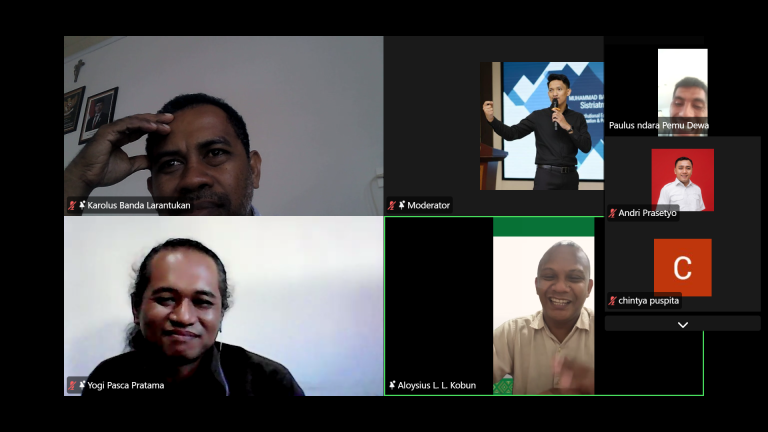 He also expressed hope that the session would serve as an initial step toward building partnerships between FEB UNS and institutions in NTT in the areas of research, community service, and social engagement. “Between locality and modernization, we need to find common ground and shared solutions. Even if partnerships begin modestly, sustained collaboration and dialogue can bring about meaningful change,” he added.
In his presentation, Karolus Banda Larantukan described NTT as an archipelagic province comprising more than 22 regencies and municipalities, characterized by predominantly dry land. Most areas experience up to eight months of dry season each year and only around four months of rainfall, conditions that significantly affect agricultural productivity.
Beyond climatic challenges, communities in NTT also face logistical constraints, limited infrastructure, and restricted access to capital. At the same time, the province possesses strong social capital rooted in customary traditions and mutual cooperation, known locally in East Flores as gemohing.
“The greatest social capital in NTT lies in its traditions and spirit of mutual cooperation. People work together without expecting financial gain,” he explained.
Karolus also highlighted several strategic development challenges, including poverty and stunting, which remain significant issues given the wide distribution of communities across the province’s many islands. To address these challenges, he emphasized the importance of collaboration among government, academia, industry, communities, and the media through a pentahelix approach.
“We need to bridge academic theory with empirical realities in the field. Our research must be contextual and rooted in the actual challenges faced by communities,” he stated.
 During the session, Karolus introduced several community empowerment initiatives led by the Taman Baca Hutan 46 Waibalun Community, a literacy organization he founded in Larantuka, East Flores. The organization focuses on literacy development, local historical documentation, and the preservation and transformation of local wisdom to strengthen community self-reliance. He also highlighted NTT’s development potential, ranging from integrated farming systems that combine maize cultivation with cattle production to abundant renewable energy resources such as solar and wind power.
In addition, Karolus proposed several collaborative research opportunities for universities, including village economy and village-owned enterprise (BUMDes) development, culturally based stunting interventions, local tourism and agricultural development, and the harmonization of customary and national legal systems. He also expressed interest in expanding collaboration between FEB UNS and the Larantuka Institute of Teacher Education and Technology (IKTL) through joint research, thematic internships, collaborative community service programs, and local wisdom-based empowerment initiatives.
Concluding his presentation, Karolus emphasized that village development in NTT should not rely solely on technology transfer but must be built through dialogue between modern knowledge and the indigenous wisdom that has sustained local communities for generations. “Village development in NTT is not limited to transferring technology; it is about fostering dialogue between modern knowledge and the wisdom that has preserved this land for centuries,” he stressed.
Closing the event, Dean of FEB UNS, Prof. Bhimo Rizky Samudro, S.E., M.Si., Ph.D., expressed his appreciation for the sharing session, noting the importance of discussions centered on local issues in village development. He encouraged the continuation of similar forums as part of a broader series of cross-regional studies. “Local themes such as these are essential so that students gain a broader understanding of economic issues beyond banking and finance, including social challenges and local development potential,” he remarked.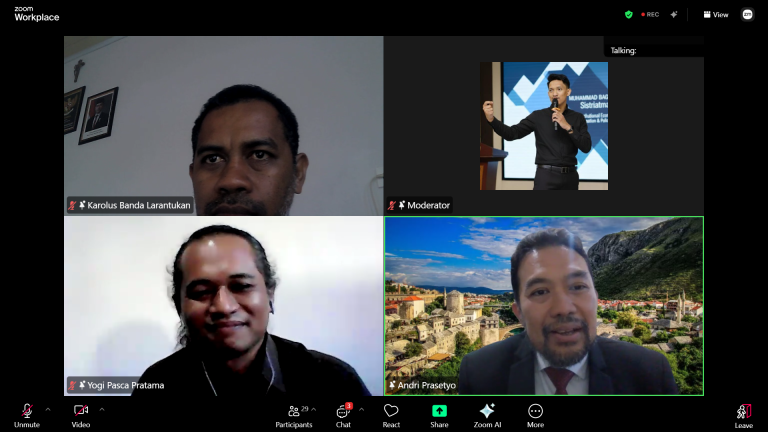
Prof. Bhimo also expressed his gratitude to the speakers, the Rural Development Laboratory, and all participants, expressing his hope that the spirit of collaboration and dialogue would continue to grow.
Through this initiative, the Rural Development Laboratory of FEB UNS seeks to strengthen collaboration among academics, practitioners, and local communities to generate more contextual research and community empowerment programs that contribute to sustainable village development in East Nusa Tenggara.
The program also supports the achievement of the Sustainable Development Goals (SDGs), particularly SDG 4 (Quality Education), SDG 8 (Decent Work and Economic Growth), SDG 11 (Sustainable Cities and Communities), and SDG 17 (Partnerships for the Goals).