FEB UNS Organizes Short Course “Applied Microeconomics of Global Health” in Collaboration with Erasmus University and Wageningen University
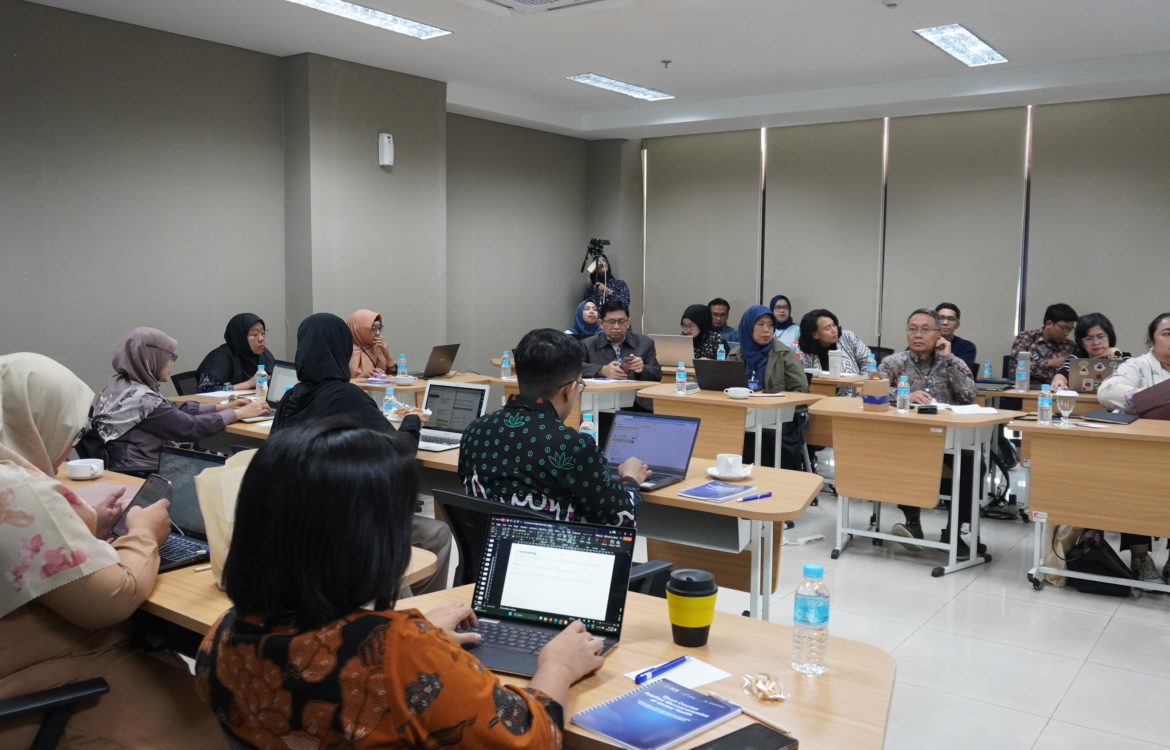
Faculty of Economics and Business (FEB), Universitas Sebelas Maret (UNS) organizes an international program through the Short Course “Applied Microeconomics of Global Health,” conducted on 25–27 November 2025 at UNS Tower. This activity is a collaboration between FEB UNS, Erasmus University Rotterdam, and Wageningen University & Research, and is attended by participants from various regions across Indonesia.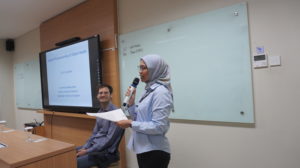
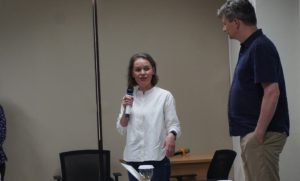
The short course is officially opened by Prof. Tri Mulyaningsih, Ph.D., Vice Dean for Academic and Research Affairs of FEB UNS, who also serves as the co-organizer of the program. In her remarks, Prof. Tri expresses her appreciation for the strong enthusiasm demonstrated by participants from diverse backgrounds and regions, including Sumatra, Java, and other provinces.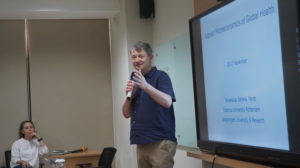
She states that global health issues increasingly require multidisciplinary approaches, particularly given the ongoing public discussions on universal health coverage, BPJS deficits, malnutrition, and mental health.
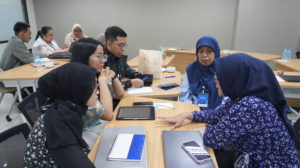 “This workshop brings together economists and health scholars so that we can examine major issues such as malnutrition, pandemics, and mental health from interdisciplinary perspectives. Hopefully, this activity will not only expand knowledge but also broaden networks and research collaboration,” said Prof. Tri.
During the opening session, Prof. Tri also introduces the three international speakers: Robbert Sparrow (Associate Professor of Development Economics, Erasmus University), Matthias Rieger (Professor of Global Health, Erasmus University), and Margarita de Vries Mecheva (researcher in behavioral experiments, Wageningen University).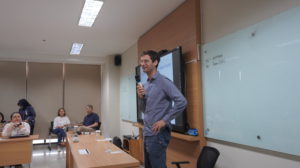
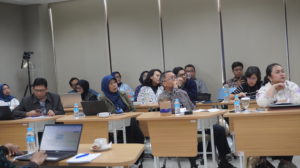
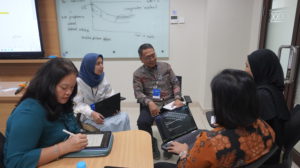 Over three days, participants take part in six structured intensive sessions. On the first day, discussions focus on Universal Health Coverage and the Economics of Nutrition & Stunting. Participants also join small group activities guided by the speakers. Each group is asked to identify one relevant public health issue, share perspectives, and agree on a topic to be analyzed throughout the workshop series. The groups then present their initial findings before proceeding to the next sessions.
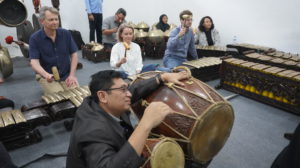
 The first day concludes with a cultural activity at Javanologi UNS, where speakers and participants have the opportunity to play gamelan, learn about traditional Javanese instruments, and experience firsthand the cultural practices that form an essential aspect of local heritage.
 On the second day, the program continues with discussions on Nutrition Transition & the Triple Burden of Malnutrition and Globalization & Health. The third day centers on Health Behaviours & Behavioural Field Experiments and a Behavioural Design Tutorial. The short course concludes with a closing dinner.
 Prof. Tri hopes that this program becomes a platform for researchers, practitioners, and academics from multiple disciplines to strengthen shared understanding of global health economics. “I hope you enjoy this program and experience the hospitality of UNS and the city of Solo,” she concluded.