

FEB UNS Initiates Risk Management Implementation
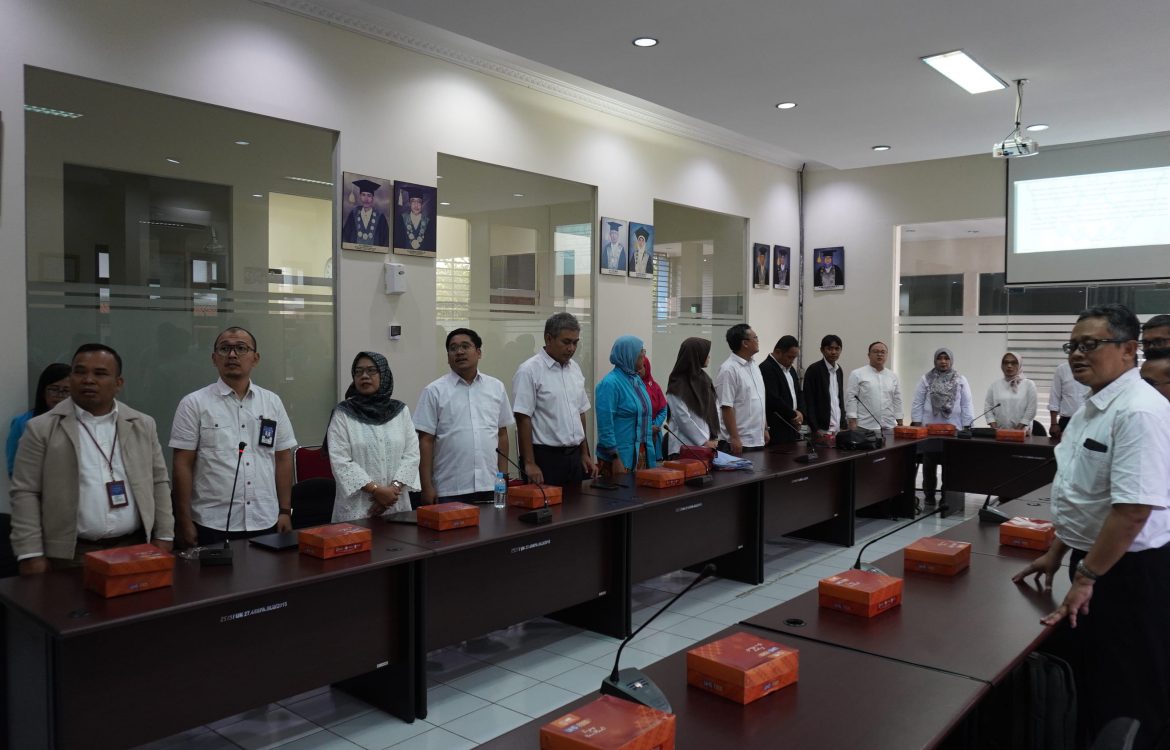
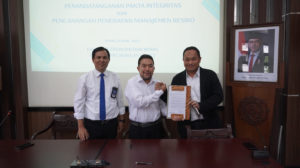
The Faculty of Economics and Business (FEB), Universitas Sebelas Maret (UNS), held a ceremony for Signing of Integrity Pact and the Initiation of Risk Management Implementation. All leaders and faculty members within FEB UNS expressed their commitment to developing a risk management system to achieve effective and efficient performance processes in pursuit of good university governance.
The entire leadership of FEB UNS is determined to implement a risk management system based on SNI ISO 31000:2018 in an integrated manner, aligned with good faculty governance principles; to enhance a culture of risk awareness in every work process; to utilize the outcomes of risk identification, analysis, evaluation, and mitigation as the foundation for audits, supervision, strategic decision-making, innovation, and investment; and to manage risks across all work units, regularly report on the implementation and mitigation of risks, and provide information on any risk incidents that may cause losses to FEB UNS.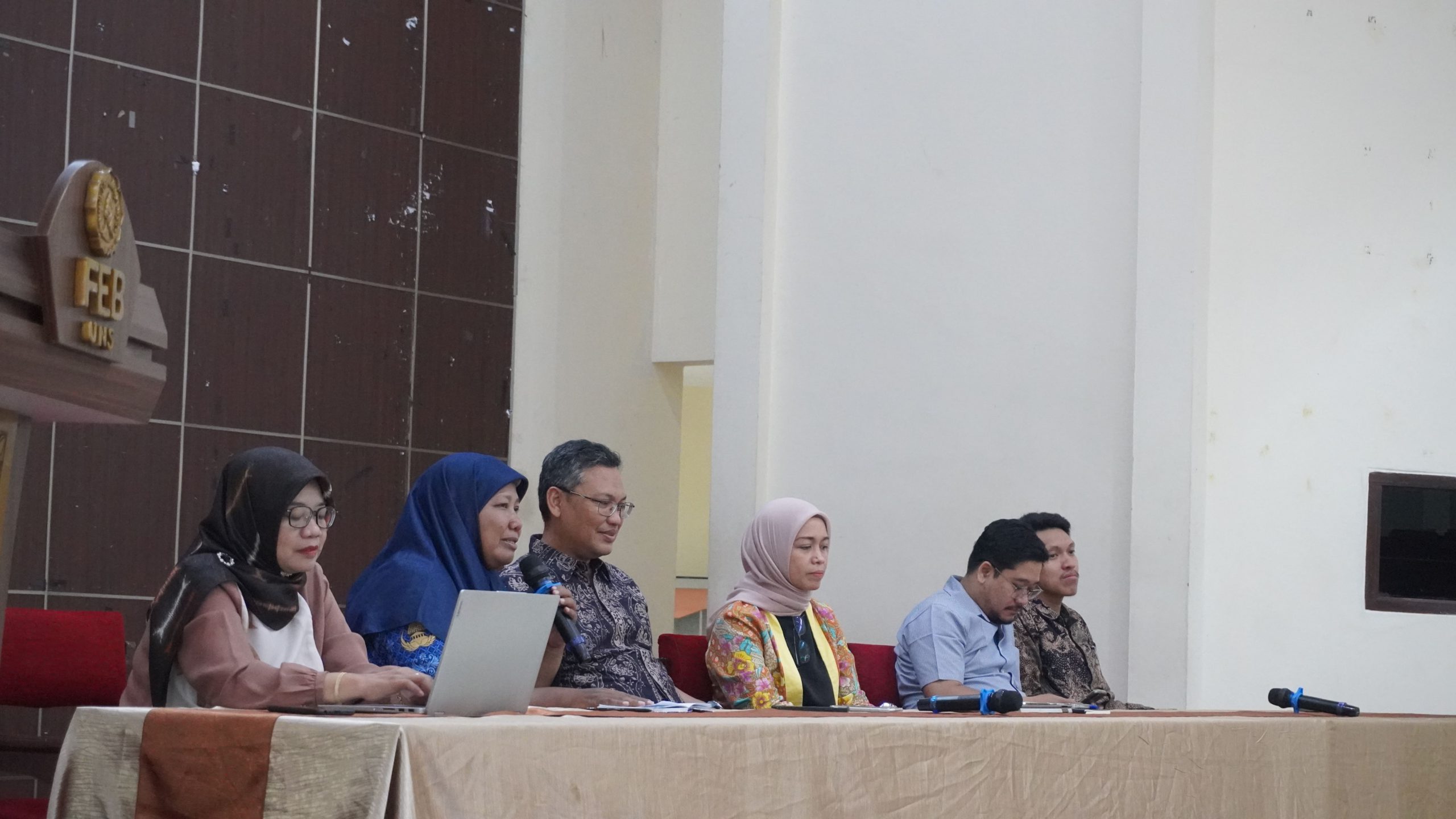
The Risk Management Integrity Pact was read by the Dean of FEB, Prof. Bhimo Rizky Samudro, and was followed in unison by all leaders present at the Signing of the Integrity Pact and Risk Management Implementation, which took place on Monday, 21 April 2025, in Meeting Room 1, Soeharno TS Building.
 In his remarks, UNS Secretary, Prof. Dr. Agus Riwanto, S.H., S.Ag., M.Ag., M.H., stated that with the Signing of the Integrity Pact and the Implementation of Risk Management, it is hoped that by this year UNS will already have formal Risk Management Procedures in place—both at the faculty level and across central administrative units, bodies, and university institutions. The aim is to eventually establish university-wide Risk Management Procedures.
Risk Management, he noted, will serve as the basis for strategic decisions at the university level. Therefore, all university policies—including budgeting, faculty management, and even non-academic matters—should refer to Risk Management principles.
 He further explained that Risk Management is closely linked with the Integrity Zone. The ultimate goals of both Risk Management and the Integrity Zone are to ensure high-quality public services within the university, with its constituents being the students and all associated stakeholders.
 “That is why the Minister of Education is currently promoting the idea that Good Corporate Governance should also be reflected as Good University Governance. We cannot claim strong performance indicators while having poor governance structures. In fact, the function of Risk Management and the Integrity Zone is to organize and improve governance—not just for accreditation or rankings. For example, if bureaucracy remains complex, signatures take too long, or graduation processing is lengthy—those are the kinds of inefficiencies we aim to eliminate. The goal is to ensure excellent performance indicators, rankings, and governance,” he explained.
 He added that UNS will also initiate certification for all administrative personnel within the university. The hope is that anyone holding a leadership position at UNS will be certified in Risk Management, ensuring that their leadership qualifications are not in question—because they understand whom they serve and how to make strategic decisions.
Lastly, Prof. Agus conveyed the Rector’s message, encouraging everyone to work with sincerity and integrity, to remain united, and to maintain harmony and collective spirit.