

FEB UNS Fintech Laboratory Equips Students with Strategies to Face Digital Banking Risks
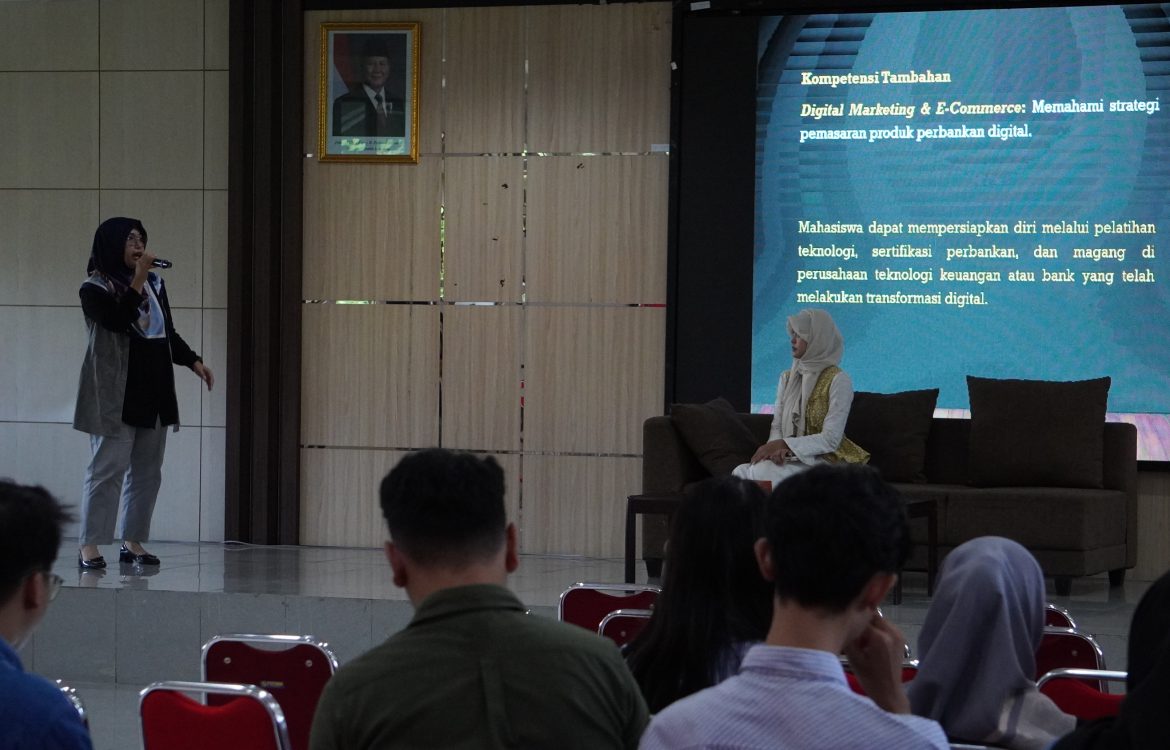
The Financial Technology (Fintech) Laboratory at the Faculty of Economics and Business (FEB), Universitas Sebelas Maret (UNS), organized a training session entitled “Risk Management in Digital Banking: Bank Strategies to Face Financial Technology Disruption” on Wednesday, April 15, 2026, at the Auditorium, 5th Floor of the Soedarah Soepono Building, FEB UNS. The event featured Cucu Kurniawati, S.E., M.M., from Bank Danamon Indonesia Solo Sharia Branch as the keynote speaker.
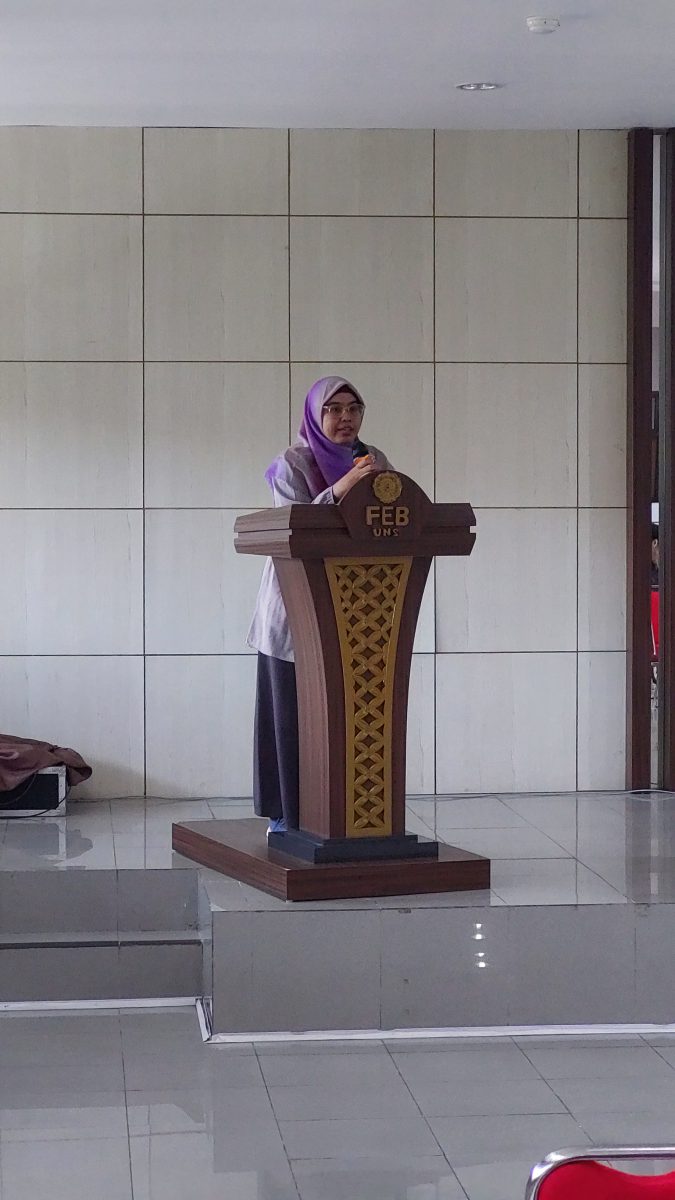 The Head of the FEB UNS Financial Technology Laboratory, Wahyu Trinarningsih, S.E., M.M., M.A., CFP., expressed in her remarks that this training is part of the laboratory’s efforts to facilitate students in enhancing their competencies in financial technology and risk management. She emphasized the importance of student readiness in facing digital transformation within the banking sector.
“Digitalization has influenced all aspects of the industry, including banking. Therefore, it is vital for students to comprehend its impact, including both the benefits and the risks generated,” Wahyu remarked.
Furthermore, she mentioned that this training is interconnected with the students’ academic requirements. “The certificate from this training can be utilized as one of the prerequisites for taking the undergraduate thesis exam, and it is aligned with the certification schemes available at LSP UNS, specifically in the field of risk management,” she added.
During the session, Cucu Kurniawati explained that banking transformation in the digital era represents a response to technological advancements and shifts in public behavior demanding fast, practical, and convenient services. Various innovations such as mobile banking, QRIS, and other digital financial services have enhanced efficiency and expanded service access to the public.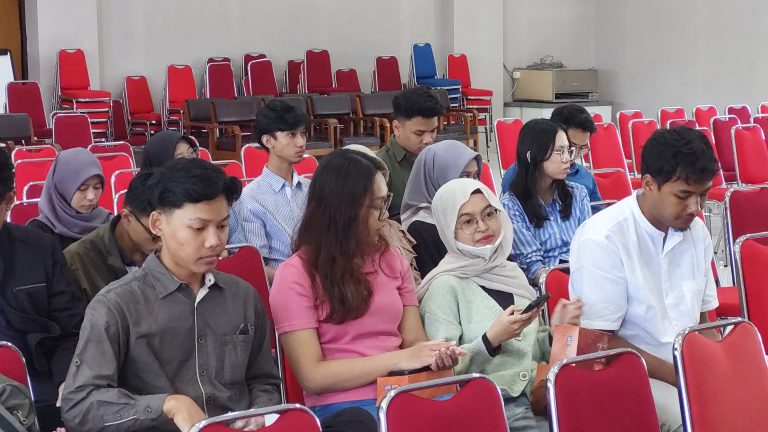
“Banking transformation today is a response to the needs of the public who desire everything to be fast and practical. Therefore, banks must be capable of adapting by adopting technology, including collaborating with financial technology (fintech),” Cucu explained.
She also added that the utilization of technology such as artificial intelligence (AI) has assisted banking in improving service quality and operational efficiency. However, this transformation is accompanied by various risks that must be properly managed. “Every transaction carries risk, making risk management mandatory to minimize potential losses, including cyber risks, data protection, and technology system failures,” she asserted.
 The training session was highly interactive, combining theoretical material with practical experiences from the banking industry. Students obtained not only theoretical understanding but also a real overview of risk management implementation in the banking sector. Through this activity, FEB UNS demonstrates its commitment to supporting the attainment of the Sustainable Development Goals (SDGs), particularly Goal 4 (Quality Education) through the development of student competencies, and Goal 8 (Decent Work and Economic Growth) by preparing human resources ready to face financial industry challenges in the digital era.