

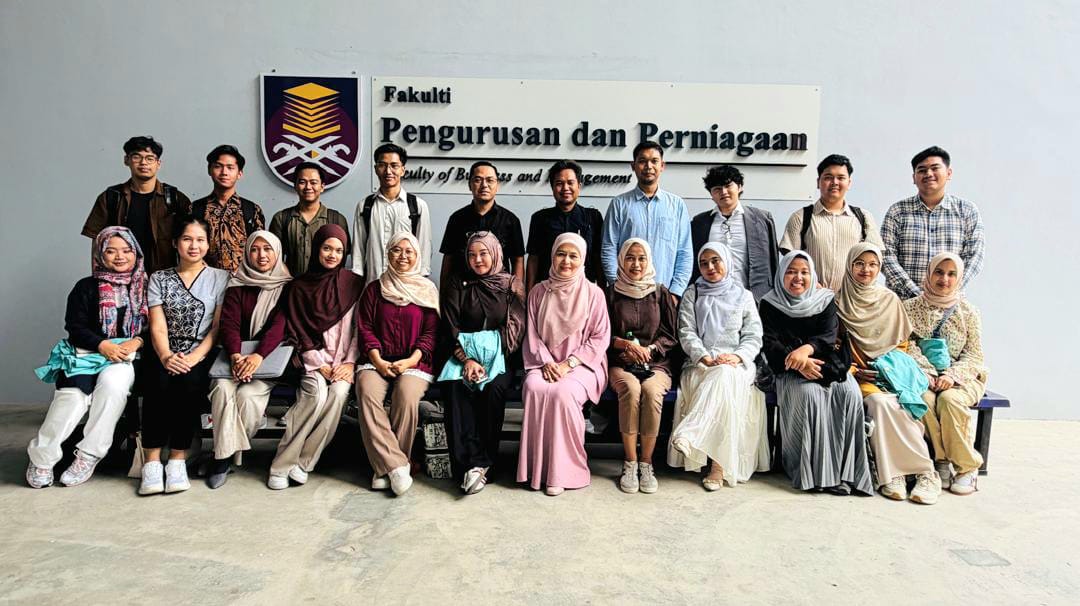
Facilitating Student Outbound Activity, FEB UNS Dee18 Students to Participate in Short-Term International Mobility Program
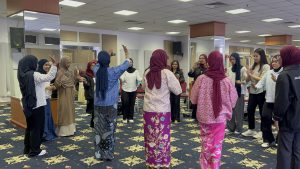
A total of 18 students from the Faculty of Economics and Business (FEB), Universitas Sebelas Maret (UNS), participated in the Short-Term International Mobility Program at the Faculty of Business and Management, Universiti Teknologi MARA (UiTM) Selangor, Malaysia, from June 2 to 6, 2026. The international experience gained by the students encompassed not only classroom lectures but also various academic and cultural activities. During their stay at UiTM Malaysia, the students engaged in management discussions, collaborative lectures delivered by FEB UNS and UiTM faculty members, international seminars, skill development workshops, introductions to Malaysian culture, and an industrial visit to Beryl’s Chocolate Factory in Selangor. For postgraduate students, this program also provided an opportunity to conduct research consultations with UiTM academics.
This program is part of FEB UNS’s commitment to broadening students’ international exposure while simultaneously elevating graduate competitiveness at the global level. The Vice Dean for Student and Alumni Affairs of FEB UNS, Tastaftiyan Risfandy, S.E., M.Sc., Ph.D., stated that FEB UNS students possess excellent academic potential. Therefore, the faculty strives to provide additional experiences that can reinforce their competencies outside the classroom.
“FEB has highly intelligent students who possess strong academic capabilities. In order to expand their skills, enhance their exposure, and boost their competitiveness beyond our campus, the faculty decided to establish a program enabling them to gain international exposure outside Indonesia,” he remarked.
According to Tastaftiyan, international experience has become increasingly important amidst evolving global challenges. Students need to become accustomed to interacting in multicultural environments and utilizing English in various academic and professional activities.
“To face a future driven by globalization and international competition, they must be familiar with English. Thus, we prepare our students from the Faculty of Economics and Business to gain exposure at the international level,” he explained. 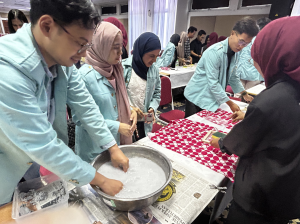
“To face a future driven by globalization and international competition, they must be familiar with English. Thus, we prepare our students from the Faculty of Economics and Business to gain exposure at the international level,” he explained.
“They have to speak with them in English, try to interact, and perhaps when given certain assignments, there are negotiation skills they can also learn. I believe those are some of the many benefits they can obtain when participating in student mobility in Malaysia,” he said.
Furthermore, he emphasized that internationalization is an inseparable part of FEB UNS’s development direction. International student mobility programs have been implemented sustainably and align with university-wide policies. “Students undertaking international mobility is not unique to this year. In previous years, we have aligned our initiatives with the university. Last year, we sent two students to France for student mobility, whereas this year, we chose to focus on Asia by sending 18 students to Malaysia,” he revealed.
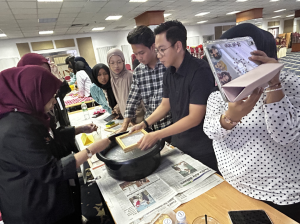
The partnership between FEB UNS and UiTM Malaysia itself has been established for several years through various higher education tridarma (three pillars) activities. Faculty members from both institutions regularly engage in teaching activities at each other’s campuses as a form of sustainable academic collaboration. In 2026, this cooperation was expanded through the student mobility program. According to Tastaftiyan, FEB UNS students received various facilities during the program at UiTM as a form of support from the international partner.
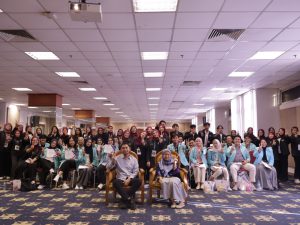
Beyond benefiting the students, this program also supports the strengthening of FEB UNS’s international network. Currently, FEB UNS maintains partnership networks with various institutions across Asia, Europe, the Middle East, and the United States.
“One of the reasons we pursue internationalization is that we are currently striving for an international accreditation, namely AACSB. One of the prerequisites is that elements of the institution, both faculty members and students, must have active engagements with partners abroad,” he explained.
Through this initiative, FEB UNS hopes that students can gain valuable global experience while strengthening the faculty’s position as an educational institution that actively builds international collaborations. The presence of FEB UNS students at UiTM Malaysia marks a concrete step toward producing graduates who are ready to compete internationally. This initiative supports SDG 4 (Quality Education) by improving the quality of experiential, international-based learning, and SDG 17 (Partnerships for the Goals) by strengthening higher education partnerships between FEB UNS and UiTM Malaysia.