

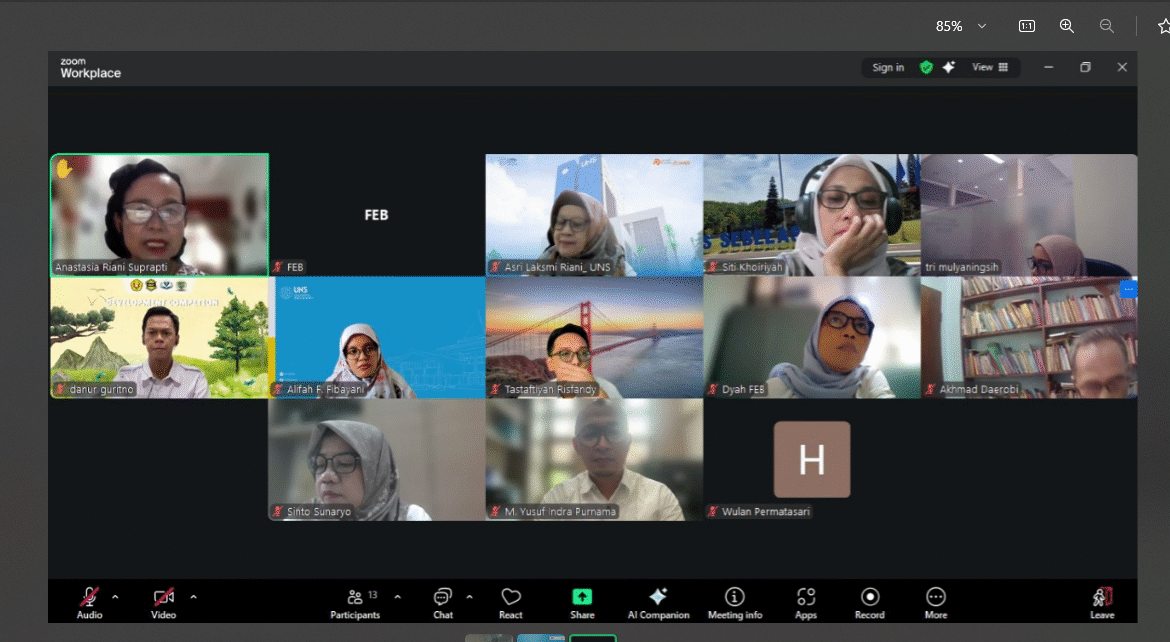
Dissemination and Coordination Session for the Implementation of Green Jobs Learning Management System at FEB UNS
The Faculty of Economics and Business (FEB), Universitas Sebelas Maret (UNS) organized a coordination meeting on the implementation of the Green Jobs Learning Management System (LMS) to support more contextual and sustainable teaching of Human Resource Management and Employment courses. The session was attended by the Vice Dean of Academic and Research Affairs, Prof. Tri Mulyaningsih, S.E., M.Si., Ph.D., the Vice Dean of Student and Alumni Affairs, Tastaftiyan Risfandy, S.E., M.Sc., Ph.D., the Heads of Management and Development Economics Study Programs, and lecturers of related courses at FEB UNS.
In her remarks to the Head of Study Program and lecturers, Prof. Tri explained that the Green Jobs LMS is part of a strategic collaboration between FEB UNS, the Faculty of Economics and Business, Universitas Gadjah Mada (FEB UGM), Coca-Cola Europacific Partners (CCEP), and the international partner “Skills for Impact.” The initiative aims to integrate the Green Jobs approach into university curricula.
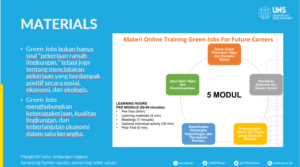 At FEB UNS, the LMS will be implemented in various courses such as Human Resource Management, Human Resource Economics, and Employment Economics. The customized materials cover topics including current labor issues, company case studies, labor migration, and trade unions. The LMS is expected to address global challenges in employment, the green economy, and environmental sustainability. Through this platform, students can access online, interactive, and flexible learning resources.
“Integrating Green Jobs into our curriculum is an important step in preparing students for the future job market, which increasingly emphasizes sustainability. The program will run from October 6 to November 1, replacing regular lectures during that period. Therefore, lecturers are expected to inform students that participation is mandatory. Attendance will be monitored by the Academic Subdivision,” she explained.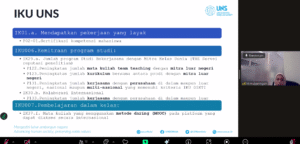
The Green Jobs training materials consist of five main modules: Fundamentals of Green Jobs and Global Context, Systems Thinking and Solution Design, Technical and Digital Skills for the Circular Economy, Stakeholder Engagement and Behavioral Change, and Green Career Pathways and Entrepreneurship. Each module is designed for 60–90 minutes of study, including pre-test, core materials, supplementary readings, optional individual activities, and post-test.
Prof. Tri further emphasized that student participation in this program supports UNS’s Key Performance Indicators (IKU), including IKU 1—Graduates Securing Decent Employment, through certification and Green Jobs competency materials; IKU 6—Study Program Partnerships, through collaboration with industry partners and international academics; and IKU 7—Innovative Classroom Learning, through the use of MOOCs and online methods.
Vice Dean Tastaftiyan Risfandy, Ph.D., added that the Green Jobs LMS is open to students across Indonesia. “This program is accessible to students nationwide. FEB students enrolled in Human Resource Management, Human Resource Economics, and Employment Economics courses will join the learning sessions. Registration is carried out independently via ugm.id/PendaftaranGreenJobs, and all information will be delivered directly to students through WhatsApp Groups,” he explained.
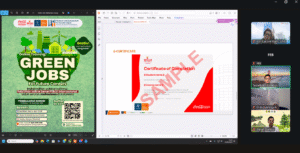 Participants will receive an international certificate from CCEP, free access to the five training modules, flexible online learning opportunities, and the chance to win cash prizes of up to IDR 5,000,000. During the discussion session, Muhammad Yusuf Indra Purnama, Ph.D., Head of the Development Economics Study Program, suggested that the independent learning process should remain under lecturer supervision to ensure student discipline and completion.
The implementation of the Green Jobs LMS at FEB UNS is aligned with the Sustainable Development Goals (SDGs), particularly in promoting decent work, inclusive economic growth, and climate action. By integrating sustainability and green economy education into the curriculum, FEB UNS contributes actively to preparing young generations who are ready to face the challenges of the future labor market with responsibility and commitment to sustainable development.