

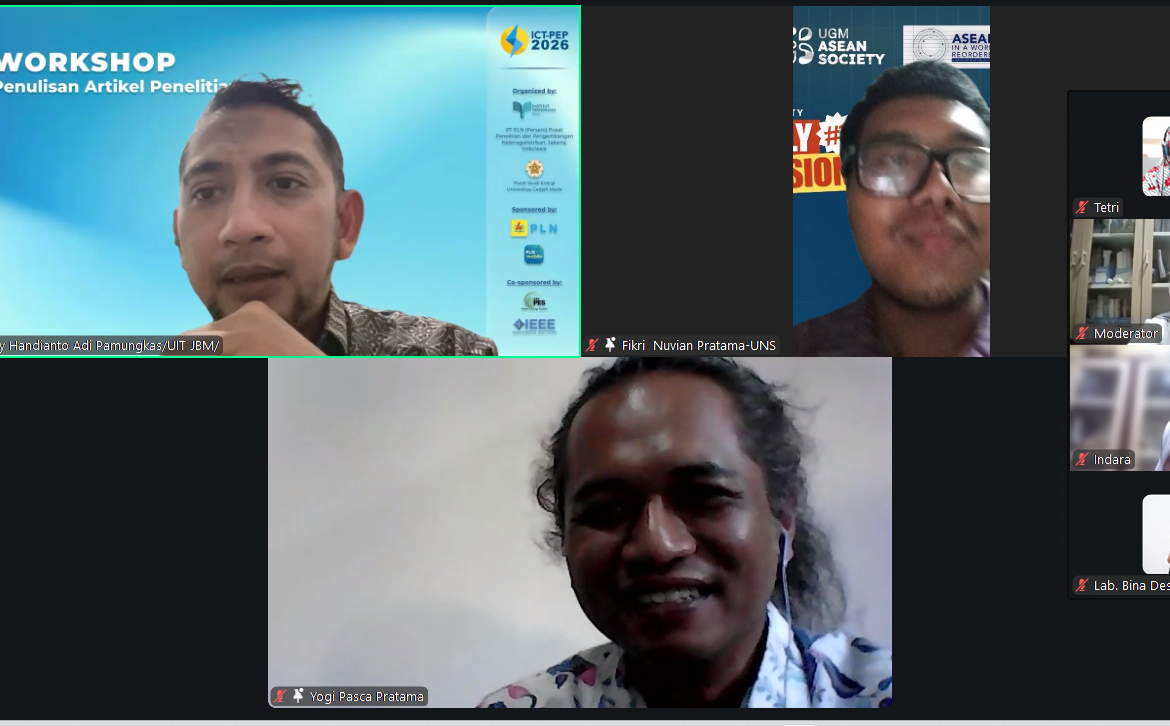
FEB UNS Rural Development Laboratory Invites PLN Practitioner to Discuss Opportunities for Energy-Based Rural Development
The Rural Development Laboratory of the Faculty of Economics and Business (FEB), Universitas Sebelas Maret (UNS), organized an online sharing session titled Future Energy Synergy: Transforming Villages through Collaboration between PLN Occupational Health and Safety Practitioners and the FEB UNS Rural Development Laboratory on Friday, 19 June 2026. The event featured Luky Handianto Adi Pamungkas, S.E., M.M., Senior Occupational Health and Safety (OHS) Officer at PLN East Java Transmission Main Unit (UIT JBM), as the keynote speaker.
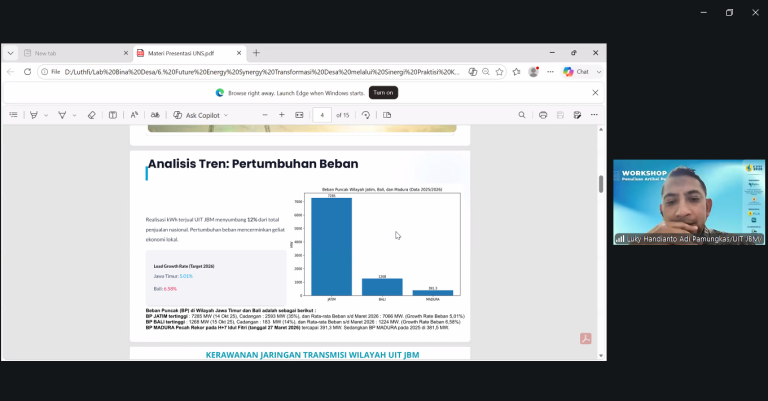 In his presentation, Luky explained that the energy sector plays a strategic role in supporting economic growth and community development. PLN UIT JBM currently manages more than 8,329 kilometers of transmission lines and 173 substations, forming the backbone of the electricity supply across Java and Bali. This infrastructure supports a wide range of economic activities, from industrial operations to rural communities. He also highlighted the steadily increasing demand for electricity in East Java and Bali, emphasizing that energy is not only a basic necessity but also a key driver of regional productivity and economic growth.
The session introduced participants to various opportunities for collaboration between industry and higher education, particularly in aligning the competencies of FEB UNS students with the needs of the energy sector. One of the main topics discussed was the contribution of graduates from management, accounting, and development economics in supporting village-owned enterprises (BUMDes), improving energy efficiency, and advancing sustainable rural economic transformation.
Luky emphasized that university students can serve as agents of change by promoting energy literacy, developing digitally enabled BUMDes innovations, and strengthening creative economic activities that make optimal use of electricity access. Students can also contribute by educating communities about electrical safety and the importance of using electricity legally and responsibly.
During the discussion session, participants also addressed the importance of aligning university curricula with industry needs. Competencies related to the Industrial 4.0 era—including digital business in the electricity sector, transmission asset management, sustainability, and ESG reporting—were identified as essential skills for future graduates.
Luky further proposed opportunities for collaboration between PLN and FEB UNS through joint research initiatives, including studies on the economic impact of energy reliability on rural MSMEs, evaluations of SDG-oriented corporate social responsibility (CSR) programs, and the development of the Digital Energy Village concept. These collaborative efforts are expected to generate policy recommendations and scholarly publications that benefit both academia and society.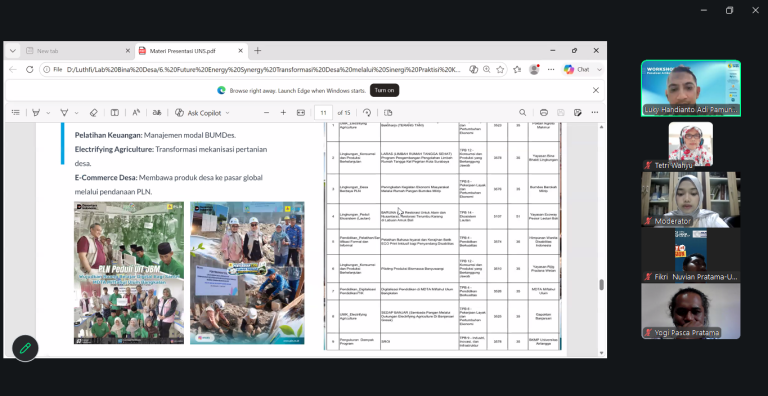
The FEB UNS Rural Development Laboratory was also recognized as a strategic hub for fostering rural community development through technical skills enhancement, financial literacy, and social responsibility initiatives. Collaboration with PLN practitioners is expected to expand the impact of community empowerment programs while preparing students to navigate the increasingly dynamic world of work.
Through this initiative, FEB UNS reaffirmed its commitment to strengthening collaboration among universities, industry, and local communities to support sustainable rural transformation. Such partnerships are expected to cultivate future leaders who possess not only economic expertise but also a strong understanding of national energy resilience and energy security.
This activity also supported the achievement of the Sustainable Development Goals (SDGs), particularly SDG 4 (Quality Education) through strengthening student competencies, SDG 7 (Affordable and Clean Energy) by promoting energy literacy and access, SDG 8 (Decent Work and Economic Growth) through rural economic empowerment, and SDG 17 (Partnerships for the Goals) by fostering collaboration between higher education institutions and industry.