

Turning Waste into Added Value: MESP UNS Students Learn Circular Economy Practices from a Village MSME
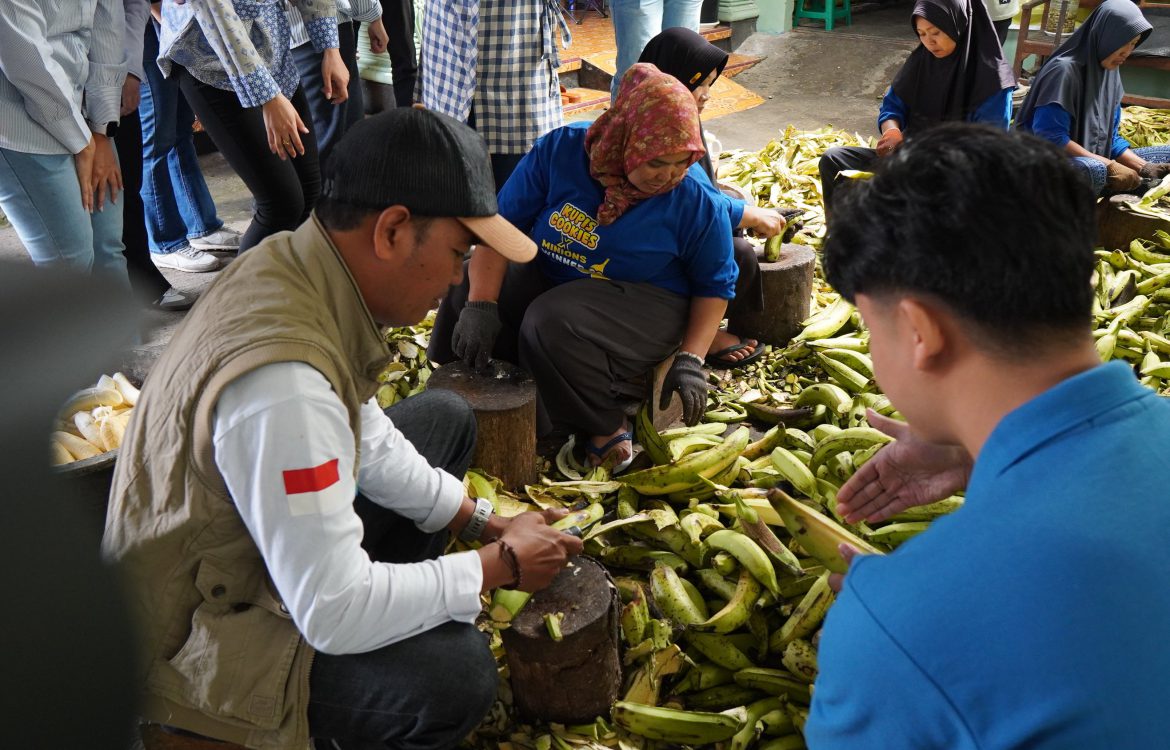
Master of Economics and Development Studies (MESP), Faculty of Economics and Business (FEB), Universitas Sebelas Maret (UNS), provided students with direct exposure to circular economy practices through an industrial visit to Minions Winner Sumber Echo in Berjo Village, Karanganyar Regency, on 16 June 2026. The group was welcomed by Rifal Afandi, the owner of the banana chip business and a graduate of the Development Economics Study Program at FEB UNS from the 2021 cohort, who has developed his enterprise based on sustainable resource utilization principles.
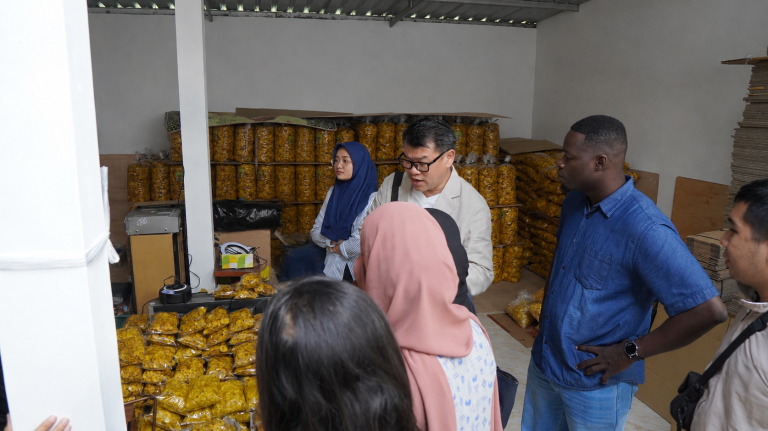 The visit was also attended by Assoc. Prof. Dr. Lin Woon Leong from Taylor’s University, Malaysia, who observed firsthand how circular economy principles are applied in community-based business activities. He described Minions Winner Sumber Echo as a hidden gem, demonstrating that rural MSMEs can create significant added value through circular economy practices.
“We may assume that they are simply producing food products, but in fact they are carrying out remarkable recycling processes using the available materials. This is particularly interesting because it is developed by an MSME in a rural area, yet it is capable of generating substantial value through the application of circular economy principles,” he stated.
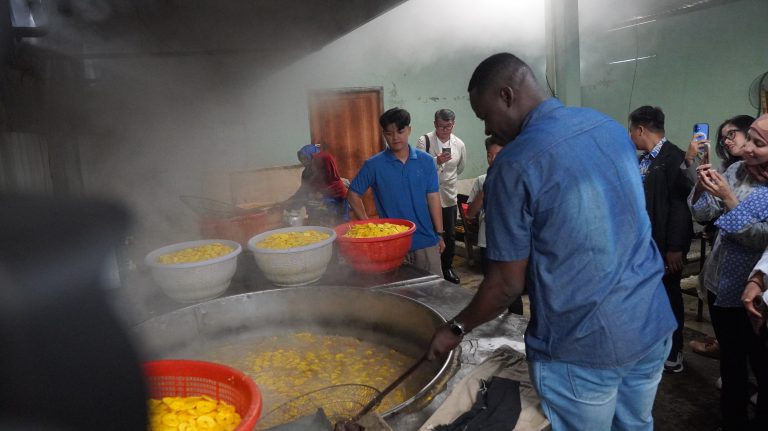 Prof. Lin identified three key circular economy practices implemented by the business: less waste, redesign, and value creation. Nearly every part of the banana is utilized, from the fruit to the peel, resulting in minimal waste generation. The production process relies on relatively simple methods rather than advanced technology, yet it successfully creates economic value for the surrounding community.
He also emphasized the importance of government support in ensuring the sustainability of MSMEs, noting that subsidies, appropriate regulations, and supportive policies are essential for businesses of this kind to continue growing.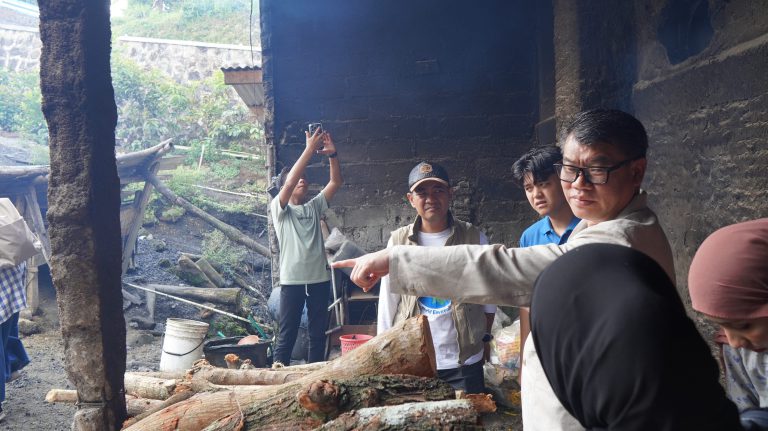
Regarding business development, Prof. Lin highlighted branding as a critical factor in strengthening competitiveness and long-term sustainability. According to him, simple technology can be adapted to local needs, but businesses still require a strong identity and brand to increase public recognition. Additionally, he highlights the importance of collaboration between universities and MSMEs. Universities can contribute through research and development, particularly in marketing, branding, and improving circular economy processes, while MSME actors implement these innovations in practice.
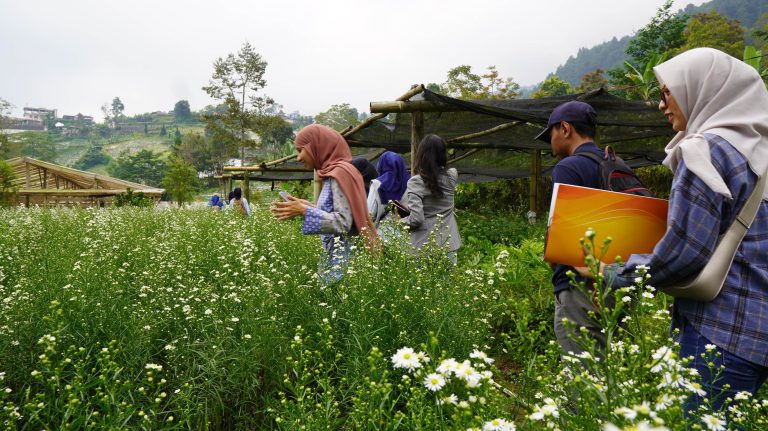 Meanwhile, Prof. Dr. Suryanto, S.E., M.Si., Head of the MESP Study Program, explained that the industrial visit was designed to provide students with practical experience in observing how circular economy concepts are implemented within the community.
“We want students to observe directly how the circular economy is applied in society. This visit shows that there is considerable potential that can be further developed and can serve as an example for students in applying circular economy concepts,” he explained.
The selection of Minions Winner Sumber Echo as the visit location was based on the values reflected in its production process. While bananas are commonly utilized only for their fruit, this enterprise also makes use of banana peels and other production by-products, resulting in almost no remaining waste.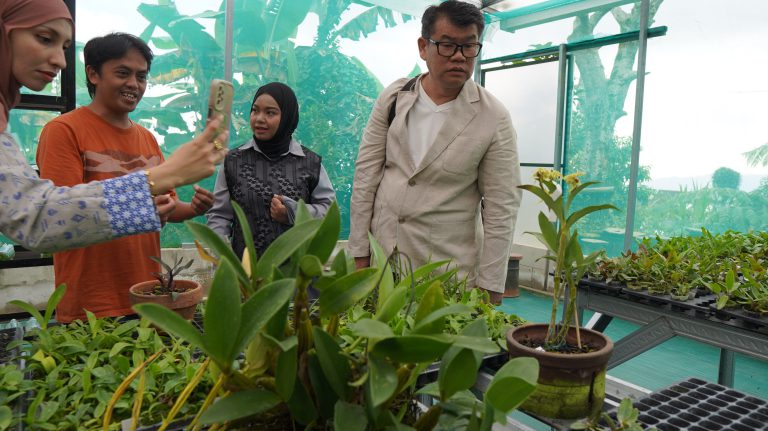
Prof. Suryanto expressed his hope that field-based learning experiences such as this would encourage students to develop creative ideas for theses and scientific publications that contribute to society. He also noted that the activity forms part of MESP UNS’s contribution to supporting the development of circular economy practices within local communities.
He further emphasized that circular economy development should continue to be strengthened through learning, research, and sustainable community engagement. University involvement in developing circular economy-based business models is expected to support community empowerment, create employment opportunities, and improve local productivity. The growth of similar community-oriented enterprises would generate broader benefits for public welfare.
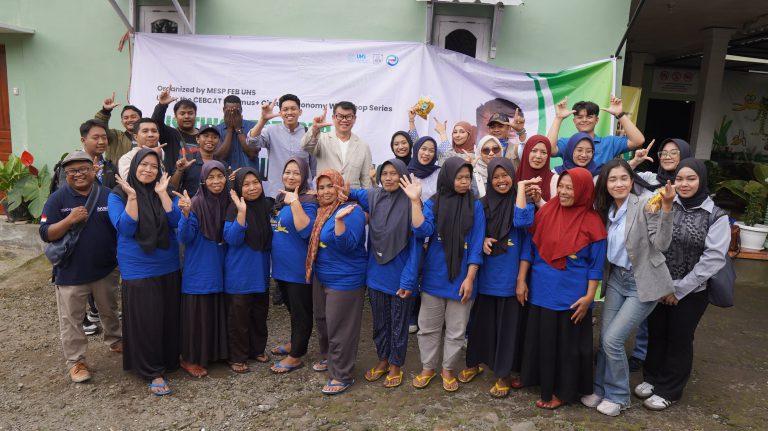 Through direct learning on sustainable resource utilization and strengthened collaboration between universities and MSMEs, this activity also contributes to the achievement of the Sustainable Development Goals (SDGs), particularly SDG 8 (Decent Work and Economic Growth), SDG 12 (Responsible Consumption and Production), and SDG 17 (Partnerships for the Goals).