

The Second Batch of Pre-Job Training: FEB UNS Strengthens Student Readiness for Emerging Workforce Trends
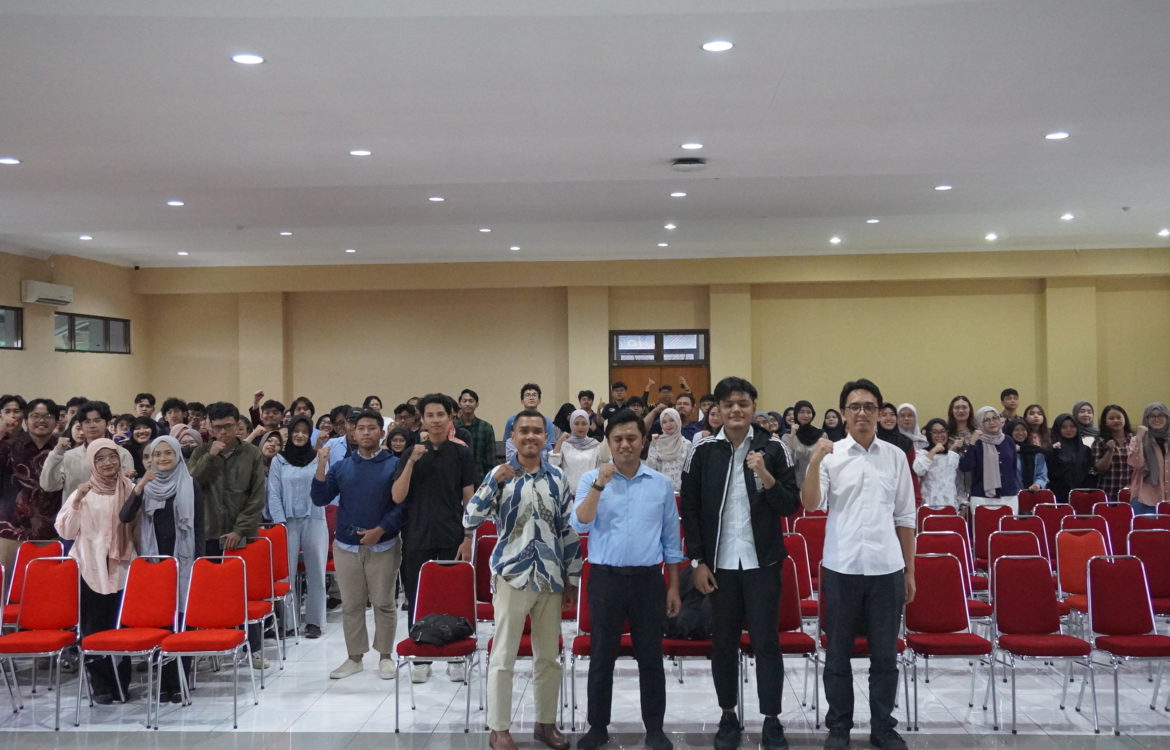
Faculty of Economics and Business (FEB), Universitas Sebelas Maret (UNS), continues its commitment to career development by organizing Pre-Job Training Batch 2, a program designed to reinforce students’ readiness for the dynamics and challenges of the modern job market. The event, attended by more than 200 students, takes place at the Soedarah Soepono Hall, FEB UNS, on Monday, 17 November 2025.
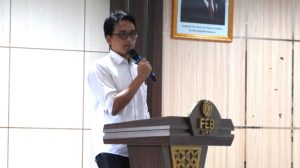 The session, which presents two FEB UNS alumni as speakers, is opened by Tastaftiyan Risfandy, S.E., M.Sc., Ph.D., Vice Dean for Student and Alumni Affairs FEB UNS. In his opening remarks, he emphasized that the program provides an important platform for students to understand any relevant competencies required in the current and future industry needs. “Students must be able to recognize the direction of industrial change, understand the competencies that you will need, prepare for it, and build the confidence needed to pursue their career paths,” he stated.
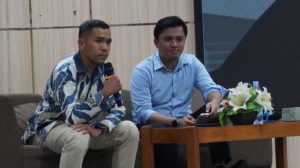 In the first session, Adhi Rohman Tri Widagdo, Senior Analyst II Financing at PT Pertamina Geothermal Energy Tbk., shares insights on financial competencies, business analysis, and the growing demand for human resources capable of adapting to developments in sustainable energy. Adhi highlights the changing landscape of the labor market shaped by digital transformation, automation and AI, and the transition toward sustainable and green industries. He emphasizes that graduates today must go beyond theoretical knowledge to develop critical thinking, problem-solving abilities, technological literacy, data proficiency, communication skills, and creativity.
Adhi also discusses the trivium approach—grammar, rhetoric, and logic—which he describes as an essential foundation of higher education, shaping students’ language proficiency, persuasive communication, and analytical reasoning. “The job market does not reward those who are simply the smartest, but those who are adaptive, ethical, and committed to continuous growth. Build relationships, learn from experience, and remain humble,” he advised.
 The next session is delivered by Syaiful Amri, Sub Branch Head KCPS Klaten, Bank BTN, who explains the development of the banking industry, particularly the housing finance sector. He outlines the strategic role of Bank BTN as a pioneer in the national housing market, having financed more than five million mortgage units, including 300 thousand Sharia-based mortgages.
Syaiful further discusses key employment issues, including the competency gap (vertical mismatch) between graduates and corporate needs, the high proportion of workers earning below regional minimum wage standards, and challenges in housing affordability due to rising property prices. He also encourages students to develop clear and purposeful career plans. “Self-awareness matters. You must know where you want to work, what contribution you want to make, the salary you expect, and what you can provide for your parents. Do not become a confused graduate,” he emphasized.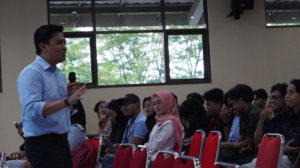
Syaiful encourages students to build networks, research prospective companies, and create step-by-step career target lists. He concludes his session with a reflective message:
“We each have our own timeline. Keep moving, stay humble, and be willing to learn. If you cannot be the solution, at least do not add to the burden. Your hard work today may be strengthened by your mother’s prayers.”
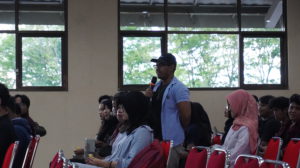 This 2nd Batch of Pre-Job Training serves as one of FEB UNS’s strategic initiatives to connect students with contemporary industry requirements. Through insights on emerging competency trends, sectoral developments, and mental preparedness, the program contributes to enhancing the competitiveness of FEB UNS graduates in the job market.
The initiative also aligns with FEB UNS’s contribution to sustainable development, particularly in advancing human resource competence, career literacy, and industry awareness relevant to the Sustainable Development Goals (SDGs), especially those concerning quality education, decent work, and sustainable economic growth.