


Strengthening Preparedness through Fire Mitigation Training and Disaster Response Simulation
Faculty of Economics and Business (FEB), Universitas Sebelas Maret (UNS), conducted a Training and Simulation for Fire Mitigation and Disaster Response on Wednesday, 31 December 2025, at the courtyard of the Bachtiar Effendi Building, FEB UNS. The activity was attended by the FEB UNS academic community, including Academic Support Staff and students.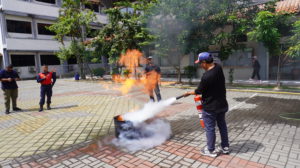
Mitigation refers to measures taken to reduce or control risks and adverse impacts arising from hazardous events, including fires. In the context of fire incidents and accidents, mitigation includes preventive and response actions such as the provision of safe evacuation routes, installation of smoke detection devices, training in the use of fire extinguishers (APAR), and understanding emergency procedures.
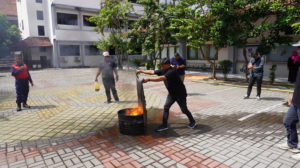 The Vice Dean for Non-Academic Affairs FEB UNS, Sutaryo, S.E., M.Si., Ph.D., Ak., CA., CRA., CRP., ACPA., stated that the activity formed part of the fulfilment of Occupational Health and Safety (K3) documentation, as well as a concrete application of risk management within the FEB UNS environment.
“This training and simulation serve as a preventive measure in anticipating potential disasters. While we do not expect such events to occur, we aim to ensure that FEB UNS is prepared in terms of human resources as well as supporting facilities and infrastructure,” he explained.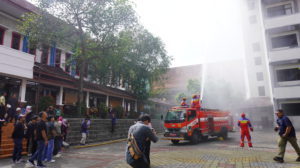
He also expressed appreciation for the strong participation and support of all attendees. According to him, creating a safe and disaster-responsive faculty environment is a shared responsibility of the entire academic community.
During the training, participants received instruction on fire prevention, basic fire suppression techniques, proper use of fire extinguishers, and emergency actions needed in the event of a fire. Instructors also explained methods of isolating fire from oxygen, including traditional techniques using burlap sacks, towels, or non-synthetic fabrics.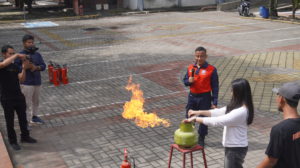
“If a small fire occurs, take a burlap sack, towel, or cloth nearby, soak it with water, and cover the fire. Pay attention to wind direction and position yourself opposite the fire. Once you move forward, do not hesitate or step back, as the fire may follow the movement of the cloth,” an instructor explained during the practical session.
Participants were also provided with guidance on handling household gas leaks, including avoiding switching electrical devices on or off to prevent sparks, opening doors and windows to allow air circulation, and removing the regulator before moving the gas cylinder outdoors until conditions are safe.
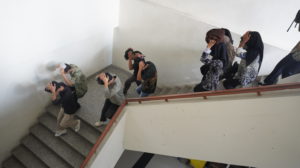
The instructor emphasized that maintaining calmness is the most critical response during a fire incident. “Fire accidents often escalate due to panic. The key is to remain calm, immediately contact the fire department, ensure personal and collective safety, and carry out initial fire suppression if possible using the techniques learned,” he stated.
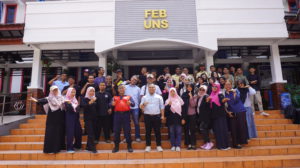
Through this activity, FEB UNS aims to improve literacy, awareness, and a risk-conscious culture within the faculty, while strengthening the preparedness of the academic community in responding to emergency situations in support of a safe and sustainable campus environment. The activity supports the achievement of the Sustainable Development Goals (SDGs), particularly SDG 3 (Good Health and Well-Being) and SDG 11 (Sustainable Cities and Communities), through enhanced safety measures and disaster preparedness within the campus environment.