

Strengthening Graduate Program Competitiveness, FEB UNS Discusses RPL Curriculum for MESP
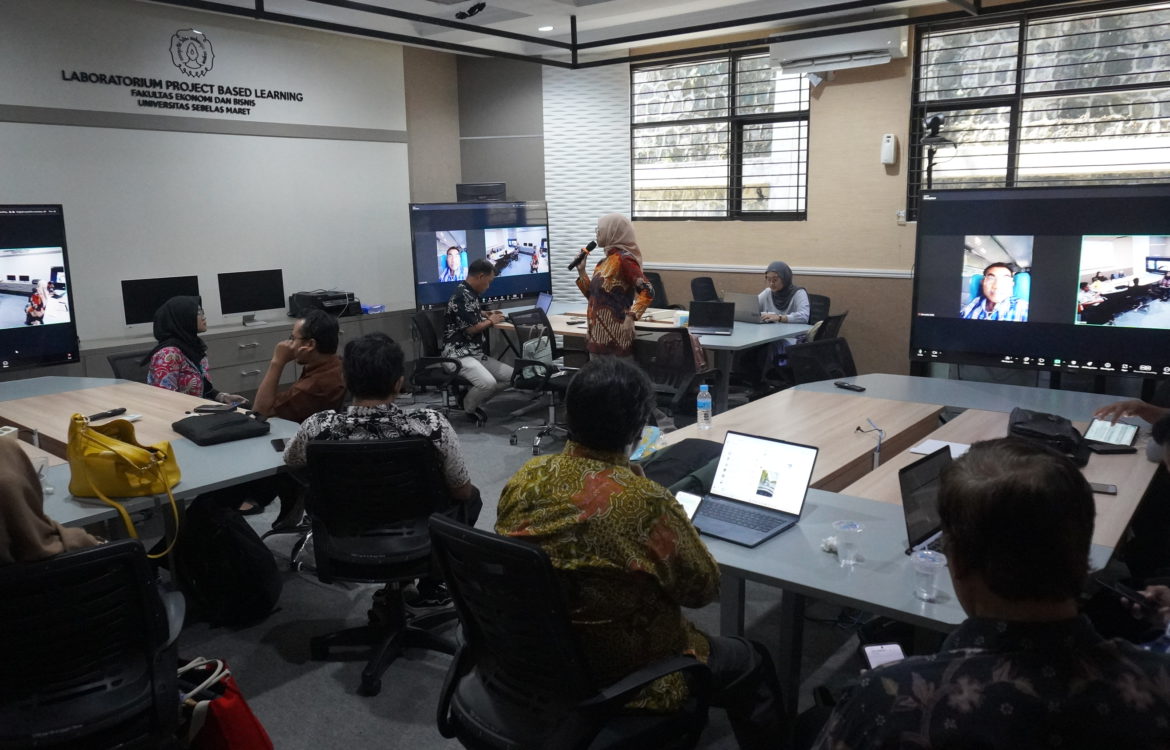
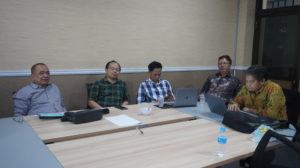
Faculty of Economics and Business (FEB), Universitas Sebelas Maret (UNS), held a Preliminary Discussion of the Recognition of Prior Learning (RPL) Curriculum for the Master’s Program in Economics and Development Studies (MESP) on Thursday, October 16, 2025, at the Project-Based Learning (PBL) Laboratory, Soedarah Soepono Building, FEB UNS.
The session was opened by Prof. Tri Mulyaningsih, S.E., M.Si., Ph.D., Vice Dean for Academic and Research Affairs of FEB UNS, and attended by Prof. Dr. Suryanto, S.E., M.Si., Head of the MESP Program; Prof. Dr. Sarwanto, S.Pd., M.Si., Head of the Institute for Educational Development and Quality Assurance (LPPMP) UNS, who were attending the session virtually, as well as lecturers of the MESP Program.
 In her remarks, Prof. Tri Mulyaningsih explained that the discussion marked an important step in facilitating the MESP Program’s preparation to launch its RPL track. She stated, “RPL is the acknowledgment of learning outcomes acquired through prior professional experience. FEB has gained experience in managing RPL at the undergraduate level, such as in the Accounting Study Program that admitted students from the Financial and Development Supervisory Board (BPKP). For the master’s level, we are designing an RPL model based on credit recognition through professional portfolios rather than mere credit transfers.”
She further explained that RPL offers extensive potential for collaboration with government agencies and professional institutions. Through RPL, study programs can attract practitioners with relevant experience, thereby not only increasing student enrollment but also enriching academic interaction in the classroom.
“The development of RPL should not only be viewed from an academic standpoint but also from the perspective of program efficiency. Some programs still face challenges in student enrollment. With RPL, we hope to enhance program attractiveness, expand collaborative networks, and make the curriculum more aligned with labor market needs,” she added.
Meanwhile, Prof. Dr. Suryanto, S.E., M.Si., Head of the MESP Program, noted that this discussion is part of the curriculum renewal effort to strengthen the competitiveness of the master’s programs within FEB UNS. He stated, “We are still lagging behind the Master of Management Program in terms of student admission. Therefore, in addition to the existing regular and fast-track programs, RPL provides an important alternative for prospective students who already possess professional experience and competencies.”
 He added that the RPL model in MESP will open opportunities for graduates from both Economics and non-Economics undergraduate programs with at least three years of work experience, particularly in planning, public policy, or regional economics. Through an assessment and portfolio-based mechanism, participants’ professional experiences will be recognized as part of their learning outcomes in accordance with academic standards.
The interactive discussion also received substantive input from LPPMP UNS regarding academic governance and administrative requirements for RPL, including registration criteria, credit recognition procedures, and portfolio verification processes.
 Through this curriculum draft discussion, the MESP Program is expected to open the RPL track in the even semester of the 2025/2026 academic year. The program aims to expand access to higher education for professionals while contributing to the enhancement of human resource capacity in economic planning and policy development.
This initiative aligns with FEB UNS’s commitment to supporting the Sustainable Development Goals (SDGs), particularly SDG 4 on Quality Education through inclusive learning access and recognition of non-formal education, and SDG 8 on Decent Work and Economic Growth through the advancement of professional capacity in public and development economics sectors.