

Prof. Evi Gravitiani and Prof. Tatien Masharabu Highlight Economic Valuation and Watershed Ecosystem Conservation
Prof. Evi Gravitiani from the Faculty of Economics and Business (FEB), Universitas Sebelas Maret (UNS), and Tatien Masharabu from the University of Burundi served as speakers in a Visiting Professor Program, which is part of the 2026 International Research Network–Equity Impact Ranking on Saturday, March 7, 2026. In the academic forum, both scholars discussed watershed ecosystem management from ecological and environmental economics perspectives as an effort to support sustainable natural resource management.
On that occasion, Prof. Evi Gravitiani, a FEB UNS faculty member, presented a topic titled “How Much is Nature Worth? Measuring WTP and WTA for Environmental Services.” In her presentation, Prof. Evi discussed economic approaches to valuing environmental services, particularly in the context of watershed management.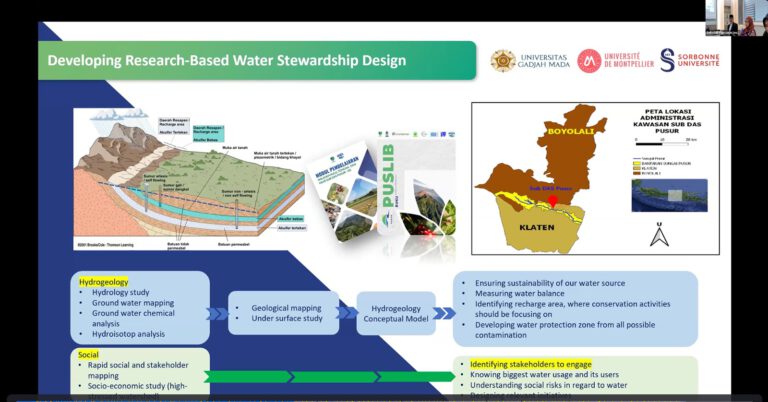
According to Prof. Evi, a conflict of interest exists between upstream and downstream watershed areas, which has driven the birth of the Payment for Environmental Services (PES) concept as a compensation mechanism for parties playing a role in preserving environmental sustainability. “Even so, many PES schemes fail due to the absence of fact-based empirical economic assessments,” Prof. Evi revealed.
In her research findings, Prof. Evi discovered a significant disparity between Willingness to Pay (WTP) and Willingness to Accept (WTA) within environmental service schemes. She also emphasized that market-based PES schemes still encounter various constraints in their implementation. Therefore, government support through policies, regulations, and subsidies serves as a vital factor in driving the successful implementation of such schemes.
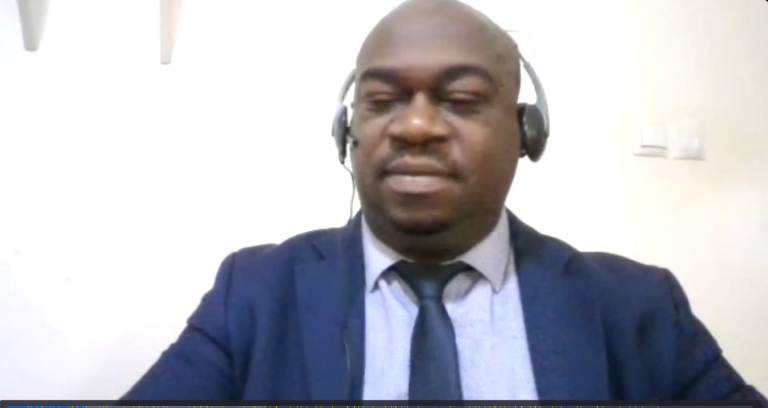 Additionally, the event featured international speaker Tatien Masharabu from the University of Burundi, who delivered a presentation titled “Understanding Watershed Ecosystem Services: Biodiversity and Ecological Function.” In his presentation, Prof. Masharabu explained the concept of a watershed as an interconnected system of water flows, soil, air, and various species that sustain ecosystem viability.
He also emphasized the importance of maintaining the ecological functions of watersheds, as entire communities live within these ecological systems and bear a collective responsibility toward environmental conservation efforts. This discussion is expected to enrich the understanding of the importance of integrating economic and ecological approaches in sustainable natural resource management while strengthening cross-border academic collaboration in the environmental field.
This initiative also supports the attainment of the Sustainable Development Goals (SDGs), particularly SDG Goal 6 (Clean Water and Sanitation) through the discussion of watershed management, SDG Goal 13 (Climate Action) through environmental conservation efforts, and SDG Goal 17 (Partnerships for the Goals) through international academic collaboration in environmental research development.