

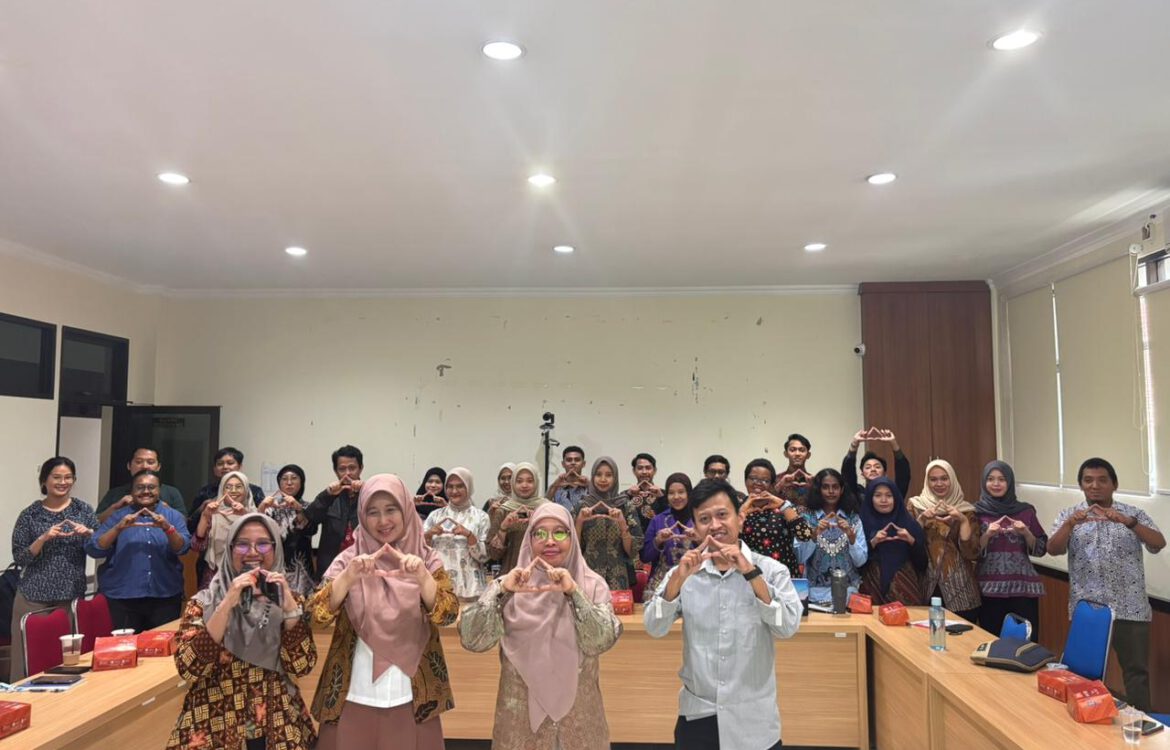
Preparing Future Accountants: Master of Accounting FEB UNS Holds New Student Orientation and Guest Lecture
Master of Accounting Study Program (MAKSI), Faculty of Economics and Business (FEB), Universitas Sebelas Maret (UNS) organized a New Student Orientation series combined with a Guest Lecture titled “Governance Professional” and an Alumni Sharing Session on Friday, 13 February 2026, at the Teleconference Room of FEB UNS. The event marked an important milestone for new students to understand the academic direction of the program while exploring strategic career opportunities at the international level.
The program was officially opened by the Head of the Master of Accounting Study Program, Lulus Kurniasih, S.E., M.S.Ak., Ph.D. In her remarks, she expressed appreciation for the new students’ decision to join the program and emphasized that the Maksi UNS curriculum is designed to develop accountants who are adaptive to global transformation and professional demands.
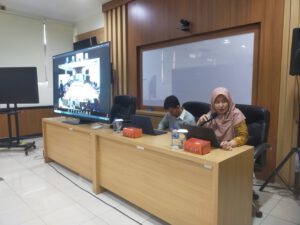
The main session featured an international expert, Dr. Nazratul Aina Mohamad Anwar from Universiti Sains Islam Malaysia (USIM). In her presentation, moderated by Muhammad Alif Nur Irvan, S.Ak., M.Acc., CPA. Dr. Nazratul elaborated on the evolution of the Corporate Secretary’s role into that of a Governance Professional. She explained that in the modern era, the responsibilities of accountants and governance professionals extend beyond legal compliance and have shifted toward becoming strategic partners to the board of directors in creating long-term organizational value.
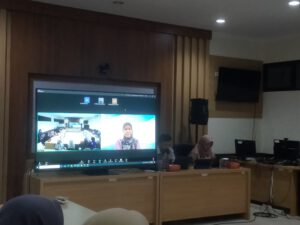
The alumni sharing session featured Antin Okfitasari, S.E., S.H., M.Si., Ak., CA., BKP., ASEAN CPA., as a practitioner who successfully manages a tax consulting and accounting services firm, Antin shared her multidisciplinary career journey, spanning accounting, law, and cross-sector professional engagement. “Love the accounting profession wholeheartedly. Deep understanding will cultivate strong competence and ethical professional practice,” Antin stated.
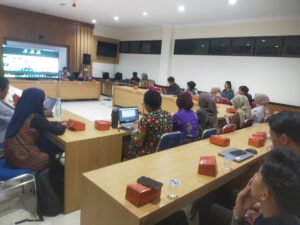
She further emphasized the importance of reskilling and leveraging technological advancements, including cyber law, to address professional challenges in both rural and urban contexts.
The panel discussion also highlighted the fact that the number of professional accountants in Indonesia remains significantly low relative to its total population. This condition presents a substantial opportunity for Master’s students in Accounting to fill the gap, particularly through professional certification and applied research aligned with industry needs.
Concluding the event, the program management outlined the academic direction of the Master of Accounting program, which includes: curriculum structure focusing on strengthening data analytics and governance; thesis requirements providing guidance for applied and innovative research; and academic facilities, including library resources and laboratories, to support students’ academic progress.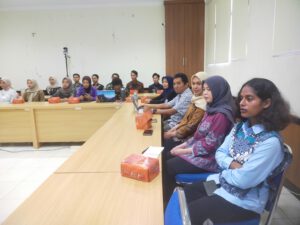
This initiative directly contributes to the achievement of the Sustainable Development Goals (SDGs), particularly SDG 4 (Quality Education) by ensuring higher accounting education aligned with global industry standards; SDG 8 (Decent Work and Economic Growth) by producing experts who reinforce national economic transparency; and SDG 16 (Peace, Justice, and Strong Institutions) by promoting ethical, accountable, and corruption-free organizational governance through the role of professional accountants.