

Inauguration of the Islamic Economics and Business Center Marks UNS’s Strategic Step in Building a Sharia Ecosystem
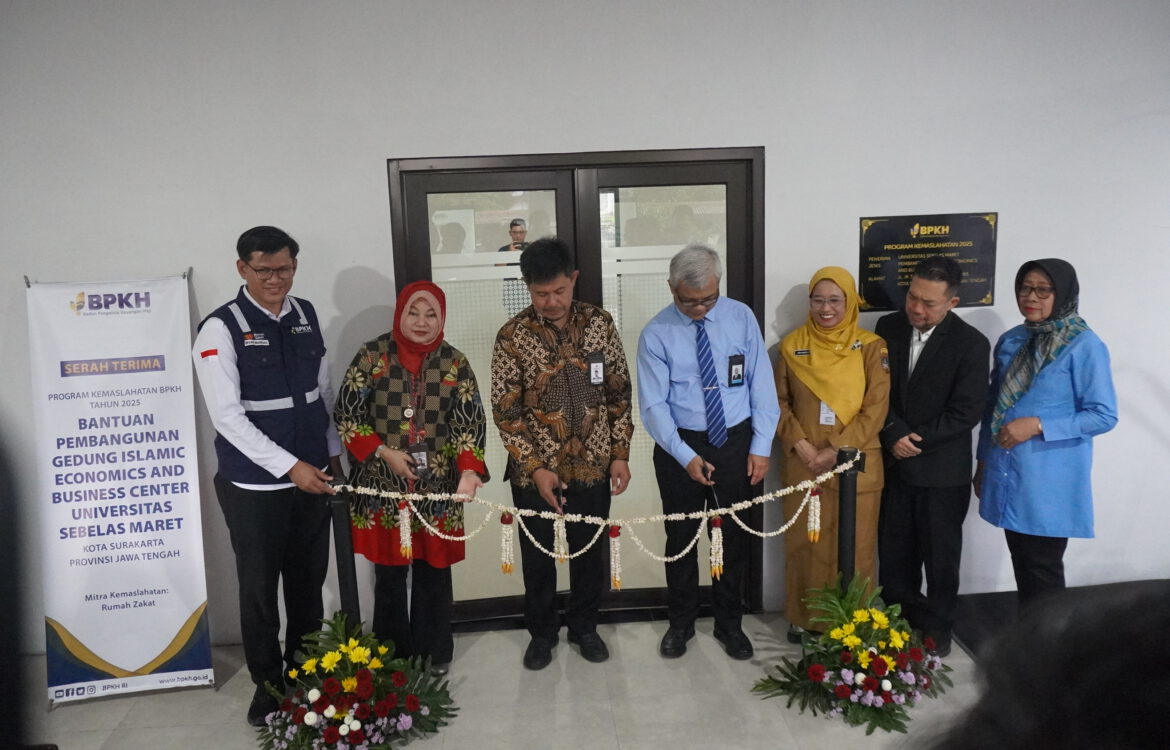
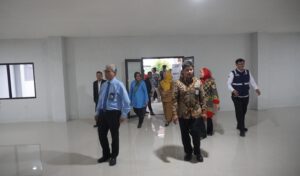
Universitas Sebelas Maret (UNS) Surakarta officially inaugurated the Islamic Economics and Business Center building within the Faculty of Economics and Business (FEB) on Tuesday (10/2/2026). The inauguration forms part of the 2025 Maslahah Program of Badan Pengelola Keuangan Haji (BPKH) and represents UNS’s commitment to strengthening Indonesia’s national sharia economic ecosystem.
The Rector of UNS, Prof. Dr. Hartono, dr., M.Si., expressed appreciation and gratitude to BPKH for its support through the Maslahah Program, which enabled the construction of the building. He explained that development began in July 2025 and the facility is now ready to support academic activities and scholarly advancement.
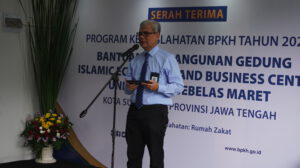
According to Prof. Hartono, the establishment of the Islamic Economics and Business Center reflects a shared vision and collaborative spirit in shaping an inclusive, just, and sustainable sharia economic future. He emphasized that Indonesia, as the country with the world’s largest Muslim population, holds significant potential in advancing Islamic finance and the halal industry. However, this potential must be reinforced through the development of human capital, research capacity, and a sustainable ecosystem.
He further noted that the Center aligns with UNS’s DREAMTEAM strategy, particularly the “Active” value, which underscores the importance of strategic collaboration with stakeholders—including government institutions, industry, philanthropic organizations, and civil society.
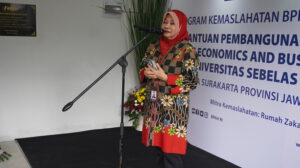
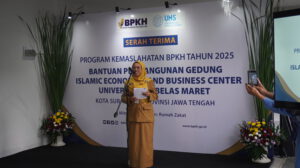
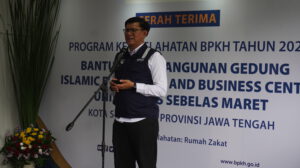
He further highlighted that Universities as higher education institutions not only serves as centers of knowledge development but also as solution-driven institutions that generate tangible societal impact. The new building is therefore envisioned as a center of excellence for implementing the Tridharma of Higher Education—education, research, and community service—with a focus on sharia-based economics and business that promotes public benefit (kemaslahatan umat).
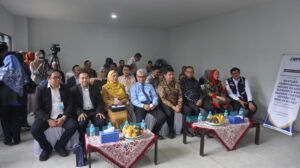
The Islamic Economics and Business Center is projected to become a hub for innovative ideas, applied research, and cross-sector synergy in advancing Islamic economics at local, national, and global levels. UNS aspires for the Center to produce graduates who are not only academically accomplished but also uphold integrity, ethical values, and social responsibility.
On this particular occasion, Prof. Hartono extended his appreciation to FEB UNS and all parties involved in preparing sustainable management of the facility. UNS also signaled its openness to collaboration with regional governments, Islamic financial institutions, zakat and waqf organizations, industry actors, and international partners.
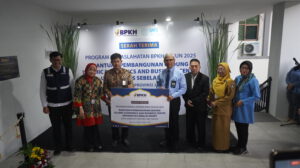
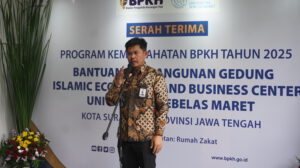
Meanwhile, Dr. Mulyadi, S.E., M.M., M.Si., Member of the Supervisory Board of BPKH, explained that the Dana Abadi Umat (Endowment Fund for the Muslim Community) managed by BPKH carries a maslahah function, including support for the education sector. This principle underpins BPKH’s involvement in funding the Islamic Economics and Business Center at UNS.
He welcomed UNS’s initiative not only to utilize the new facility but also to plan the opening of new academic programs in Islamic economics and finance. According to him, this step aligns with BPKH’s mandate to manage Hajj funds in a transparent, accountable, and sharia-compliant manner.
Through this collaboration, BPKH expects a continuous partnership development with UNS, particularly in education and strengthening literacy in Islamic economics and finance. The establishment of new academic programs also opens opportunities for further initiatives such as Hajj financial literacy outreach, seminars, and broader public engagement.
In implementing its Maslahah Program, BPKH collaborates with partner organizations, including Rumah Zakat. BPKH has supported the development of educational facilities across Indonesia—from Sabang to Merauke—including Islamic boarding schools and other educational institutions. The appointment of UNS as a strategic partner reflects its growing institutional capacity, demonstrated societal contributions, and strong potential to become a national center for Islamic economics and finance education.