

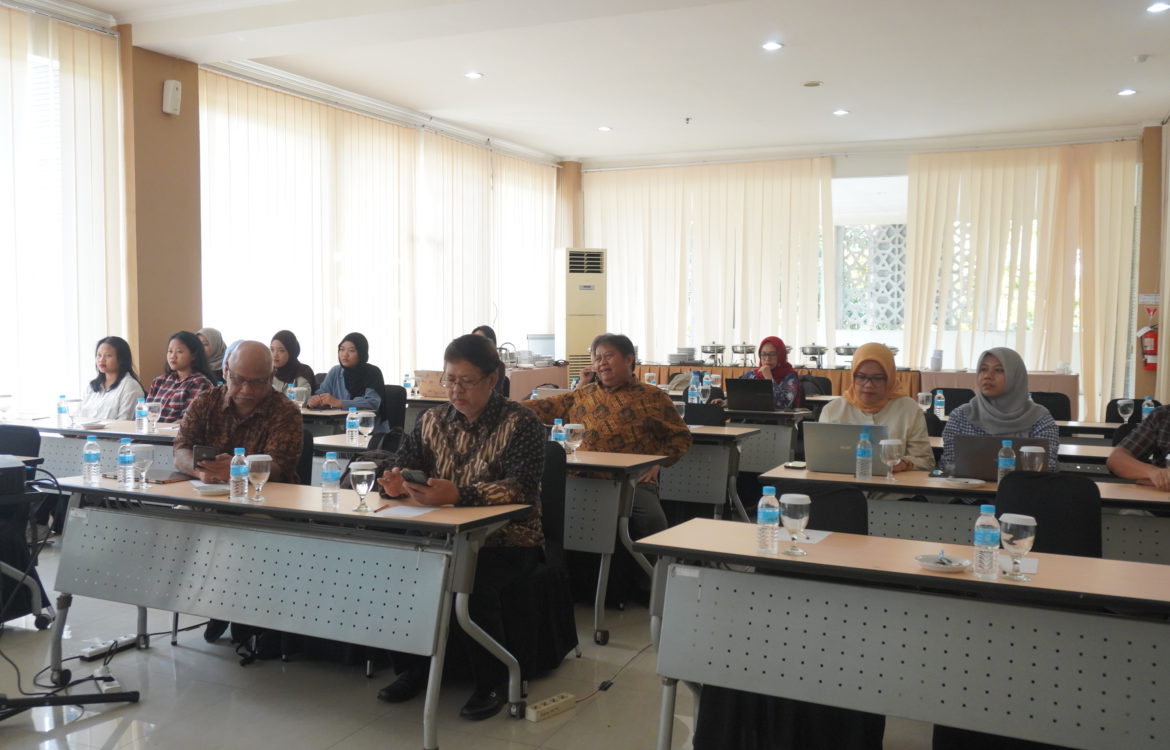
Fiscal Corner FEB UNS and Ministry of Finance Hold Workshop on Enrichment of Development Planning and Budgeting Module
The Fiscal Corner of the Faculty of Economics and Business (FEB), Universitas Sebelas Maret (UNS), in collaboration with the Ministry of Finance of the Republic of Indonesia, organized a Workshop on Enrichment of Learning Materials for the Development Planning and Budgeting (PPP) Module on Wednesday, October 15, 2025, at UNS Inn. This agenda is part of the ongoing implementation of a strategic partnership between FEB UNS and the Ministry of Finance aimed at strengthening the curriculum and fiscal learning development.
 The workshop opened with remarks from Prof. Bhimo Rizky Samudro, S.E., M.Si., Ph.D., Dean of FEB UNS, who emphasized the importance of developing adaptive and contextual curricula that respond to the dynamics of public policy. “One crucial point is how we develop an adaptive curriculum, where the learning process is directed toward case-based and project-based learning. This material is designed not only for postgraduate courses but also for undergraduate levels and is relevant to all study programs at FEB—Development Economics, Accounting, and Management,” stated Prof. Bhimo.
Prof. Bhimo further expressed that the collaboration with the Ministry of Finance has become a key asset for FEB UNS, particularly through the Fiscal Corner initiatives that have been active since 2024. “We have built a strong collaboration with the Ministry of Finance through various activities and policy research projects. Currently, we are also participating in the Financial Research initiative initiated by the Ministry of Finance as a follow-up to our ongoing partnership,” he added.
 The workshop continued with a presentation by Dr. Mulyanto, M.E., Head of Fiscal Corner FEB UNS, who introduced the draft of the Development Planning and Budgeting module.
Designed based on the Outcome-Based Education (OBE) approach, the module consists of 12 chapters. These chapters are divided into two main sections, namely, planning and budgeting, which cover national, regional, and village levels. The learning framework combines theoretical understanding and practical application through document preparation simulations, fiscal analysis, and data-driven public policy recommendations.
The following session featured a presentation by Noor Cholis Madjid, S.E., M.Si., Senior Instructor at the Center for Training in Budget and Treasury, Financial Education and Training Agency (BPPK) of the Ministry of Finance, who discussed the reinforcement of concepts in national planning and budgeting. He emphasized the need for stronger integration between development planning and fiscal policy through the Medium-Term Expenditure Framework (MTEF) and Performance-Based Budgeting (PBB) approaches.
 Further, Risky Sulistyanto, S.E., M.M., Head of the Finance Division of the Secretariat General of the Ministry of Finance, delivered a presentation on the practical implementation of development planning and budgeting across ministries and agencies. He shared insights on budget formulation, fiscal supervision, and financial policy innovations within the Ministry of Finance.
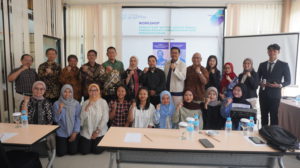
The event, moderated by Adib Barliyin Abdurrahim and Titin Dwi Aryanti, proceeded interactively with active participation from lecturers, curriculum developers, and postgraduate students of FEB UNS. Participants engaged in discussions and provided constructive feedback on the integration of project-based fiscal and budgeting learning in the classroom.
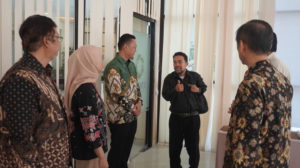 Through this workshop, FEB UNS continues to strengthen its academic collaboration with the Ministry of Finance in developing a curriculum that is contextual, applicable, and oriented toward enhancing students’ competencies in public planning and budgeting.
The Workshop on Enrichment of Learning Materials for the Development Planning and Budgeting Module also supports the achievement of the Sustainable Development Goals (SDGs), particularly Goal 4 (Quality Education)—by improving curriculum quality and practice-based learning methods—and Goal 17 (Partnerships for the Goals)—by reinforcing collaboration between FEB UNS and the Ministry of Finance in promoting transparent and sustainable fiscal governance.