

FEB UNS Team Assists STIE Atma Bhakti in Enhancing Journal Quality and Accreditation through OJS Training
Community engagement team from the Faculty of Economics and Business (FEB), Universitas Sebelas Maret (UNS), conducted a training and mentoring program on the use of Open Journal Systems (OJS) to improve the quality and accreditation ranking of scientific journals managed by Sekolah Tinggi Ilmu Ekonomi (STIE) Atma Bhakti Surakarta. The program was conducted under the Research Group Grant for Community Engagement (PKM HGR-UNS) scheme, led by Dr. Eko Arief Sudaryono.
The initiative was motivated by several challenges identified in the partner institution’s journal management practices. Preliminary analysis revealed issues in article editing processes, inconsistencies in publication schedules, and a predominance of authors and editors from within the institution. These conditions have contributed to the journal’s relatively low national accreditation ranking.
Additionally, online journal management system is yet to be fully optimized. In fact, electronic systems such as Open Journal Systems enable integrated, transparent, and more efficient workflows covering manuscript submission, editorial processing, peer review, and publication. Proper implementation also supports greater visibility and academic impact of published articles.
To address these challenges, the community engagement team provided technical training on OJS operation, developed article writing guidelines, and supplied standardized templates to ensure consistency in manuscript formatting. The program also included mentoring in building networks with external editors and peer reviewers to strengthen the quality of the review process.
The implementation was carried out in three main stages. The first stage involved an initial assessment of the journal’s condition to identify development needs related to features and governance improvements. The second stage consisted of hands-on training on article editing workflows and journal website management. The third stage focused on monitoring and mentoring to ensure that all materials and improvements were effectively adopted by the journal management team.
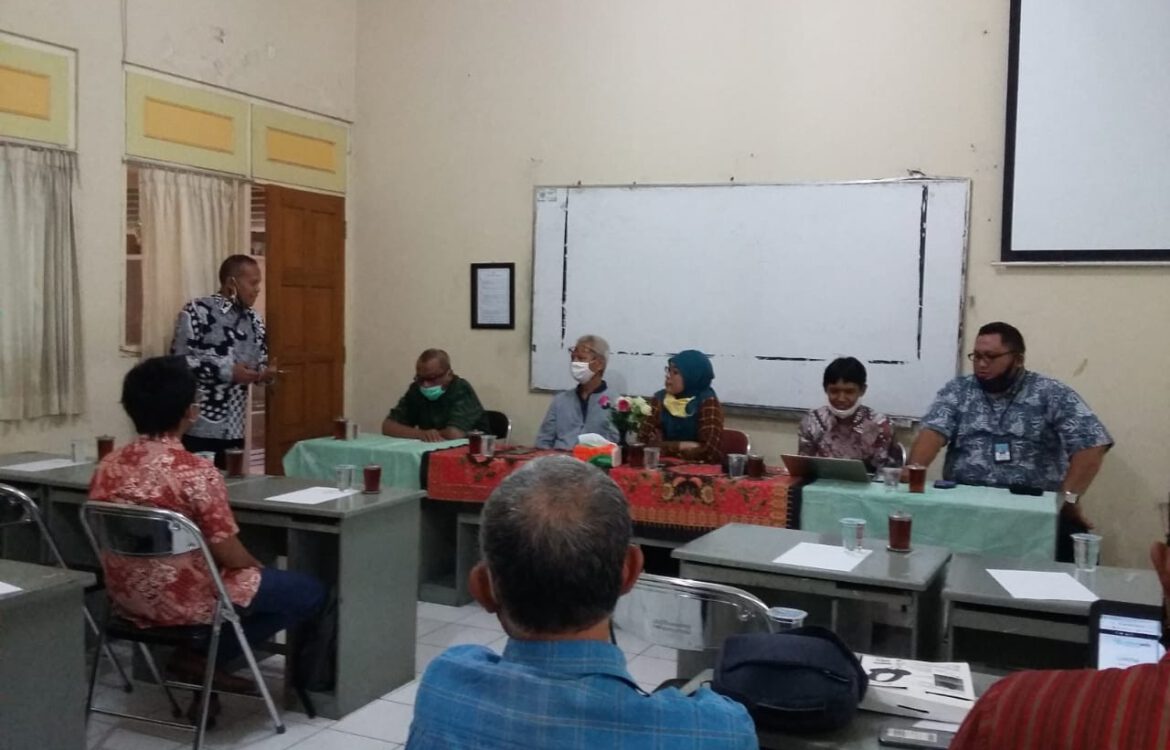
The training, conducted onsite at STIE Atma Bhakti, was attended by journal editors and administrative staff. The sessions emphasized compliance with national journal accreditation standards, including the completeness of information on the journal website, the substantive quality of articles, consistency in reference formatting, and the involvement of qualified external reviewers. The evaluation identified several areas requiring improvement, such as the absence of a journal synopsis on the homepage, the lack of links to editors’ academic profiles, and research methodology sections that were not yet systematically structured.
Moving forward, the team recommended sustained support from the institution’s leadership, the addition of competent human resources in information technology, and the expansion of external collaboration networks to enhance the journal’s quality and competitiveness. Through strengthened governance and improved scholarly substance, the partner journal is expected to broaden its publication reach and achieve a higher national accreditation ranking.
This community engagement initiative aligns with higher education institutions’ commitment to supporting the achievement of the Sustainable Development Goals (SDGs), particularly SDG 4 (Quality Education) through the enhancement of scientific publication quality and academic governance, as well as SDG 17 (Partnerships for the Goals) through inter-institutional collaboration to strengthen higher education capacity.