

FEB UNS Expands Research Network by Engaging Malaysian Academics
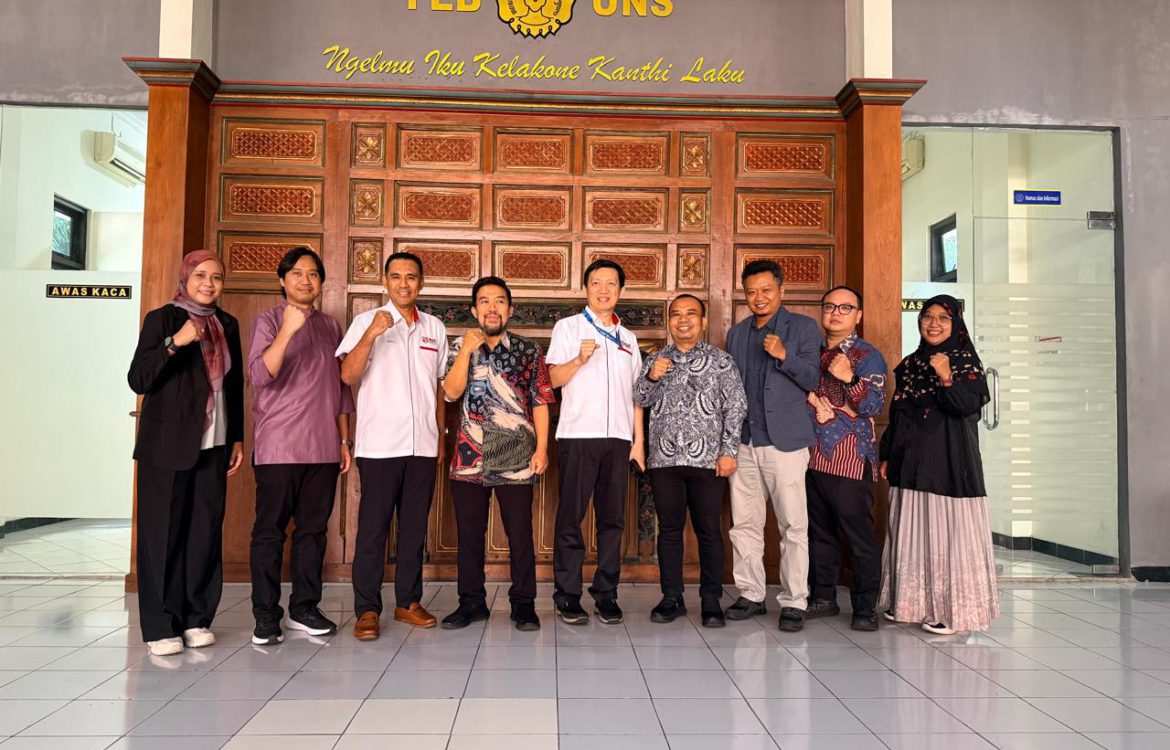
Faculty of Economics and Business (FEB), Universitas Sebelas Maret (UNS), welcomed four academics from leading Malaysian universities as part of its effort to strengthen research collaboration and broaden international academic engagement on Friday, 31 October 2025. The visiting scholars are Prof. Law Siong Hook (School of Business and Economics, Universiti Putra Malaysia), Prof. Mohamad Fazli Sabri (Faculty of Human Ecology, Universiti Putra Malaysia), Dr. Fakarudin Bin Kamarudin (School of Business and Economics, Universiti Putra Malaysia), and Dr. Nazratul Aina binti Mohd Anwar (Universiti Sains Islam Malaysia).
 The delegation was welcomed by the Dean of FEB UNS, Prof. Bhimo Rizky Samudro, alongside with the Vice Dean for Non-Academic Affairs, Sutaryo, Ph.D., Head of the Center for Fintech and Banking, Putra Pamungkas, Ph.D., Arum Setyowati, Ph.D., and Linggar Ikhsan Nugroho, M.Ec.Dev.
Speaking to feb.uns.ac.id, Prof. Bhimo stated that FEB UNS has maintained long-standing academic network with some of the visiting scholars through joint research, student advisory activities, and academic exchange among faculty members. “We have a numerous collaborations with several colleagues from Malaysia for a considerable period, particularly through the Center for Fintech and Banking UNS. Some of them are acting as external supervisors for FEB UNS master’s and doctoral students. This meeting serves to consolidate existing networks and formalize ongoing cooperation,” he explained.
He further noted that Universiti Putra Malaysia (UPM) is accredited by AACSB in the field of business. UPM was the first institution in Malaysia to receive the accreditation for its Faculty of Economics and Management (now School of Economics and Business), marking an important momentum for FEB UNS, which is currently preparing its Eligibility Application as an initial step toward the accreditation.
 In the AACSB preparation process, FEB UNS requires international partners who can provide feedback, informal advisory support, and document review. The presence of UPM scholars, who have frequently engaged with FEB UNS, creates opportunities for such support. “They have visited FEB UNS multiple times and have been involved in numerous joint researches with our faculty. Informally, we receive valuable input for the preparation of AACSB documents, including the review of processes,” Prof. Bhimo added.
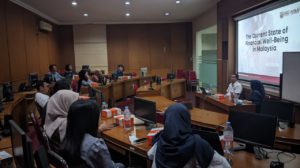
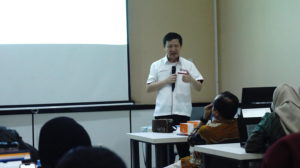
Aside from the formal meeting, the Malaysian academics delivered public lectures and workshops that received strong interest from students and faculty members. Intensive discussions took place, particularly in master’s and doctoral classes, where research methodology became the main point of exchange.
“Students were highly engaged, resulting in constructive discussions that open new avenues for collaborative research. Our colleagues from Malaysia also seek opportunities for joint publications, and Indonesia provides a highly collaborative environment,” he said.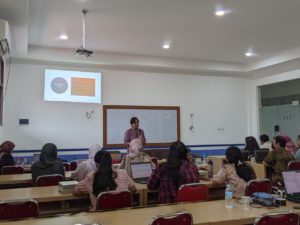
In the coming weeks, FEB UNS will continue its preparation for AACSB documentation. The team aims to finalize the required documents by mid-November, followed by an internal review process before resubmission in April. Furthermore, research collaborations that have previously been conducted through personal networks will begin to be formalized within the institutional database to ensure that all academic partnerships are well-documented and contribute to accreditation processes and faculty development.
This engagement reaffirms FEB UNS’s commitment to expanding its international research network, enhancing academic quality, and advancing cross-country collaboration. The initiative also supports the Sustainable Development Goals (SDGs), particularly Quality Education (SDG 4) and Partnerships for the Goals (SDG 17).