

FEB UNS Conducts Curriculum Review Workshop for Master’s and Doctoral Programs
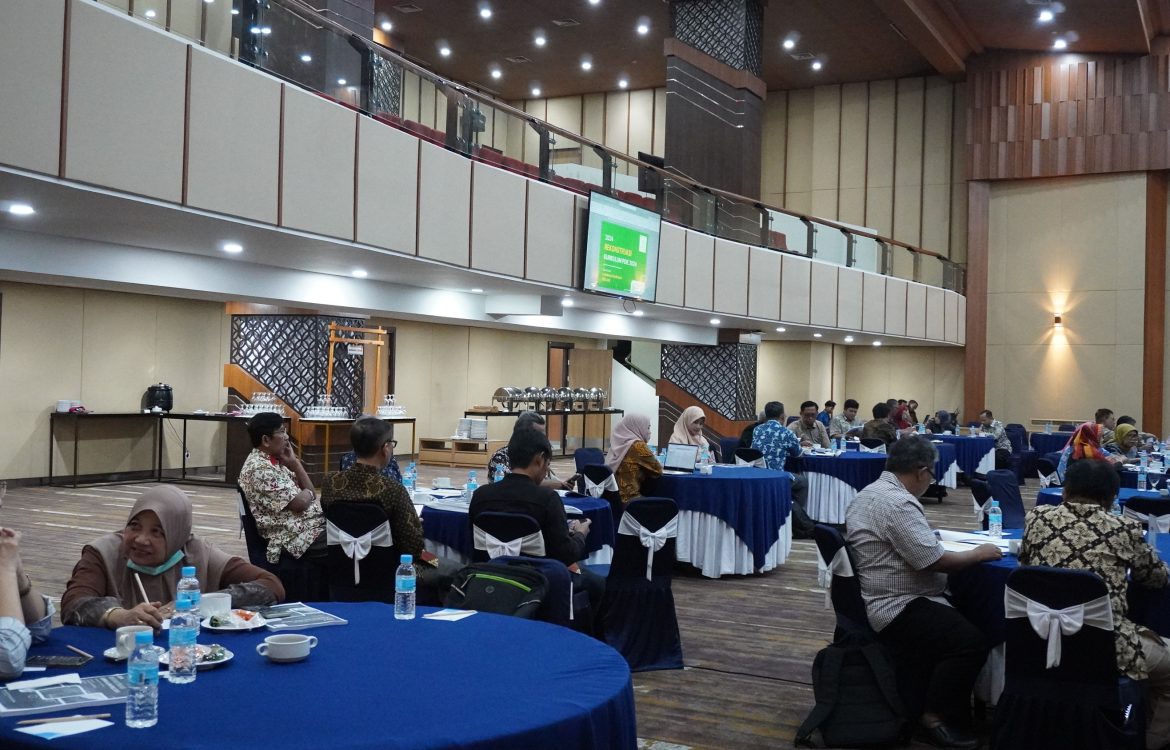
The Academic Affairs Division of the Faculty of Economics and Business (FEB), Universitas Sebelas Maret (UNS), held a Curriculum Review Workshop for Master’s and Doctoral Programs on 19–20 December 2024 at the Ki Hadjar Dewantara Tower, UNS. The workshop, attended by all faculty members teaching in the Master’s (S-2) and Doctoral (S-3) programs, was officially opened by the Dean of FEB UNS, Bhimo Rizky Samudro, S.E., M.Si., Ph.D.
 In his opening remarks, Dr. Samudro expressed his appreciation to the program coordinators and teaching faculty for their commitment to participating in the curriculum development process. He emphasized the importance of this initiative in aligning academic programs with recent regulatory changes and improving academic management processes.
 Prior to this workshop, a preparatory session was held involving the program managers of the Master’s and Doctoral programs. The session focused on discussing key points from two regulatory documents: the Ministerial Regulation of the Ministry of Education, Culture, Research, and Technology (Permendikbudristek) No. 53 of 2023 on Quality Assurance in Higher Education, and UNS Rector’s Regulation No. 22 of 2024 concerning the management and implementation of Master’s and Doctoral programs at the university.
 Several critical issues were addressed during the workshop discussions. These included adjustments in the number of credit units (SKS) to align with the updated curriculum structure, reassignment of faculty members who have recently completed their studies, and improvements in academic management—particularly in the administration of examinations.
Prof. Tri Mulyaningsih, S.E., M.Si., Ph.D., Vice Dean for Academic and Research Affairs at FEB, emphasized that the workshop was designed to support academic programs in revising their curricula in response to the new ministerial and university-level regulations. She noted that both Master’s and Doctoral programs must revise their curricula accordingly.
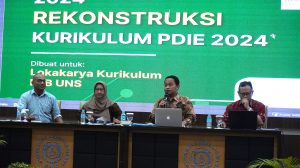 “One major change involves the adjustment of credit loads. Under the new guidelines, the Master’s program requires 54 to 60 credit units, while the Doctoral program must comprise a minimum of 60 credits,” Prof. Mulyaningsih explained.
According to her, UNS has already provided guidelines on how these changes can be incorporated—such as simplifying but increasing the credit weight of key components like thesis and dissertation stages. Additionally, if deemed necessary, programs are encouraged to recalibrate the content and direction of their course offerings to increase their relevance and attract more students.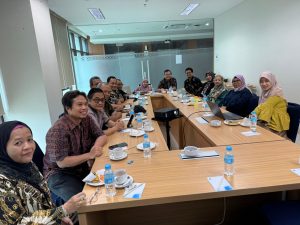
“This curriculum shift should aim for greater precision and relevance in response to societal developments,” she added.
Importantly, these curriculum changes are not intended to increase the academic burden or extend the study period for students, but rather to sharpen the academic focus of the programs.
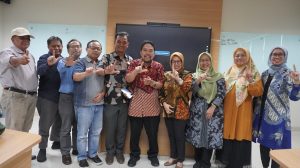 The updated curriculum will apply to new students admitted in 2025 (starting February intake), while current students will continue under the existing curriculum. A transitional mechanism will be implemented to ensure that the process runs smoothly, particularly for students nearing the end of their programs.
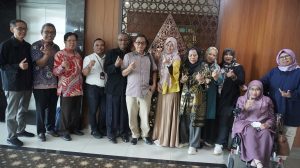 Regarding publication requirements, the standards remain unchanged: Master’s students are required to publish in SINTA-3 or higher-ranked national journals or international journals, while Doctoral students must publish in Scopus-indexed international journals as a prerequisite for thesis defense.
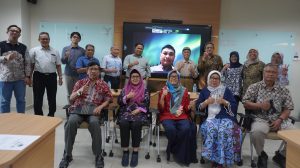 Prof. Mulyaningsih views Permendikbudristek No. 53/2023 as a valuable opportunity for academic programs to comprehensively review and update their curricula. “This is a timely moment for programs and the faculty to revitalize the curriculum to ensure that it remains responsive and aligned with the demands of the evolving academic and professional landscape,” she concluded.