

Academic and Industry Collaboration Marks the FutureFin Event at FEB UNS
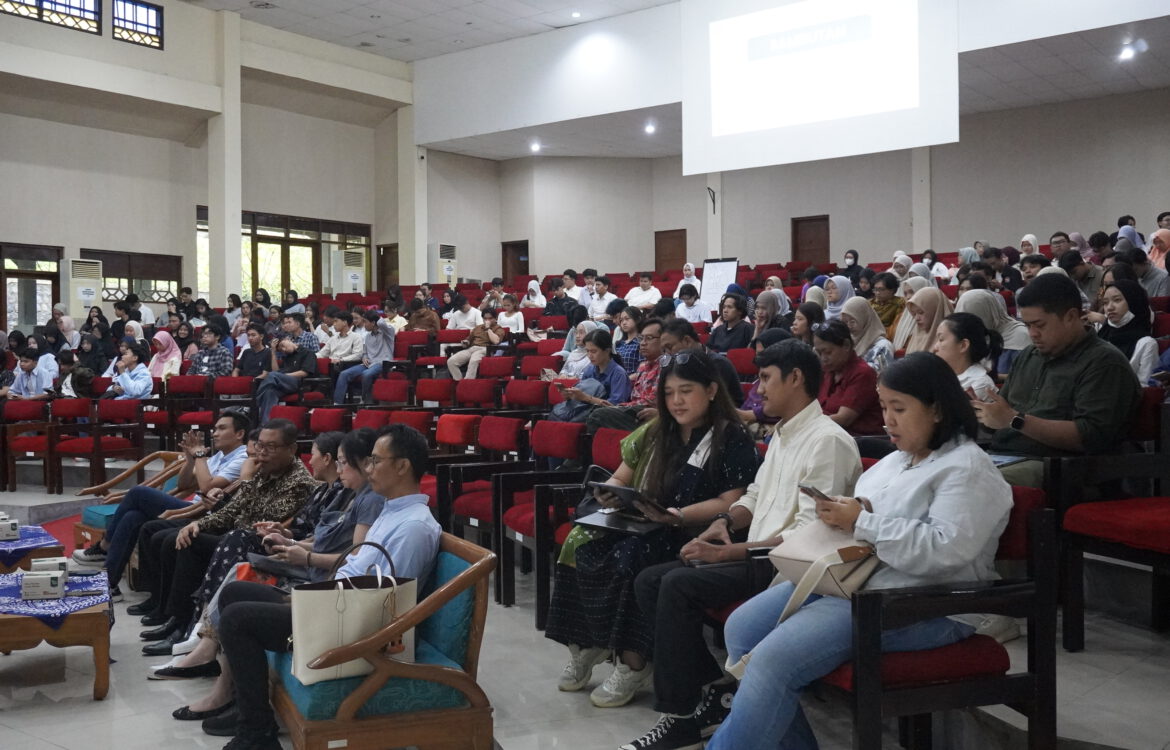
Faculty of Economics and Business (FEB), Universitas Sebelas Maret (UNS), hosted the “FutureFin” as part of the “Tech for Indonesia” initiative at the Suhardi Building Hall of FEB UNS on Tuesday, 3 March 2026. Taking on the theme of “Exploring Digital Lending Through Data, Ethics and Critical Thinking,” the event brought together representatives from academia, industry, and regulators to strengthen digital financial literacy and inclusion among students.
The Dean of FEB UNS, Prof. Bhimo Rizky Samudro, S.E., M.Si., Ph.D., highlights the significance of the FutureFin Talk for students, particularly those enrolled in the Digital Business study program, as it provides an opportunity to learn directly from practitioners and stakeholders in the financial technology sector. “Students should not be confined solely to lessons and theories in the classroom. The campus must also be integrated with developments beyond its walls, including those in the industrial world,” he stated.
 He further noted that UNS is currently placing emphasis on integrating academic activities with the Sustainable Development Goals (SDGs) agenda, particularly SDG 4: Quality Education, and expressed the hope that events such as this would provide students with new insights and perspectives from competent speakers.
The Head of the Surakarta Branch for the Financial Services Authority (OJK), Eko Hariyanto, extended appreciation to FEB UNS for its commitment to supporting the enhancement of financial literacy and inclusion through the organization of educational activities for students. OJK also acknowledged the contribution of fintech company AdaKami in participating in financial literacy and inclusion programs in Indonesia by engaging students as participants in this event.
On the other hand, the Head of Digital Business Study Program, Aldy Fariz Achsanta, S.E., M.Rech., Ph.D., conveyed that the event serves as a space for students to sharpen and update their knowledge of financial technology, both conceptually and in terms of the practical challenges that arise in its implementation. He noted that participants received perspectives from two speakers representing distinct viewpoints, from the industry and academics, enabling students to develop a more comprehensive understanding of fintech developments.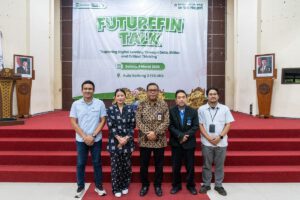
“This event is fundamentally part of a remarkable synergy between the academic world and the industrial world. It is hoped that going forward, this collaboration will involve an even broader range of stakeholders, from the business sector and regulators to the wider community,” he remarked.
He further mentioned that such collaboration is essential to advancing responsible and sustainable financial inclusion, and encouraged students to engage attentively with the material in order to gain direct insight into how the fintech industry operates in practice.
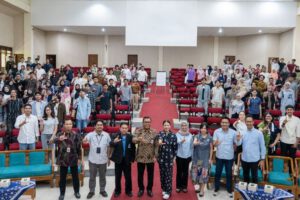 Through the FutureFin event, students are expected to acquire not only theoretical understanding but also a meaningful discussion experience that offers a tangible perspective on industry practice.