

FEB UNS Organizes Export-Import Training for Beginners, Equipping Students with International Trade Skills
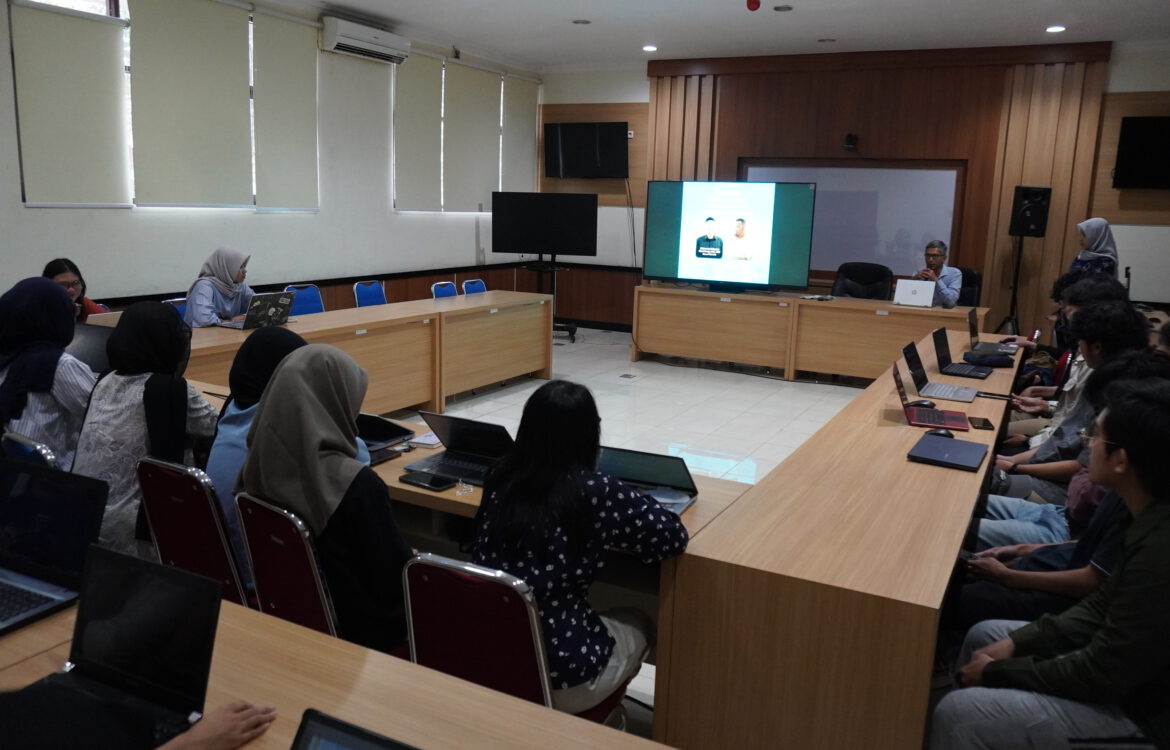
The Export-Import Laboratory (EXIM), Faculty of Economics and Business (FEB), Universitas Sebelas Maret (UNS), organized the First Batch of Export-Import Training for Beginners (Batch 1) at the Teleconference Laboratory, Soedarah Soepomo Building, FEB UNS, on Tuesday, 3 March 2026. The training was attended by FEB UNS students and featured speakers drawn from both academic and export practitioner backgrounds.
 In his opening remarks, the Head of the Export-Import Laboratory FEB UNS, Arif Rahman Hakim, S.E., M.Ec.Dev., Ph.D., MCE., conveyed that the activity forms part of the faculty’s student competency development program in the field of international trade. He explained that in 2026, the Export-Import Laboratory of FEB UNS plans to organize six rounds of export-import training, with the current session constituting the first batch in the series.
“Insyaallah, this year the Export-Import Laboratory will conduct six training sessions. We are beginning with the first batch, to be followed by the second, third, and subsequent batches, culminating in a certification-based training conducted in collaboration with the Ministry of Trade,” he explained.
 Arif further noted that the first through fifth batches will be conducted internally, featuring speakers from among FEB lecturers and export practitioners based in Surakarta, while the certification-based training will be held in partnership with the Ministry of Trade. Through this program, participants will not only receive a faculty-issued training certificate, but will also be encouraged to proceed to professional certification at the university level through the UNS Professional Certification Body (LSP).
“We hope that after completing this training, participants will not stop here. We encourage you to continue to the certification program at LSP UNS in order to develop stronger competencies in the field of export-import,” he stated.
 He further affirmed that the objective of the training extends beyond fulfilling administrative student requirements, and is aimed at strengthening practical skills and soft skills relevant to the world of work. “We wish students to not only have a strong GPA, but also to possess expertise that will serve them well when entering the workforce. One of the essential skills is understanding export-import process,” he added.
In the first session, Muhammad Bagus Sistriatmaja, S.E., M.E., a lecturer at FEB UNS, delivered material on the fundamentals of export commodity identification and the Harmonized System (HS) Code classification used in international trade. He explained that participants would be guided through the process of identifying commodities with export market potential and learning how to classify goods using the HS Code.
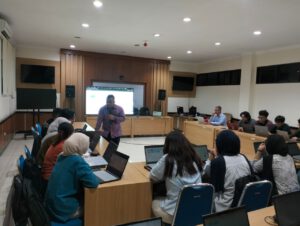 “We will try to identify commodities that have export market potential, such as coffee and spices like chili and ginger, and examine which countries offer the greatest market opportunities,” he explained.
In addition to the presentation, participants engaged in a simple simulation to practice the export commodity identification process, preceded by a pre-test to assess their baseline understanding of international trade. The training also featured Ivan Kurniawan, an export practitioner and entrepreneur from Surakarta, who shared firsthand experience from his work in the field.
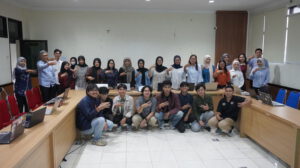 Through this activity, students are expected to gain practical insights into international trade while strengthening their readiness to navigate the dynamics of the global business environment. The training also reflects FEB UNS’s ongoing efforts to develop well-rounded graduates who excel not only academically, but also possess practical skills aligned with industry needs. Furthermore, the training is consistent with the commitment of the Faculty of Economics and Business, UNS, to advancing the Sustainable Development Goals (SDGs), particularly SDG 4 (Quality Education) through the strengthening of student competencies in international trade, and SDG 8 (Decent Work and Economic Growth) by equipping students with practical skills relevant to the industrial world and global business opportunities.