

International Visiting Lecture FEB UNS Explores Sustainable Transport Economics
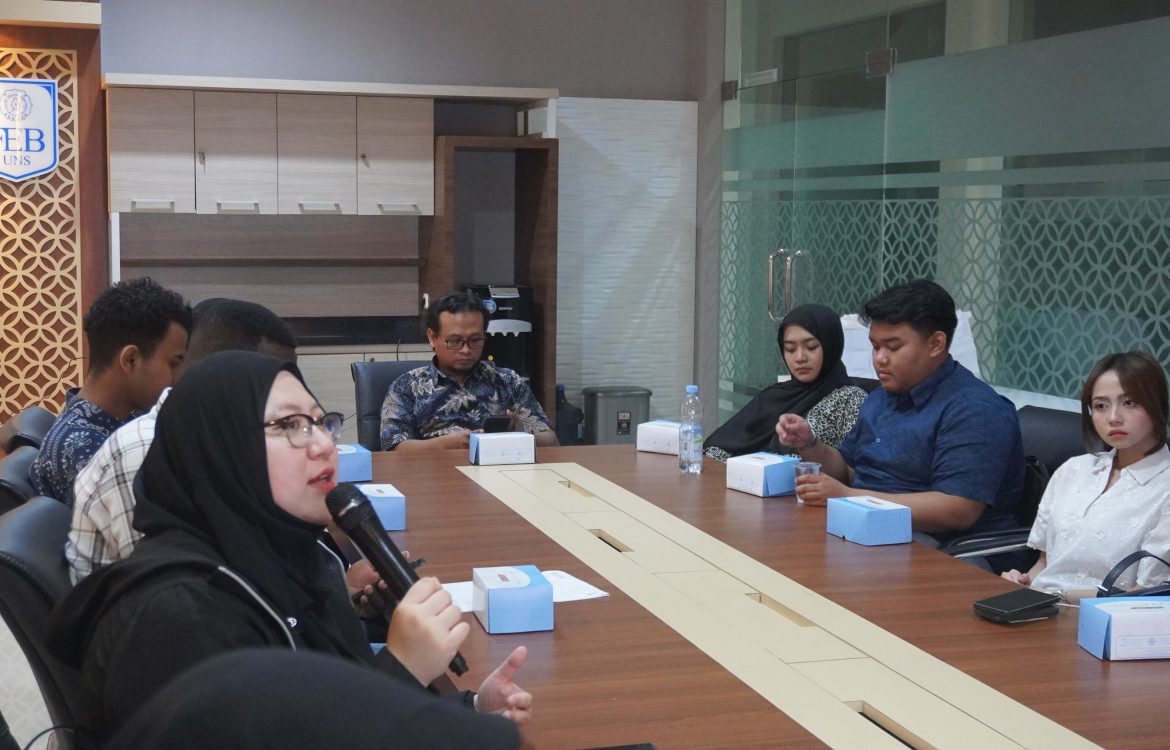
The Integrated Technology and Information Laboratory, Faculty of Economics and Business (FEB), Universitas Sebelas Maret (UNS), hosted an International Visiting Lecture titled “Transport Economics” on Friday (3 July 2026) at Meeting Room 1, Second Floor, Soeharno TS Building, FEB UNS. The lecture featured Dr. Nur Zaimah Ubaidillah from Universiti Malaysia Sarawak (UNIMAS), Malaysia, and was attended primarily by international students of FEB UNS. The event aimed to provide a global perspective on transport economics while examining contemporary issues related to transportation and economic development. It also served as a platform for scholarly discussion and meaningful interaction among students in the International Class at FEB UNS.
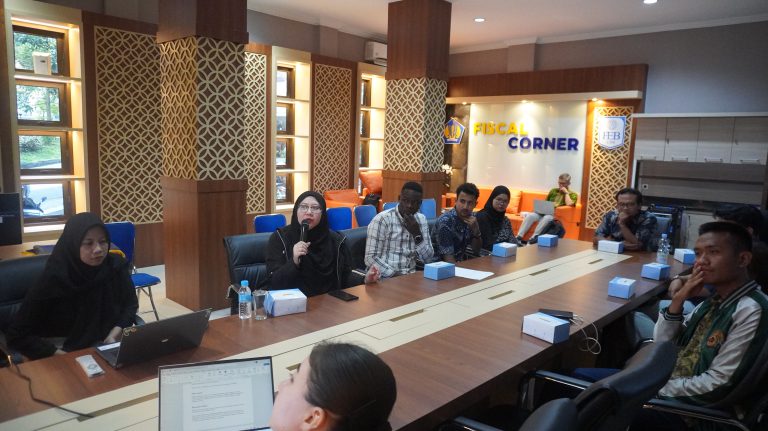 Mulyadi, S.E., M.Ec.Dev., Ph.D., MCE., Head of the Integrated Technology and Information Laboratory at FEB UNS, explained that the program was designed to foster a productive academic environment while broadening students’ perspectives through engagement with scholars from international partner universities.
During the lecture, Dr. Nur Zaimah presented material titled “Transport Economics: Towards Sustainable Transport,” which introduced the fundamental concepts of transport economics and their role in developing sustainable transportation systems. She began by discussing the factors influencing the demand for transportation services, including income levels, the prices of related goods and services, changes in consumer trends, expectations of future prices, and the distinctive characteristics of transport demand, which is both derived demand and time-specific.
She then addressed several key challenges facing the transportation sector, including traffic congestion, energy shortages, and environmental pollution, emphasizing their significance in the transition toward sustainable transportation systems. The presentation also featured data on vehicle ownership, transport mode usage, and carbon emissions to illustrate transportation trends across ASEAN and Malaysia.
As an example of sustainable transportation innovation, Dr. Nur Zaimah introduced the Autonomous Rail Transit (ART) system being developed in Kuching, Sarawak, Malaysia. The system is designed as a trackless public transit solution powered by hydrogen-fueled vehicles that operate using virtual tracks and advanced communication technologies, with the goal of providing a more efficient and environmentally friendly public transportation system.
In the final session, she presented findings from her research on the factors influencing public intention to adopt Autonomous Rail Transit. The study found that social norms, attitudes, personal norms, government policies, and habitual travel behavior all significantly influence people’s willingness to use the system, highlighting the importance of behavioral factors in advancing sustainable transportation.
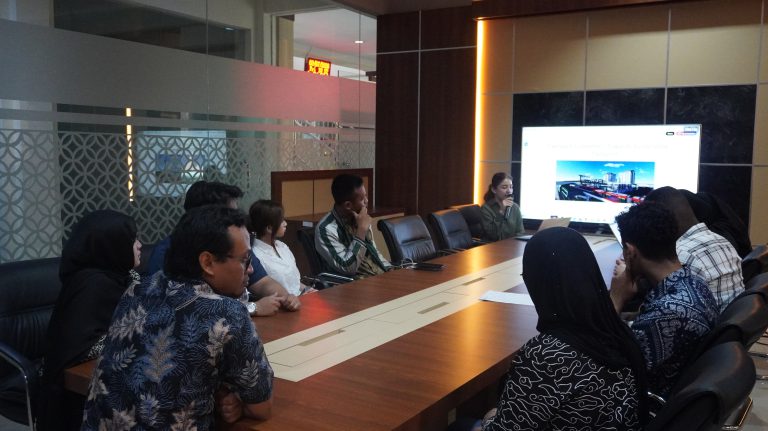 Through this International Visiting Lecture, FEB UNS continues to strengthen the internationalization of its academic programs by engaging scholars from partner universities abroad. The program broadened students’ understanding of developments in transport economics, encouraged cross-country academic discussions, and reinforced the importance of sustainable transportation systems in supporting economic development.
The event also supported the Sustainable Development Goals (SDGs), particularly SDG 4 (Quality Education) through enhancing learning experiences based on international collaboration, SDG 11 (Sustainable Cities and Communities) by promoting discussions on safe, inclusive, and sustainable transportation, and SDG 17 (Partnerships for the Goals) through strengthening academic collaboration between FEB UNS and Universiti Malaysia Sarawak (UNIMAS).