

FEB UNS Master of Accounting (MAKSI) Holds Public Lecture on Tax Law Enforcement and Introduces Recognition of Prior Learning Program
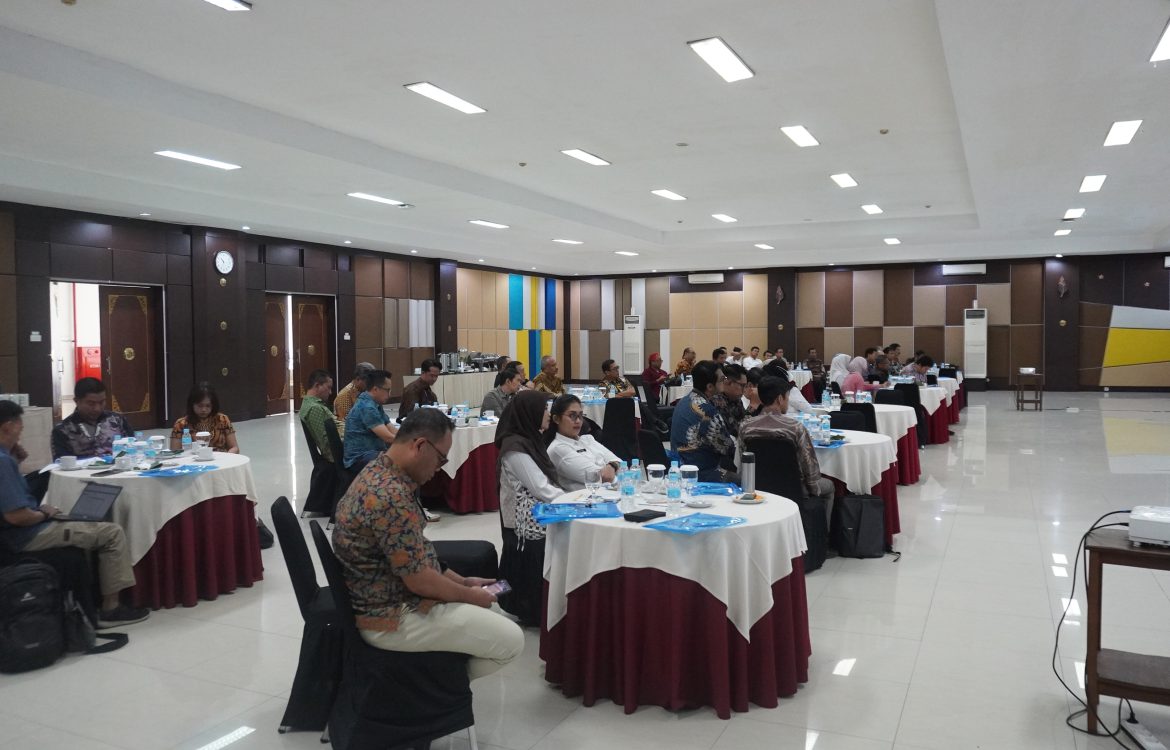
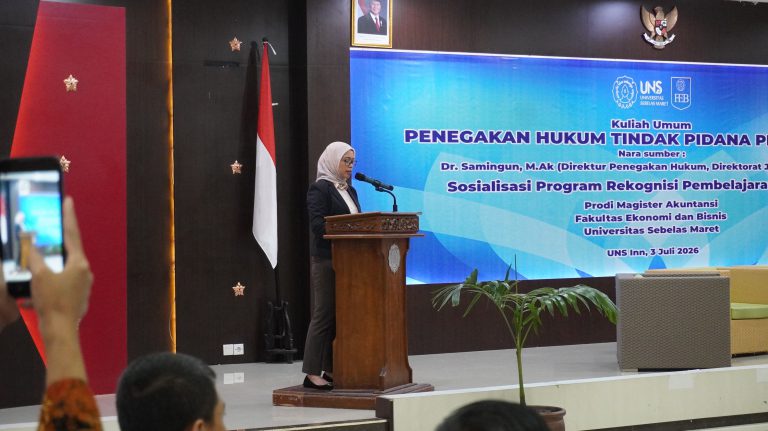
Master of Accounting Study Program, Faculty of Economics and Business (FEB), Universitas Sebelas Maret (UNS), organized a public lecture titled “Law Enforcement of Criminal Offenses in Taxation”, combined with a socialization session on the Recognition of Prior Learning (RPL) Program, on Friday (3 July 2026) at UNS Inn. The event featured Dr. Samingun, Ak., M.Ak., Director of Law Enforcement at the Directorate General of Taxes, as the keynote speaker. It served as a collaborative forum bringing together academics, government officials, practitioners, and industry representatives to strengthen understanding of tax law enforcement while introducing the Recognition of Prior Learning (RPL) Program offered by the Master of Accounting Study Program at FEB UNS.
 Participants included the Head of the Regional Office of the Directorate General of Taxes for Central Java II and its officials, the heads of the Surakarta Medium Tax Office and the Primary Tax Offices of Surakarta, Sukoharjo, Boyolali, and Klaten, as well as representatives from companies, hospitals, tax consulting firms, public accounting firms, faculty members, and master’s and doctoral students.
In her opening remarks, Prof. Tri Mulyaningsih, S.E., M.Si., Ph.D., Vice Dean for Academic and Research Affairs of FEB UNS, expressed her appreciation for the Directorate General of Taxes’ longstanding collaboration with the faculty. She emphasized that the partnership plays an important role in strengthening both educational quality and institutional governance.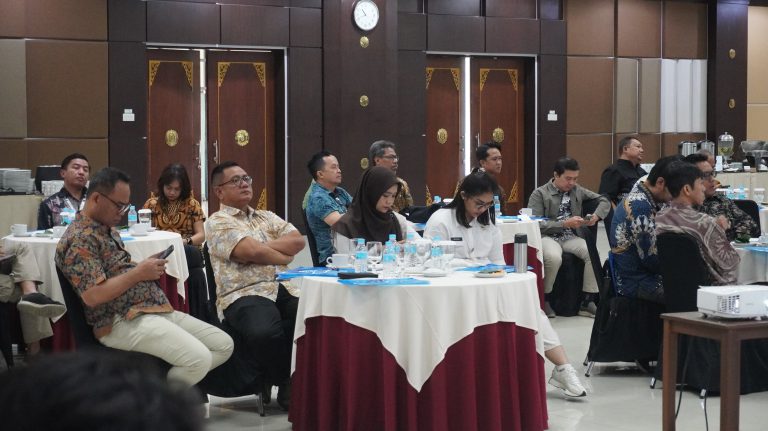
“UNS and the Directorate General of Taxes have maintained a strong and consistent collaboration. We are also grateful that the Director General of Taxes, Mr. Bimo Wijayanto, has agreed to serve on the Advisory Board of FEB UNS. We hope this partnership will provide valuable insights for the faculty’s development while opening broader opportunities for collaboration,” she said.
Prof. Tri added that the topic of tax law enforcement is highly relevant to national development. She explained that taxation serves not only as a source of government revenue but also as a mechanism for resource allocation, supporting infrastructure development and improving public welfare.
“Today’s discussion is particularly important because taxation serves both as a source of revenue generation and as a tool for resource allocation. Tax revenues should ultimately benefit society through better infrastructure and public services,” she remarked.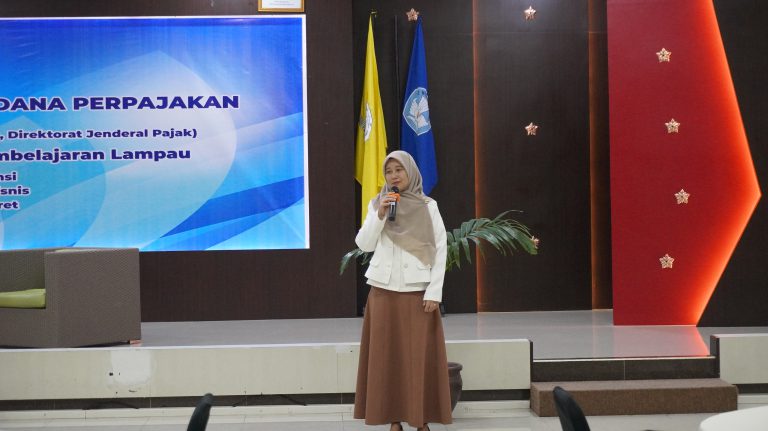
She also expressed hope that the partnership between higher education institutions and the Directorate General of Taxes would generate academic research and learning initiatives that contribute to strengthening Indonesia’s taxation system.
Before the public lecture began, Lulus Kurniasih, S.E., M.S.Ak., Ph.D., Head of the Master of Accounting Study Program, introduced the Recognition of Prior Learning (RPL) Program to participants. She explained that the program is designed to enable professionals to pursue a master’s degree while recognizing relevant work experience as part of their learning achievements.
“Professional work experience can be recognized as credit exemptions for coursework. Participants may receive recognition for up to 18 credits, equivalent to six courses, allowing them to complete only the remaining required courses,” Lulus explained.
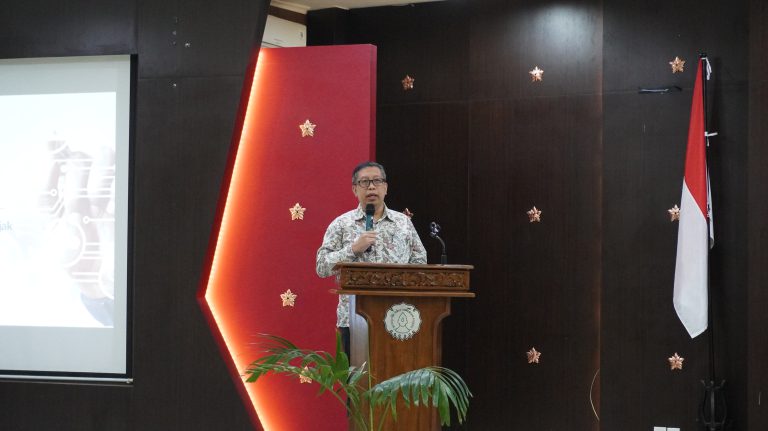 She added that the RPL Program enables students to complete their studies more efficiently through a flexible hybrid learning system and evening classes without compromising academic quality. Aside from introducing the RPL Program, Lulus highlighted the strengths of the Master of Accounting Study Program, including its faculty members—all of whom hold doctoral degrees, with seven professors—its international partnerships, guest lecture programs, and multiple study pathways, including the regular program, fast-track program, and the Master’s Program Leading to a Doctorate for Outstanding Bachelor Graduates (PMDSU).
During the public lecture, Dr. Samingun discussed the importance of enforcing tax-related criminal law to strengthen voluntary taxpayer compliance. He explained that taxation is the backbone of government revenue, making higher levels of taxpayer compliance essential for supporting national development.
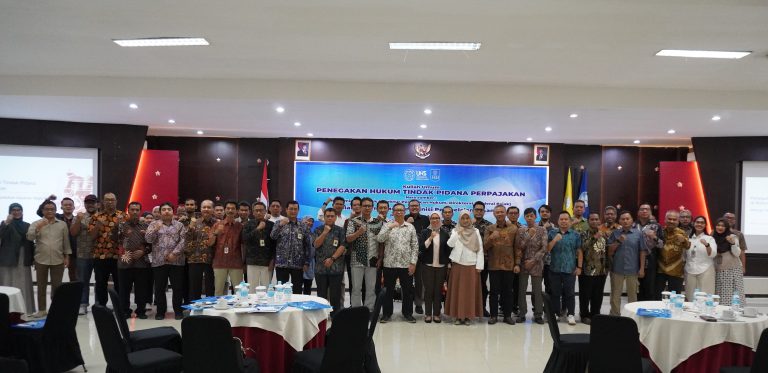 He further explained that efforts to improve compliance involve a balanced approach encompassing education, public services, supervision, audits, and law enforcement. Criminal law enforcement is applied as an ultimum remedium, or a measure of last resort, after administrative measures have been exhausted. This approach aims to recover losses to state revenue while creating a deterrent effect that encourages greater taxpayer compliance.
The event also supported the Sustainable Development Goals (SDGs), particularly SDG 4 (Quality Education) through strengthening professional education and capacity building, SDG 16 (Peace, Justice and Strong Institutions) through promoting sound governance and effective tax law enforcement, and SDG 17 (Partnerships for the Goals) by strengthening collaboration among higher education institutions, government agencies, businesses, and professional organizations.