

PDIE FEB UNS Discusses Semester Learning Plan, PMDSU Curriculum, and By-Research Track with Head of LPPMP UNS
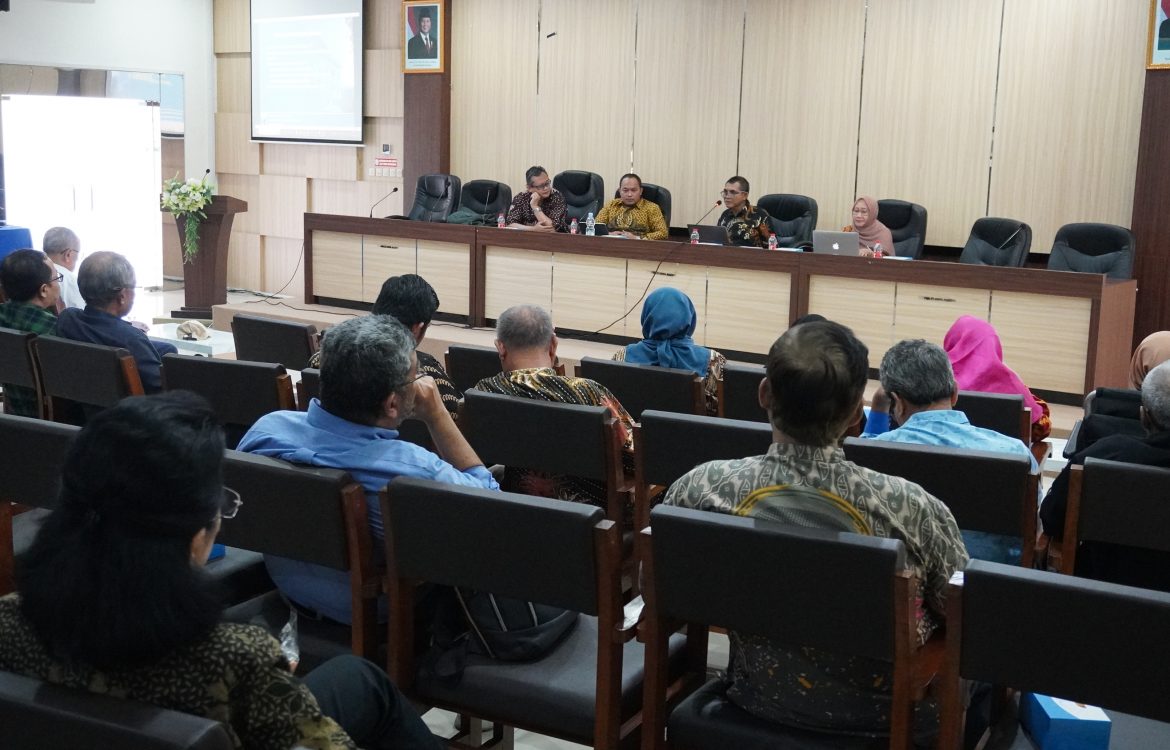
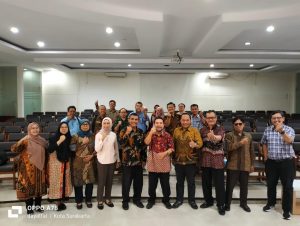
Doctoral Program in Economics (PDIE), Faculty of Economics and Business (FEB), Universitas Sebelas Maret (UNS), held a curriculum discussion titled “Discussion on Semester Learning Plan (RPS), Curriculum for the Master’s Education Leading to Doctorate for Excellent Graduates (PMDSU), and By-Research Curriculum” on Thursday, 27 February 2025. The session is conducted at the Konimex Auditorium, Bachtiar Effendi Building, FEB UNS, and was attended by PDIE faculty members. The session featured Prof. Dr. Sarwanto, S.Pd., M.Si., Head of the Institute of Educational Quality Development and Assurance (LPPMP) UNS, as the invited speaker.
 Prof. Agung Nur Probohudono, S.E., M.Si., Ph.D., Ak., CA., CFrA., Head of PDIE, stated in his opening remarks that the event was organised in response to Rector’s Regulation No. 22 of 2024 on the Management and Implementation of Master’s and Doctoral Programs.
“This Rector’s Regulation will certainly brought out various new regulations, which then need to be implemented into PDIE’s curriculum structure. The presence of the Head of LPPMP in this particular occastion is intended to provide direction and foster a unified understanding among PDIE lecturers regarding how the Semester Learning Plan (RPS) should be developed,” he explained.
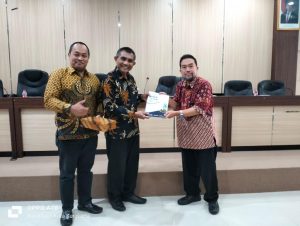 Prof. Sarwanto elaborated on the implementation of an Outcome-Based Education (OBE) curriculum model at UNS. OBE is an educational approach that emphasises the learning outcomes students must achieve upon completing a course. The approach ensures graduates are equipped with skills relevant to current industry and societal needs.
“In the OBE curriculum, learning outcomes—or Capaian Pembelajaran Lulusan (CPL)—are the key. These outcomes are determined by the Study Program and then mapped to individual courses. Thus, lecturers no longer select CPLs independently, as they are already predefined by the Study Program. Faculty members are mandated to deliver these outcomes as assigned, and this is the central principle,” he explained.
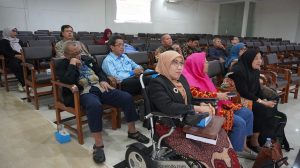 He also stated that each curriculum document must include a matrix linking each course with the CPLs, enabling proper distribution and ensuring that all CPLs are comprehensively addressed across courses.
Following the issuance of Rector’s Regulations No. 21 and 22 of 2024, all curricula at UNS are required to be based on CPLs. Therefore, the Semester Learning Plan (RPS) must also reflect this orientation. Each RPS must contain the following components: Study Program name, course name and code, semester, credit load, and name of course instructors; CPLs assigned to the course; Targeted learning outcomes for each session; Topics relevant to the intended learning outcomes; Learning methods; Time allocation for each learning outcome; Student learning experiences described in the form of semester tasks; Assessment criteria, indicators, and weightings; and List of references used. In addition, each RPS must be regularly reviewed and updated in line with advancements in science and technology.
 Prof. Sarwanto also introduced new features in the Academic Information System (Siakad), where once a lecturer finalises their RPS, they simply need to click submit. The system will then forward the RPS to all instructors involved in the course, including the course coordinator. If adjustments are needed, the RPS will be returned to the drafter until it is approved by the Head of Study Program—making the process more streamlined.
Concluding the session, Prof. Sarwanto also presented an overview of the By-Research Doctoral Track and the PMDSU curriculum model, expanding the discussion to align with national standards and institutional goals for graduate education.