

Head of Quality Assurance Unit Submits UPM Activity Report to FEB UNS
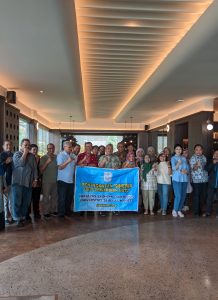
The Quality Assurance Unit (UPM) of the Faculty of Economics and Business (FEB), Universitas Sebelas Maret (UNS), held a performance improvement gathering on Friday, 25 October 2024. The event was attended by the faculty leadership, members of UPM, the Quality Control Task Force (GKM), as well as faculty leaders serving in the 2019–2024 term.
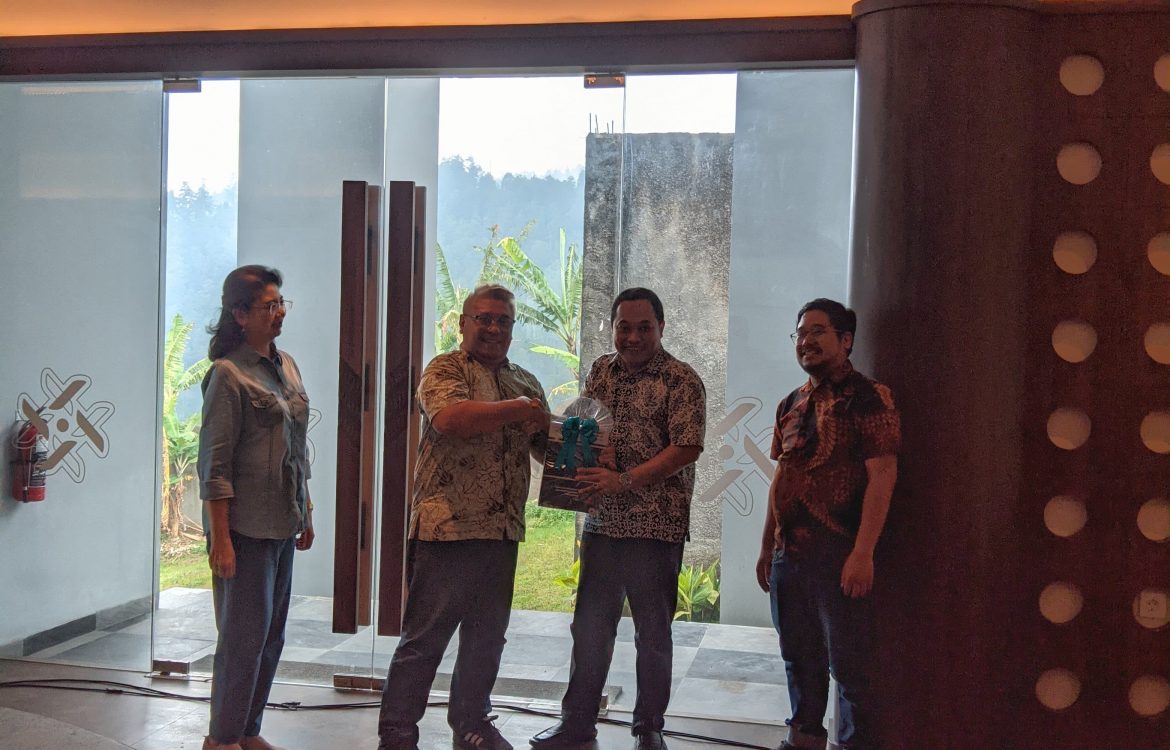
In his remarks, Prof. Dr. Budhi Haryanto, M.M., Head of UPM FEB UNS, shared the accomplishments of UPM FEB UNS during his term from 2019 to 2024. On this occasion, Prof. Budhi officially submitted the UPM Activity Report to the faculty leadership, represented by Agung Nur Probohudono, S.E., M.Si., Ph.D., Ak., CA., CFrA., Head of the Doctoral Program in Economics (PDIE) at FEB UNS. “This is an opportunity for UPM to deliver a report of its activities over the past four years. The quality assurance documents we have compiled are now handed over to the new leadership. We also wish to apologise to the Study Program Heads for any shortcomings in our work over this period. We hope this report will help the faculty leadership provide input to improve the performance of the next UPM management,” stated Prof. Budhi.
 The submitted report summarised UPM’s key activities, including results from the Internal Quality Audit (AMI) from 2022 to 2024, tracer studies of alumni users, and benchmarking visits to various institutions, including the Quality Assurance Units of FEB Universitas Gadjah Mada (UGM) and Universitas Indonesia (UI). These benchmarking efforts provided valuable insights into how other universities manage quality assurance and support teaching improvement.
Benchmarking visits to UGM and UI contributed significantly to enhancing the quality of learning processes at FEB UNS. UPM FEB UNS also undertook an international benchmarking activity at Universiti Sains Malaysia, which further expanded its quality assurance perspectives.
Looking ahead, the next UPM FEB UNS leadership is encouraged to expand its international benchmarking activities, ideally targeting universities in Europe or the United States. Benchmarking is no longer optional—it has become a necessity in maintaining and advancing educational quality.
Concluding the event on a lighter note, a series of indoor games were organized to strengthen camaraderie among participants. The activities were met with enthusiastic participation from all attendees.