

FEB UNS Welcomes Visit from the Department of Economics, FEB Universitas Brawijaya, an Initiative to Strengthens Collaboration on the Higher Education Tri Dharma
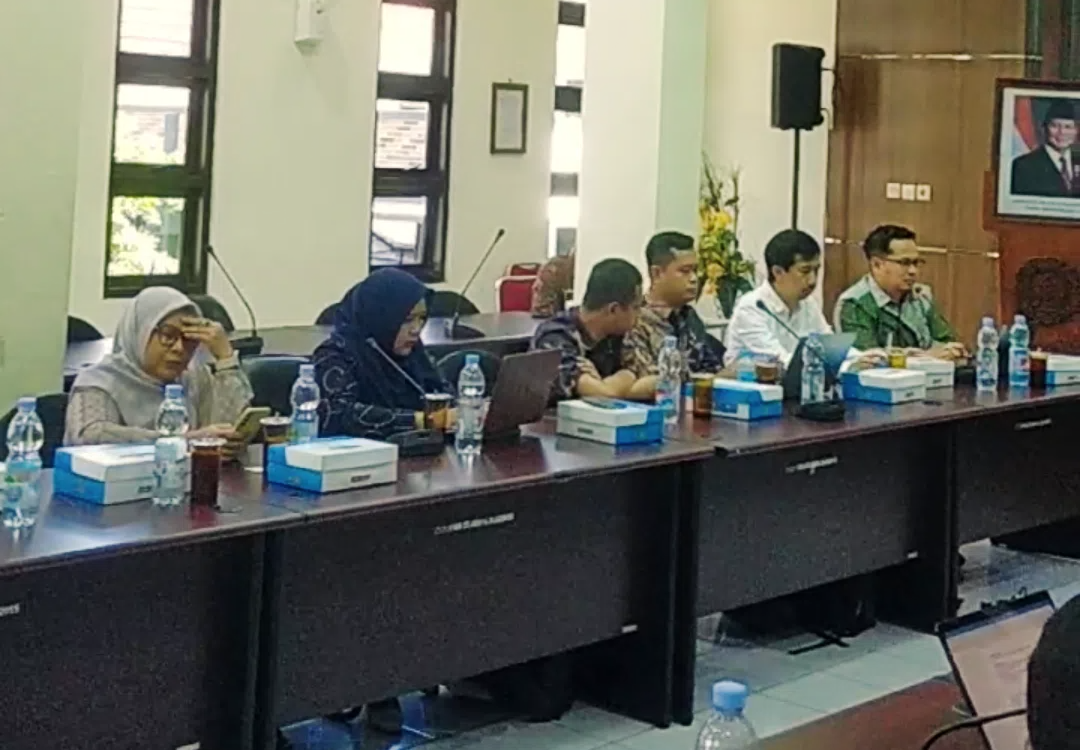
Faculty of Economics and Business (FEB), Universitas Sebelas Maret (UNS), welcomed a visit from the Department of Economics, Faculty of Economics and Business, Universitas Brawijaya (FEB UB), on Thursday, July 17, 2025, at Assembly Room 1, Soeharno TS Building, FEB UNS. The visit aimed to initiate collaboration in the implementation of the Higher Education Tri Dharma.
The FEB UB delegation is received by Prof. Tri Mulyaningsih, S.E., M.Si., Ph.D., Vice Dean for Academic and Research Affairs FEB UNS; Tastaftiyan Risfandy, S.E., M.Sc., Ph.D., Vice Dean for Student, Alumni, and Partnership Affairs; Prof. Agung Nur Probohudono, S.E., M.Si., Ph.D., Ak., CA., CFrA., Head of the Doctoral Program in Economics; Prof. Dr. Suryanto, S.E., M.Si., Head of the Master’s Program in Development Economics; Dr. Siti Aisyah Tri Rahayu, S.E., M.Si., Head of Specialization in the Doctoral Program in Economics; and Pram Suryanadi, S.E., M.Si., lecturer at FEB UNS.
 In her welcoming remarks, Prof. Tri conveyed appreciation for the visit and presented the profile and achievements of the faculty, in academics, research, and community engagement activities. “In our efforts toward internationalization, we continue to strengthen collaboration, research, community engagement, and scientific publications. In term of university and faculty rankings, particularly in the fields of Economics, Econometrics, Accounting, and Management, we see an upward trend,” stated Prof. Tri.
Currently, FEB UNS offers four undergraduate programs: Accounting, Development Economics, Management, and Digital Business. At the master’s level, the faculty provides Master of Accounting, Master of Development Economics, and Master of Management programs. At the doctoral level, FEB UNS provided a Doctoral Program in Economics with three areas of specializations: Accounting, Development Economics, and Management.
 To support learning and research, the faculty is equipped with eight laboratories, which can be categorized as the data laboratories, business laboratories, and learning laboratories. These facilities are available not only for the students and lecturers but are also expected to provide services to external users. Additionally, serving as platforms for research development and international publications FEB UNS is a home for 20 interdisciplinary research groups, where the research ecosystem is further supported by regular forums, such as the monthly Working Paper Forum.
Prof. Tri added that the faculty’s five-years research agenda focuses on strategic issues such as climate change, renewable energy, food security, creative industries, poverty alleviation, human capital development, finance and banking, as well as autonomy and decentralization.
Potential areas of collaboration between FEB UNS and FEB UB include curriculum development, implementation of case-based and project-based learning, enhancement of student competencies in data analysis and entrepreneurship, research training, community engagement, collaborative research, joint publications, and other academic activities. “Hopefully, this collaboration will be well-established and bring mutual benefits for both institutions,” concluded Prof. Tri.
 Meanwhile, Dr. rer. pol. Ferry Prasetyia, S.E., M.App.Ec., Head of the Department of Economics FEB UB, expressed appreciation for the warm welcome extended by FEB UNS. “Thank you to Prof. Tri and all the faculty leaders for the hospitality. This visit follows FEB UNS’s visit to UB in 2023. We hope it will strengthen synergy and collaboration going forward,” said Dr. Ferry.
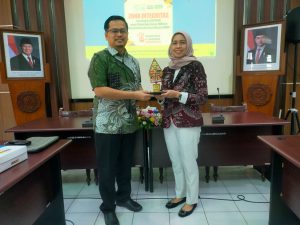
Following the discussion, the visit concluded with the signing ceremony of a collaboration agreement between FEB UB and FEB UNS, covering student exchange, research collaboration, implementation of the Tri Dharma of Higher Education, and curriculum development. This partnership reflects a joint commitment to advancing institutional potential, while it is expected to further strengthen the role of higher education in supporting sustainable development agendas.
The initiative is also aligned with the Sustainable Development Goals (SDGs), particularly SDG 4: Quality Education, SDG 8: Decent Work and Economic Growth, SDG 9: Industry, Innovation, and Infrastructure, and SDG 17: Partnerships for the Goals.