

FEB UNS Optimizes Green Campus Program through Vertical Garden Innovation
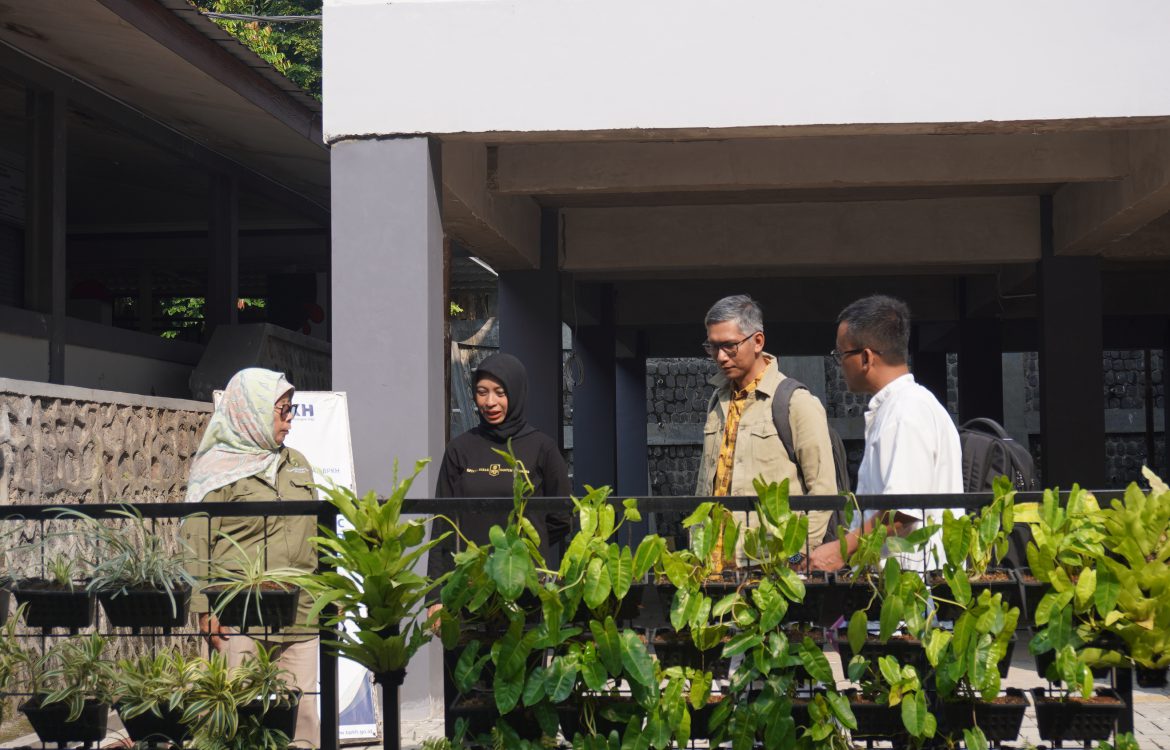
Faculty of Economics and Business (FEB), Universitas Sebelas Maret (UNS), welcomed a visitation from the Vertical Garden Competition Assessment Team on Friday, April 17, 2026, as part of a series of evaluations for the campus greening program themed “Vertical Green Action: Low-Emission Vertical Garden Innovation on Campus.” This event served as a momentum to showcase various vertical garden-based greening innovations developed within the FEB UNS environment.
The Head of the FEB UNS Vertical Garden Competition, Arif Rahman Hakim, S.E., M.Ec.Dev., Ph.D., MCE, explained that preparations for this program had been underway since the beginning of 2026. It began with the dissemination phase on February 6, 2026, followed by registration from February 7 to 13, 2026, and implementation from February 16 to March 13, 2026, before finally entering the assessment stage.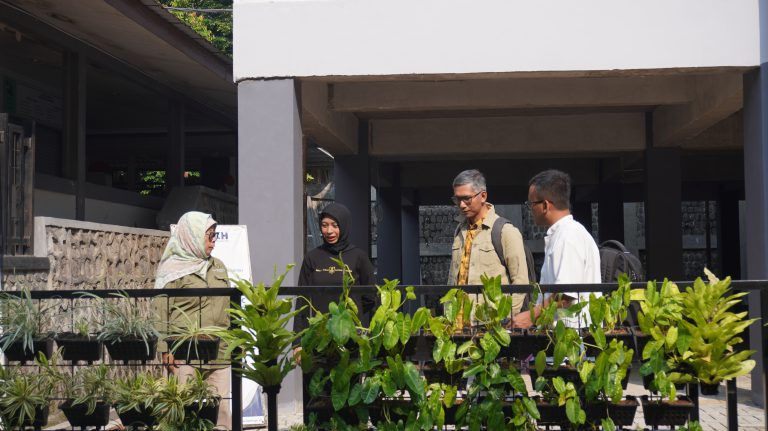
“Each faculty was given approximately three months to prepare, plant, and develop greening points before the visitation and judging took place,” Arif explained.
On that occasion, FEB UNS showcased various greening points that had been optimized or developed.
The Head of the Non-Academic Sub-Department of FEB UNS, Amelia Zailani Pertiwi, S.IP., stated that the primary strategy employed was utilizing the existing building conditions to be more efficient and sustainable. “Our preparation involved adding vertical garden points by maximizing the conditions of existing buildings, such as the cafeteria and the new building. The available fence structures made it possible to be utilized as vertical greening media, so we do not solely rely on ground pots,” she said.
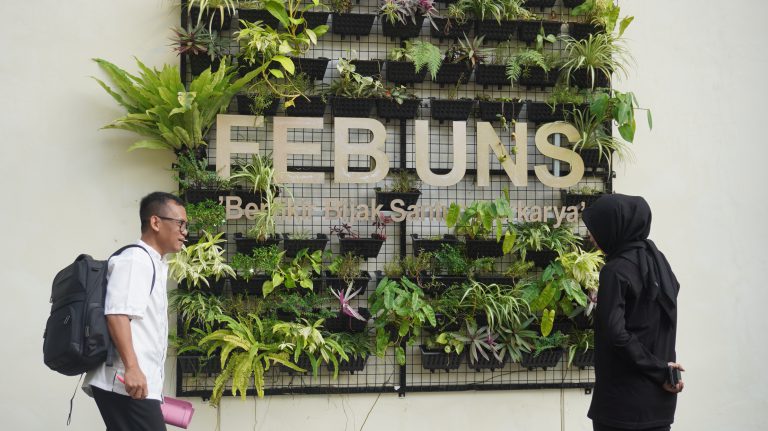 In addition to adding new points, FEB UNS also revitalized existing green spaces, including adding vegetation, replacing less suitable flora, and adjusting plant types based on environmental conditions such as light intensity and temperature. The choice of flora also focused on utilizing local plants and pollutant-absorbing vegetation, including those capable of absorbing CO2.
This effort was further reinforced by displaying educational messages through environmental slogans placed at several spots. This aims to increase the awareness of the academic community regarding the importance of environmental preservation.
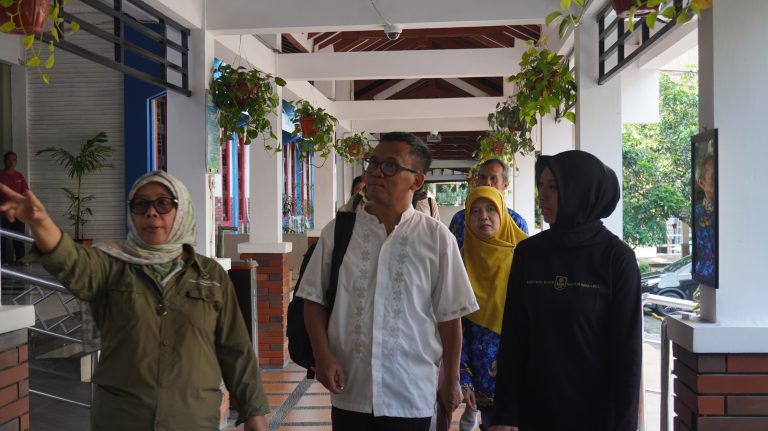 “We want to build awareness that greening is important and can start from small things. With a vertical garden, a campus does not require extensive land to become green. This also serves as an invitation for students, faculty members, and academic support staff to contribute together,” Amelia added.
Moving forward, FEB UNS plans to develop a more productive greening concept, such as fruit-based horticultural plants that are relatively easy to maintain and offer added value benefits. Furthermore, optimizing untouched areas, such as the northern side of the Djarwanto PS Building and the Bachtiar Effendi Building, will also be the focus of the next development phase.
 Overall, this initiative demonstrates FEB UNS’s commitment to creating a sustainable campus environment. This greening program through vertical gardens aligns with the Sustainable Development Goals (SDGs), particularly Goal 11 (Sustainable Cities and Communities), Goal 13 (Climate Action), and Goal 15 (Life on Land), through efforts to present a green, healthy, and eco-friendly campus.