


FEB UNS Launches Academic Handbook for Undergraduate, Master’s, and Doctoral Programs
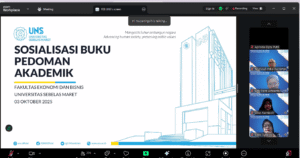
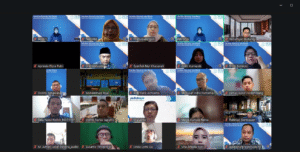
Faculty of Economics and Business (FEB), Universitas Sebelas Maret (UNS) officially launched “Academic Handbook for Undergraduate, Master’s, and Doctoral Programs” on Friday, 3 October 2025. The event was conducted virtually and attended by all undergraduate, master’s, and doctoral students, as well as faculty members of FEB UNS.
In her remarks, Vice Dean for Academic and Research Affairs, Prof. Tri Mulyaningsih, S.E., M.Si., Ph.D., emphasized the significance of the session for students. The academic handbook serves as a primary reference to help students navigate their academic journey in a more structured and focused manner.
 “There are two main objectives of this activity: improving the quality of graduates and enhancing the quality of curriculum and learning experiences. The academic and curricular information presented in this handbook will help students to graduate on time, acquire knowledge and skills relevant to the job market, and ensure a meaningful and enjoyable learning experience at FEB UNS,” she explained.
Prof. Tri further added that the handbook also provides a comprehensive understanding of academic regulations, including lecture procedures, scientific writing guidelines, and the stages of final project completion. With this information, students are expected to design more effective learning strategies, enabling them not only to graduate but also to gain competencies that are relevant to professional settings.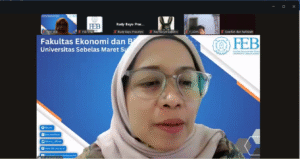
The handbook covers various essential aspects, including the vision and mission of UNS and FEB, organizational governance, academic regulations, curriculum, and supporting facilities. It is divided into three categories the Undergraduate Programs: Accounting, Management, Development Economics, and Digital Business. Master’s Programs covering the Master of Accounting (MAKSI), Master of Economics and Development Studies (MESP), and Master of Management (MM), and lastly the Doctoral Program in Economics (PDIE) with specializations in Accounting, Management, and Economics.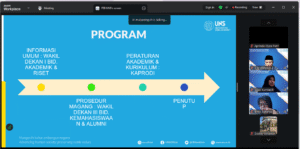
In addition to the launching session, the event also addressed the latest regulations regarding student internships. Vice Dean for Student and Alumni Affairs, Tastaftiyan Risfandy, S.E., M.Sc., Ph.D., explained that internships at FEB UNS are divided into two categories: compulsory internships and independent internships. The compulsory internship is part of the curriculum, worth 3 credits, and requires submission of a final report. Meanwhile, the independent internship is initiated by students, carries no credit load, and does not require reporting. Detailed information on internship programs is included in the Academic Handbook.
As a parallel session of the event, students participated in breakout room sessions led by each Head of Study Program. During these sessions, students received more in-depth explanations about the curriculum, academic regulations, and learning strategies specific to their programs. The interactive sessions provided opportunities for students to ask questions directly and obtain information tailored to their academic needs.
 Through the launch of this Academic Handbook, FEB UNS hopes that all students can follow a clearer academic path, understand their rights and responsibilities, and make full use of the available learning facilities. This initiative also reaffirms FEB UNS’s commitment to supporting the achievement of the Sustainable Development Goals (SDGs), particularly Goal 4 (Quality Education) through strengthened learning systems, Goal 8 (Decent Work and Economic Growth) through internship regulations, and Goal 9 (Industry, Innovation, and Infrastructure) through the provision of modern learning facilities.