

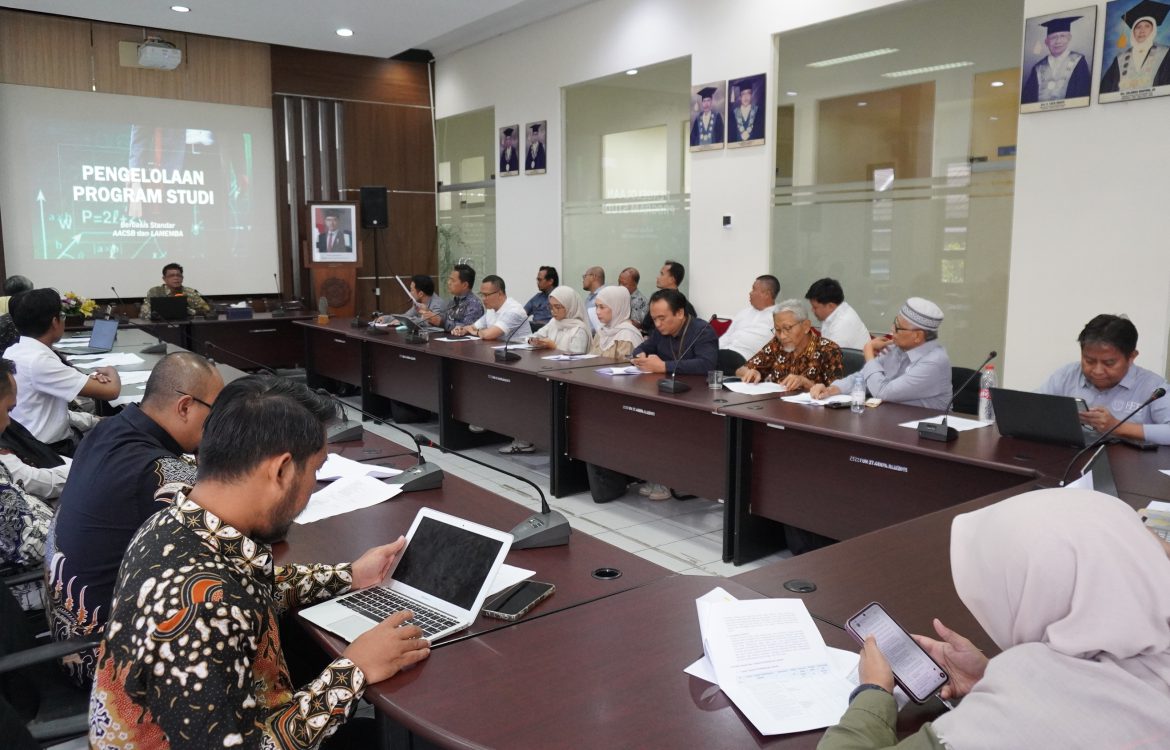
FEB UNS Islamic Economics and Finance Study Program Holds Curriculum Development Workshop with Practitioners, Academics, and Industry Partners
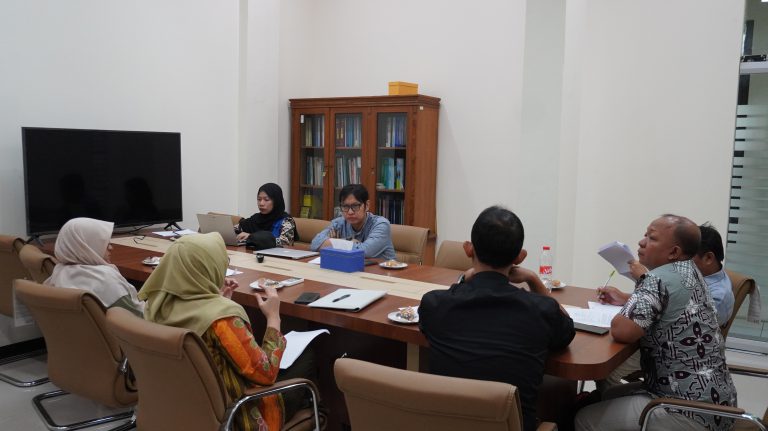
Islamic Economics and Finance Study Program, Faculty of Economics and Business (FEB), Universitas Sebelas Maret (UNS), organized a Curriculum Development Workshop on Wednesday, 8 July 2026, in Meeting Room I of the Soeharno TS Building, FEB UNS. The workshop formed part of the study program’s operational preparations ahead of welcoming its first cohort of students and commencing academic activities in August 2026. Inviting academics, industry practitioners, and institutional partners, the program aims to gather input for developing a curriculum that is aligned with workforce needs while meeting the standards for study program governance.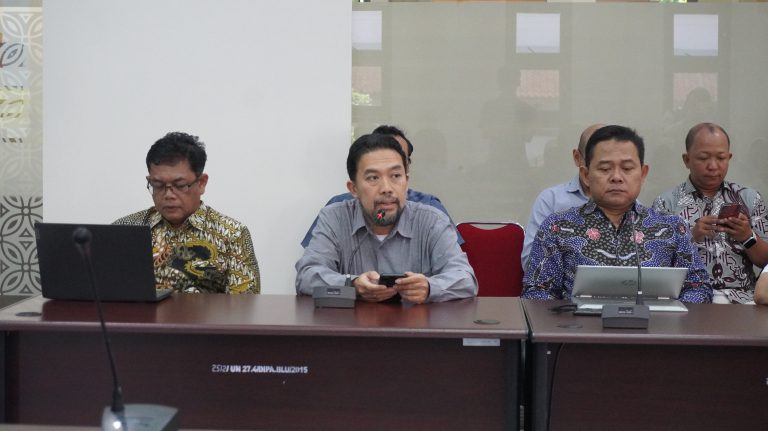
In his opening remarks, the Dean of FEB UNS, Prof. Bhimo Rizky Samudro, S.E., M.Si., Ph.D., expressed his appreciation to all speakers, partners, and stakeholders for their support in developing the Islamic Economics and Finance Study Program.
“Through this workshop, both personally and on behalf of FEB UNS, particularly the Islamic Economics and Finance Study Program, we sincerely welcome your input. As a newly established study program, we need to listen carefully and learn from the key insights shared by practitioners and our partners.”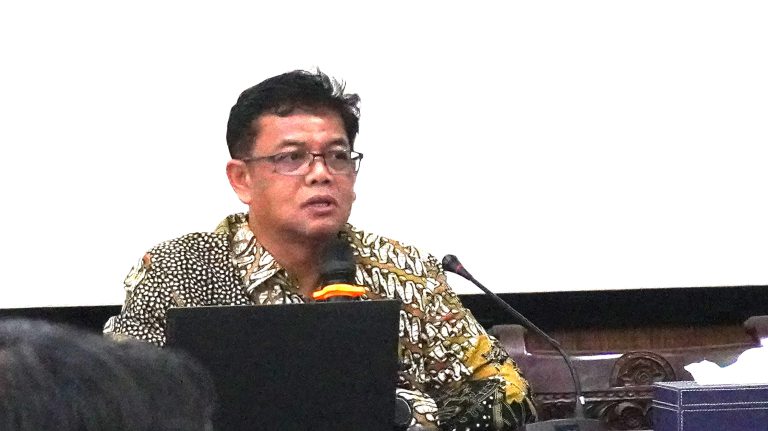
Prof. Bhimo also emphasized that FEB UNS seeks to learn from the experience of the Islamic Economics Study Program at Airlangga University, particularly in curriculum development and study program management that align with both national and international accreditation standards.
Representing Airlangga University, Dr. Sulistya Rusgianto, S.E., MIF., Ph.D., highlighted the importance of establishing sound study program governance based on best practices from the outset. According to him, study program management should be designed to comply with both the standards of the LAMEMBA and internationally recognized accreditation frameworks. 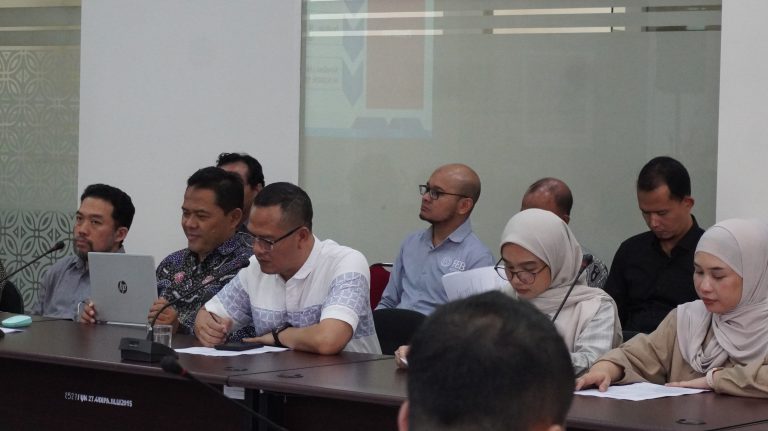 “Since this is a newly established study program, this is the ideal time to design both its governance and operations according to recognized standards. Rather than making extensive adjustments later, it is better to establish a strong governance system from the beginning that complies with LAMEMBA standards and supports future international accreditation.”
He added that the development of a study program should begin with a clearly defined mission. “A mission does not merely describe the existence of a study program; it represents a commitment to stakeholders. If the mission is not carefully formulated, the study program will eventually be held accountable by parents, graduates, and industry partners.”
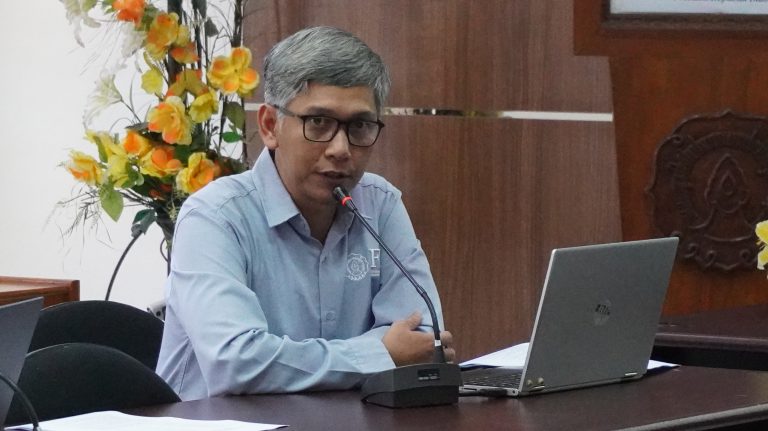 Dr. Sulistya further explained three key pillars of study program management: strategic management and innovation, learner success, and societal impact. He noted that the curriculum discussions during the workshop primarily addressed the learner success pillar, while the other two pillars focus on strategic governance and the program’s contributions to society and knowledge development.
Meanwhile, the Head of the Islamic Economics and Finance Study Program at FEB UNS, Dr. Arif Rahman Hakim, S.E., M.Ec.Dev., Ph.D., MCE., explained that the study program received its operational license in May 2026 and has submitted its accreditation application as one of the requirements for commencing academic activities. The inaugural intake is scheduled to begin in August 2026.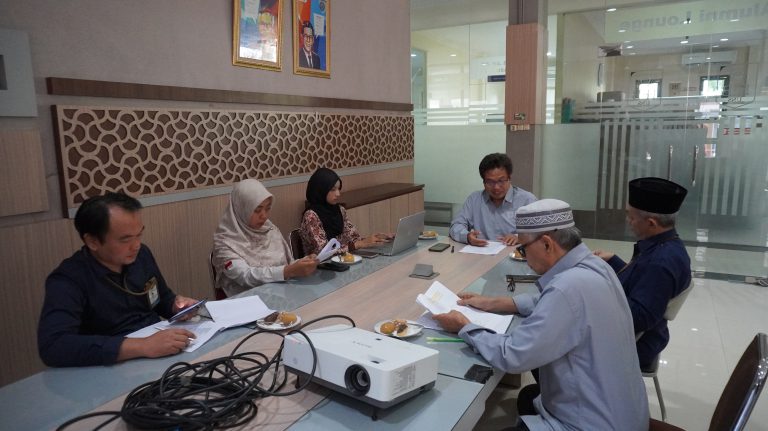
“Curriculum development is one of our highest priorities because it will determine the competencies of our future graduates. We greatly value input on refining our concentration areas and course offerings to ensure they meet the needs of today’s job market.”
He also explained that the study program is supported by the Islamic Economic and Business Center, which serves as its primary learning facility. In addition, through the support of the UNS Fintech Center, the study program has recently become a member of the Indonesian Sharia Fintech Association, further strengthening its professional network in the Islamic finance sector.
 “We are grateful that our study program already has the Islamic Economic and Business Center as its learning hub, and at the beginning of July we officially became a member of the Indonesian Sharia Fintech Association.”
Dr. Arif outlined that the curriculum consists of eight semesters with a total of 144 credit units. The program focuses on Islamic economics through research and policy development, Islamic finance, Islamic Social Finance covering zakat, infaq, sadaqah, and waqf, Hajj and Umrah management, and the development of the halal ecosystem, including the halal industry, halal tourism, halal culinary businesses, cosmetics, and other related sectors.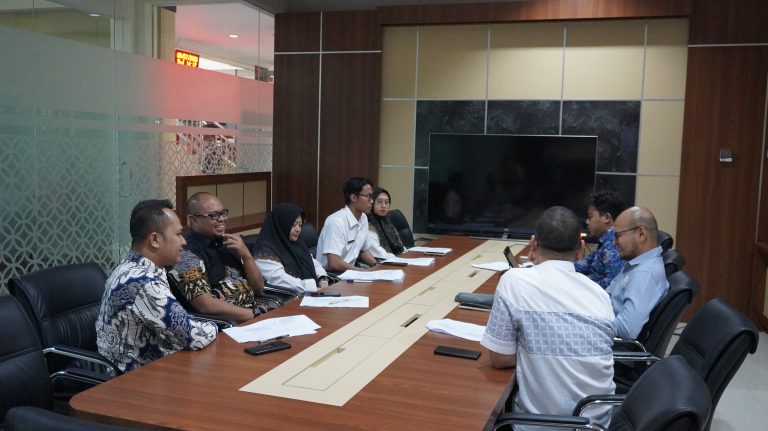
“Input from practitioners is invaluable because they have first-hand knowledge of the competencies required in professional practice. Following the plenary session, participants will join discussion groups based on their areas of expertise to provide recommendations for each concentration we have designed.”
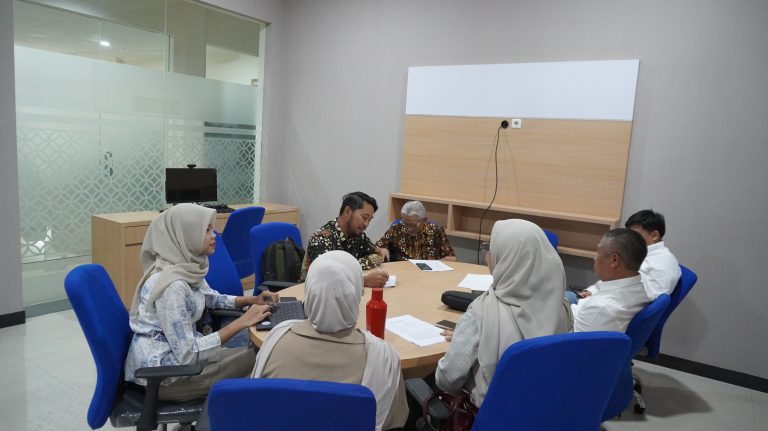 Following the plenary presentations, participants continued the workshop through discussions in five specialized commissions: the Graduate Profile, Program Learning Outcomes, and Curriculum Structure Commission; the Islamic Finance Commission; the ZISWAF (Zakat, Infaq, Sadaqah, and Waqf) Commission; the Hajj and Umrah Commission; and the Islamic Entrepreneurship Commission. Within each commission, academics, practitioners, and institutional partners provided recommendations on the proposed curriculum, graduate profiles, learning outcomes, and competencies required to address developments and emerging needs in their respective fields.
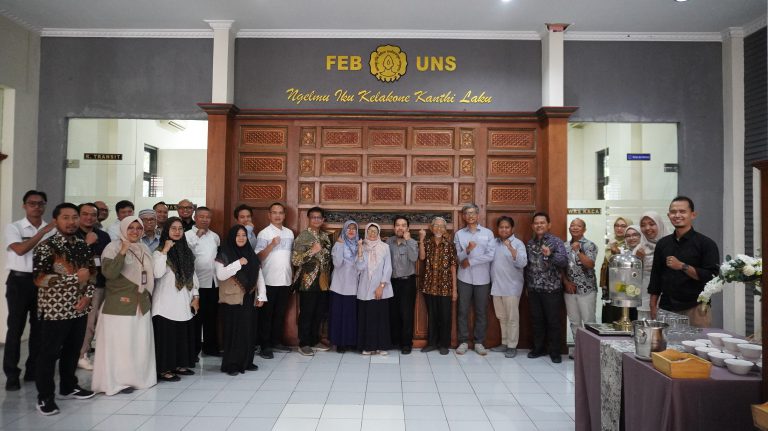 Through this workshop, the Islamic Economics and Finance Study Program at FEB UNS aims to develop a curriculum that not only meets academic quality standards but also responds to the needs of industry, Islamic financial institutions, philanthropic organizations, and other sectors that will become career destinations for its graduates.
The workshop also supports the achievement of the Sustainable Development Goals (SDGs), particularly SDG 4 (Quality Education) through strengthening curriculum quality and SDG 17 (Partnerships for the Goals) through collaboration among higher education institutions, academics, practitioners, and a wide range of stakeholders.