

FEB UNS Hosts Benchmarking Visit from Telkom University FEB, Discusses Strengthening of Digital Business Program and Internationalization
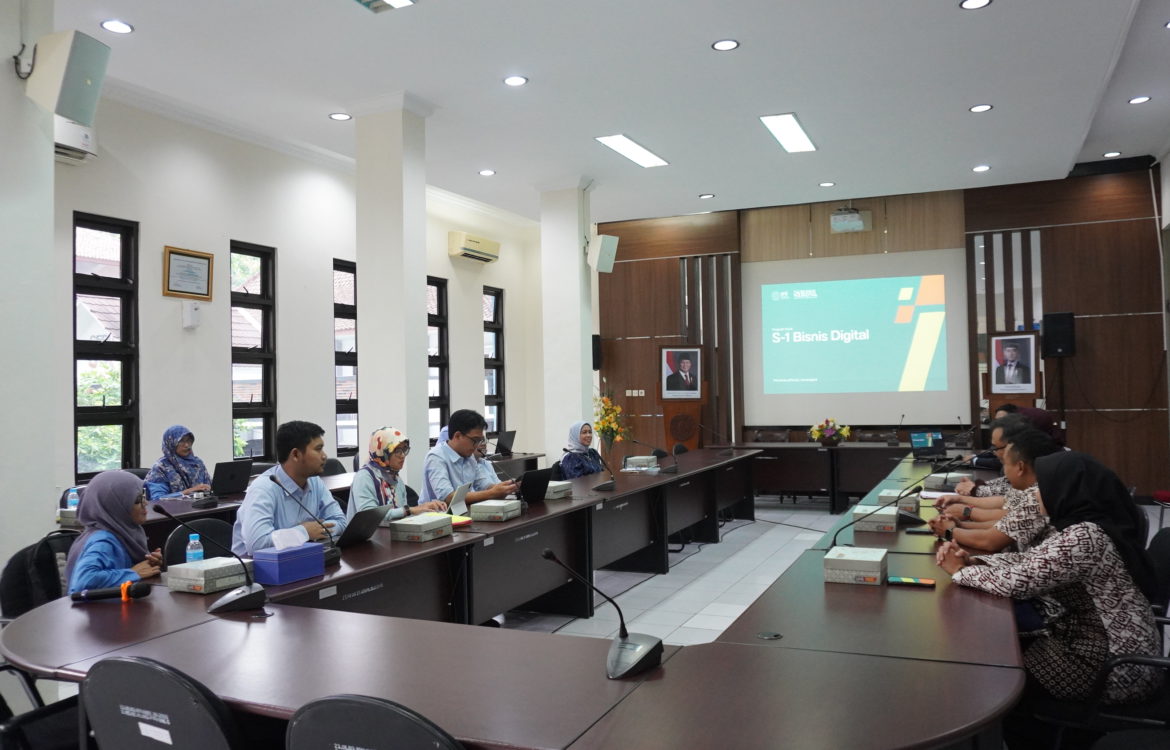
Faculty of Economics and Business (FEB), Universitas Sebelas Maret (UNS), welcomes a benchmarking visit from the Faculty of Economics and Business of Universitas Telkom on Tuesday, 20 January 2026, at Meeting Room 1, Soeharno TS Building. The visit served as a strategic forum for discussion and exchange of best practices in managing the Digital Business Study Program, while reinforcing academic quality, governance systems, and adaptive higher education development amid digital transformation.
In her opening remarks, the Vice Dean for Academic Affairs and Research of FEB UNS, Prof. Tri Mulyaningsih, S.E., M.Si., Ph.D., stated that although the Undergraduate Digital Business Study Program at FEB UNS is relatively new, it has demonstrated highly encouraging achievements. In terms of applicant interest and selectivity ratio, the program ranks among the top at UNS and holds the second position within the Social Sciences and Humanities cluster.
“Although newly established, Digital Business has become highly popular. The high level of selectivity also indicates the strong academic quality of incoming students,” she explained.
 She further outlined that FEB UNS currently manages four undergraduate programs: Accounting, Management, Development Economics, and Digital Business. At the postgraduate level, FEB UNS offers Master’s programs in Accounting, Management, and Development Economics, as well as a Doctoral Program in Economics with three main concentrations: Accounting, Management, and Development Economics.
Prof. Tri also highlighted FEB UNS’s commitment to quality assurance and internationalization through the pursuit of international accreditation from Association to Advance Collegiate Schools of Business (AACSB). FEB UNS has entered the Eligibility stage and is currently preparing the Self-Evaluation Report (SER) as part of the accreditation process.
 In terms of academic infrastructure, FEB UNS is supported by eight laboratories and one Fiscal Corner, designed to enhance learning processes, professional training, certification programs, and research activities. Undergraduate students are encouraged to obtain professional certifications, while master’s and doctoral students are facilitated in strengthening research competencies. The Research and Community Service Center (P4M) also plays an active role in supporting scholarly research and community engagement initiatives.
Meanwhile, Dr. Nurvita Trianasari, Head of the Digital Business Study Program at FEB Universitas Telkom, explained that the visit aimed to conduct benchmarking and academic discussions regarding the management of the Digital Business Study Program.
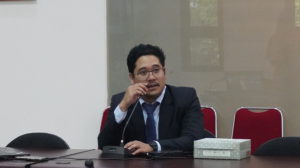 “The benchmarking focus includes curriculum development, study program governance, human resource strengthening, implementation of Outcome-Based Education (OBE), and strategies for national and international accreditation,” she stated.
FEB UNS was selected as a benchmarking partner due to its strong academic reputation, international ranking achievements, and its commitment to developing a Digital Business Study Program that is responsive to industry demands and technological advancements.
The session continued with a comprehensive presentation led by Aldy Fariz Achsanta, S.E., M.Rech., Ph.D., Head of the Undergraduate Digital Business Study Program at FEB UNS. He provided an overview of the program’s scientific vision, curriculum structure, laboratory support—including the UNS Fintech Center—and strategies for strengthening accreditation status and graduate competitiveness.
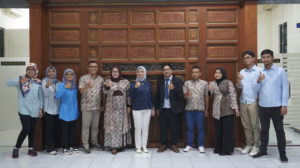 Through this benchmarking and academic exchange, FEB UNS aspires to establish sustained inter-university synergy and collaboration in enhancing educational quality, graduate relevance, and institutional competitiveness at both national and global levels.
The activity aligns with the achievement of the Sustainable Development Goals (SDGs), particularly SDG 4 (Quality Education) and SDG 17 (Partnerships for the Goals), through strengthened academic governance and institutional collaboration in higher education.