

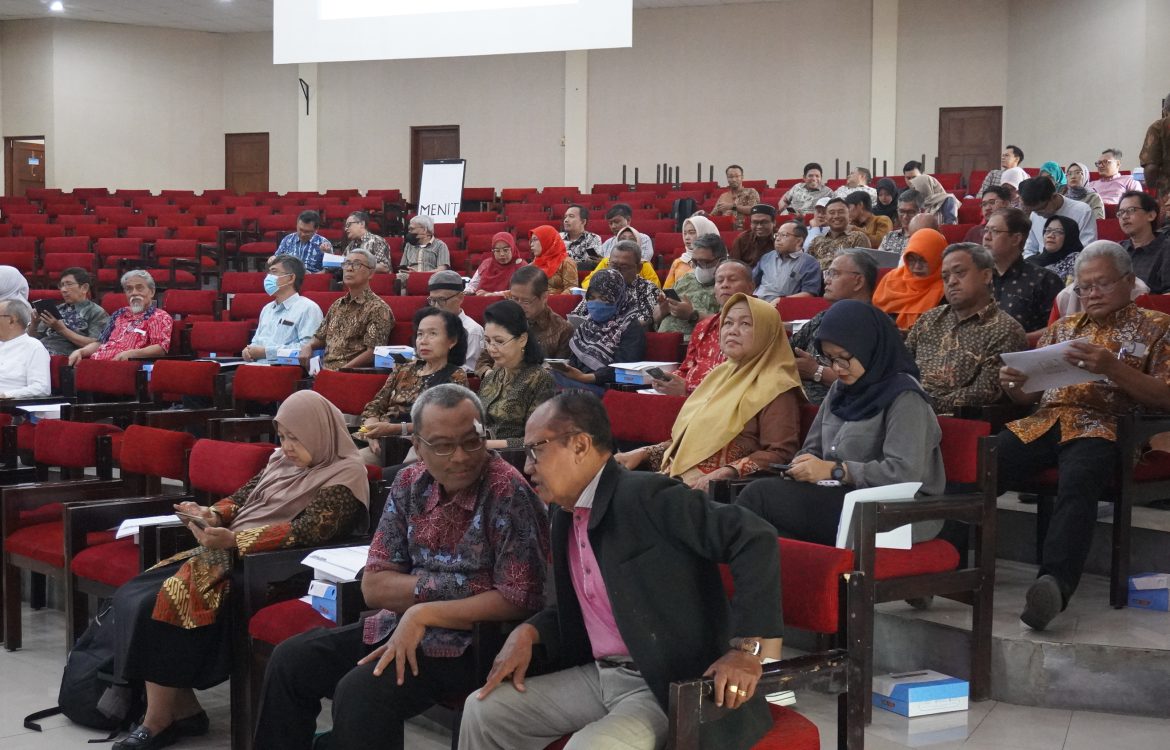
FEB UNS Faculty Council Meeting: Preparation and Evaluation of Learning for the First-term of 2025 Academic Year
The Faculty Council Meeting is a regular agenda organized by the Faculty of Economics and Business, Universitas Sebelas Maret (FEB UNS), to prepare for lectures and evaluate learning process in each semester. In preparation for the August 2025–January 2026 semester, the meeting was held at Suhardi Hall, FEB UNS, on Friday, 22 August 2025. Dean of FEB UNS, Prof. Bhimo Rizky Samudro, S.E., M.Si., Ph.D., presented several updates and important programs across academic and non-academic fields.
 First, the selection of international class students for this term is carried out through students’ academic records and independent admission pathway, which currently is awaiting the final decision for the achievement inquiry selection and independent test pathways. The Master’s Education toward Doctorate Program for Excellent Undergraduates (PMDSU) is ongoing with participants from several study programs, while the Recognition of Prior Learning (RPL) Program for undergraduate and master’s levels is also being implemented. In addition, Level 1 and 2 Internal Quality Audits (AMI) at both study program and faculty levels have been completed, followed by evaluations of the results. Regarding the enhancement of education quality, the AACSB accreditation process is ongoing with the submission of the Eligibility Application and the completion of the Business Unit draft.
 On the governance side, the implementation of Integrity Zone and Risk Management across various areas has progressed to reports preparation and risk identification drafts stage, with official reporting scheduled. The entry meeting with the Internal Supervisory Unit (SPI) has been completed, with the exit meeting as follow-up. In terms of collaboration, the partnership program for the Islamic Business Center with BPKH establishment has entered the groundbreaking stage, while scholarship collaborations for undergraduate students at FEB UNS have been allocated and are being monitored simultaneously by the stakeholders.
In education, the Global Challenge program with selected students traveling abroad is awaiting evaluation reports. Laboratory-based training related to export-import and fintech has also been carried out, with follow-up programs being planned. Furthermore, the Introduction to Campus Life for New Students (PKKMB), focusing on both academic and non-academic coordination, is scheduled for August 2025. At the same time, application training for academic support staff was conducted in an integrated manner and is currently under evaluation.
 Alongside the Dean’s presentation on faculty achievements, an evaluation for the second term of the 2024 academic year learning process and preparation for new students in 2025 were also discussed. The learning plan, including lecturer assignments, workload distribution, English language instruction, as well as training and certification as requirements for the final examination were also discussed for the the first term of 2025 academic year. The launch of academic handbooks for undergraduate, master’s, and doctoral programs, along with the implementation of Academic Advising coordination, also became a priority.
Additionally, for the faculty’s governance, career development of teaching staff, employee discipline, budget management, and infrastructure are managed effectively and sustainably. Collaboration with alumni through partnerships and scholarships is under continuous development. AACSB accreditation and the Introduction to Campus Life for New Students (PKKMB) also received special attention during the meeting.
 In the following session, the Vice Deans delivered presentations according to their respective fields: Prof. Tri Mulyaningsih, S.E., M.Si., Ph.D., Vice Dean for Academic and Research Affairs; Sutaryo, S.E., M.Si., Ph.D., Ak., CA., CRA., CRP., ACPA., Vice Dean for Non-Academic Affairs; and Tastaftiyan Risfandy, S.E., M.Sc., Ph.D., Vice Dean for Student and Alumni Affairs.
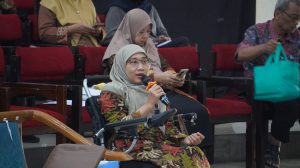
Following the Deans’ Office presentations, lecturers had the opportunity to deliver questions, suggestions, and feedback to the Dean Office. The Faculty Council Meeting of FEB UNS also aligns with the faculty’s commitment to supporting the achievement of the Sustainable Development Goals (SDGs), particularly SDG 4 (Quality Education), SDG 8 (Decent Work and Economic Growth), and SDG 17 (Partnerships for the Goals). Through the continuous improvement of learning quality, the development of international programs, and strategic collaborations with various stakeholders, FEB UNS contributes significantly to building excellent human resources capable of responding to global challenges in a sustainable way.