

Workshop on Initial Self-Evaluation Report Strengthens FEB UNS’s Preparation for AACSB Accreditation
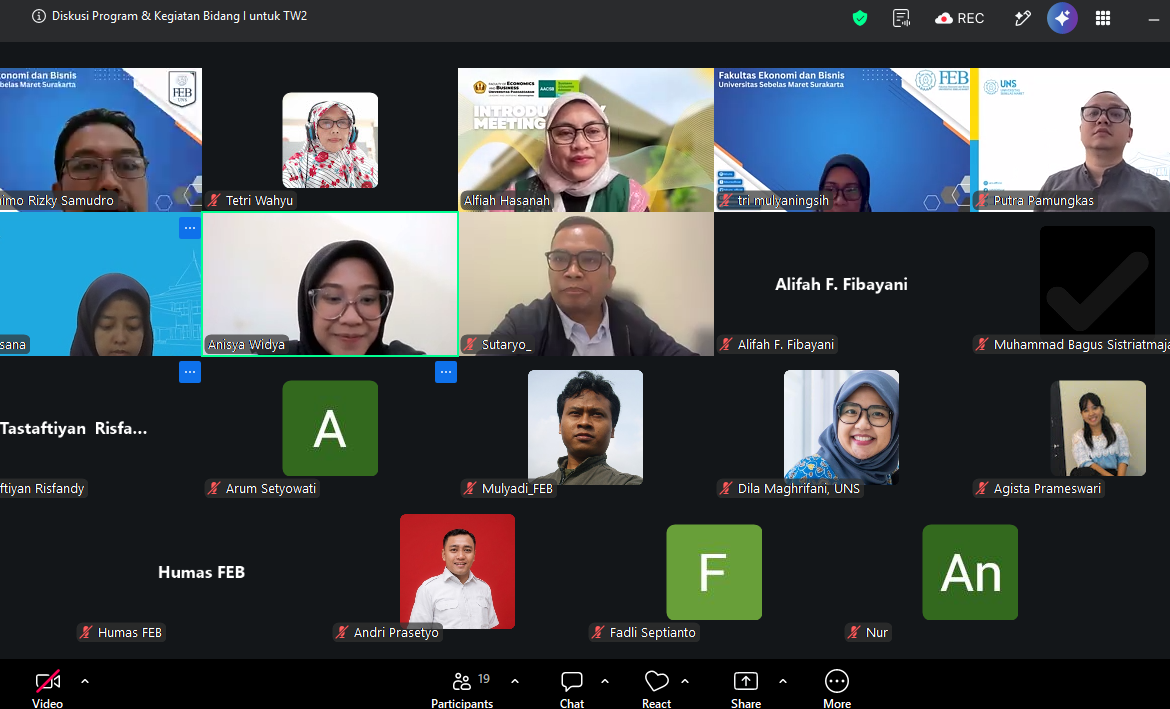
Faculty of Economics and Business (FEB), Universitas Sebelas Maret (UNS), organized the AACSB Initial Self-Evaluation Report (iSER) Workshop on Wednesday, July 15, 2026, conducted virtually via Zoom Meeting. The workshop marked an important stage in FEB UNS’s preparation for developing its Initial Self-Evaluation Report (iSER) following the acceptance of its AACSB Eligibility Application. The workshop featured Prof. Alfiah Hasanah, S.E., M.Ec., Ph.D., from the Faculty of Economics and Business, Universitas Padjadjaran, who shared her institution’s experience and best practices in preparing the iSER throughout its AACSB accreditation journey.
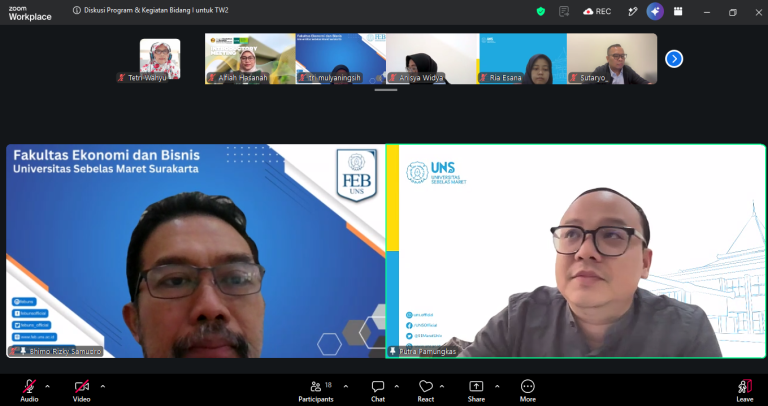 In his opening remarks, Prof. Bhimo Rizky Samudro, S.E., M.Si., Ph.D., Dean of FEB UNS, emphasized that preparing the iSER requires commitment, collaboration, and resilience from the entire team. Following the acceptance of the Eligibility Application, FEB UNS strengthened its organizational structure by reestablishing the AACSB Task Force to better prepare for the iSER development process and the mentoring phase with an AACSB mentor. He explained that the path toward AACSB accreditation is gradual and continuous, requiring the active involvement of all units within the faculty.
Through the workshop, FEB UNS sought to gain insights into effective team coordination, mentor selection, and practical strategies for preparing the iSER. Putra Pamungkas, S.E., M.Rech., Ph.D., Chair of the AACSB Task Force at FEB UNS, explained that the workshop provided an opportunity for the task force to develop a more comprehensive understanding of the challenges involved in preparing the iSER. Lessons learned from institutions that have already completed this stage are expected to guide FEB UNS in planning its next strategic steps.
During her presentation, Prof. Alfiah explained that preparing the iSER is more than drafting a document; it is a process of institutional reflection and realistic strategic planning. She highlighted the importance of endurance, leadership commitment, and strong teamwork in maintaining consistency throughout an accreditation process that may span several years.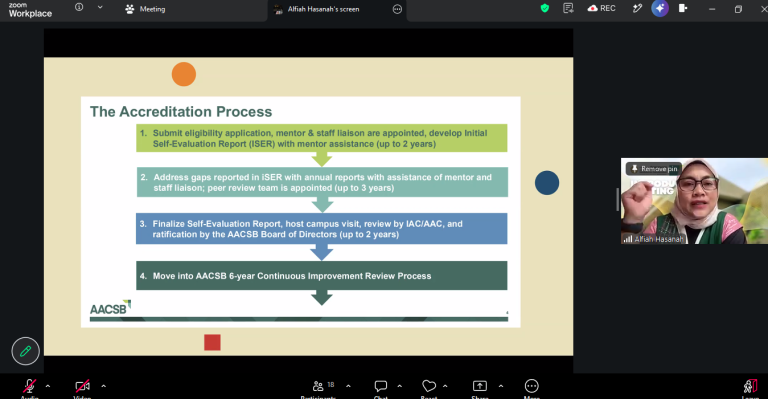
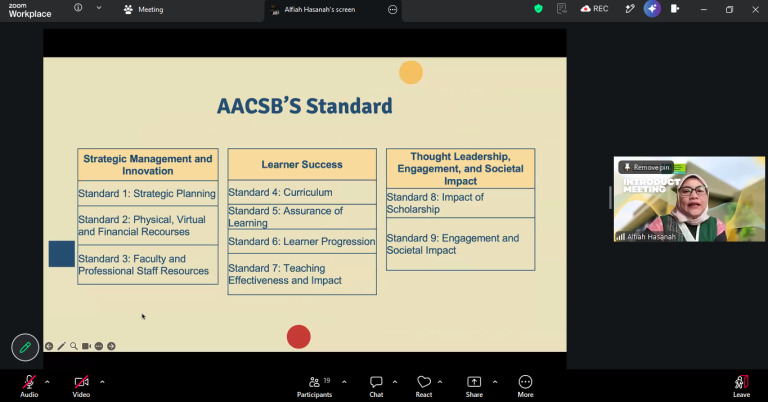
Prof. Alfiah also outlined the stages of the AACSB accreditation journey, beginning with membership status, acceptance of the Eligibility Application, iSER preparation, mentor-guided implementation, and the peer review visit. She emphasized that every target outlined in the iSER should be grounded in historical data and the institution’s actual capacity so that its vision, mission, strategy, curriculum, resources, research, and societal impact are closely aligned. Additionally, participants received an overview of the nine AACSB standards, which encompass the areas of Strategic Management and Innovation, Learner Success, and Thought Leadership, Engagement, and Societal Impact.
The speaker also shared practical experiences regarding the formation of standard-based working groups, strategies for coordinating with AACSB mentors, and the importance of data readiness, particularly in relation to faculty resources, strategic planning, curriculum development, assurance of learning, and the faculty’s contributions to society.
 Through this workshop, FEB UNS further strengthened the AACSB Task Force’s understanding of the Initial Self-Evaluation Report (iSER), a key milestone on the faculty’s path toward AACSB international accreditation. The workshop is expected to support ongoing efforts to enhance institutional governance, as well as the quality of education, research, and Community Engagement in line with international standards.
This initiative also contributes to the achievement of the Sustainable Development Goals (SDGs), particularly SDG 4 (Quality Education) by strengthening the quality of higher education, and SDG 17 (Partnerships for the Goals) through collaboration and shared learning among higher education institutions to advance institutional quality.