

MESP FEB UNS Visiting Lecturer Explores the Role of the Circular Economy in Industrial Transformation
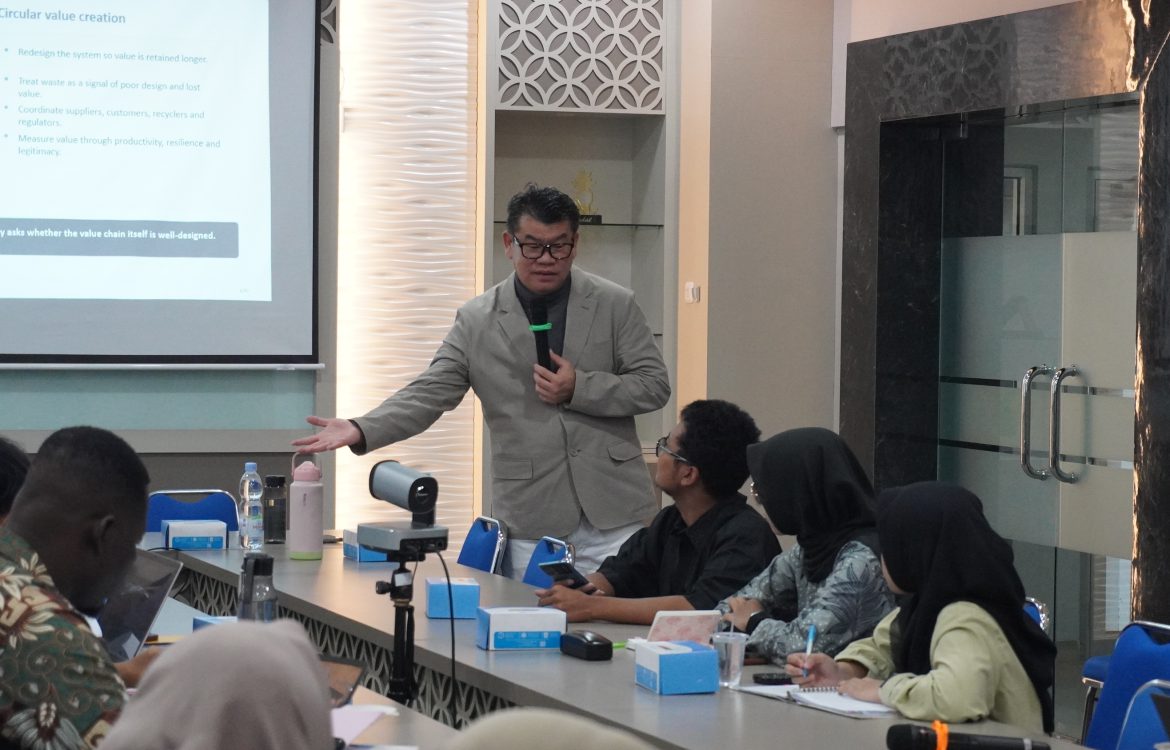
Master of Economics and Development Studies (MESP), Faculty of Economics and Business (FEB), Universitas Sebelas Maret (UNS), welcomed Assoc. Prof. Dr. Lin Woon Leong from Taylor’s University, Malaysia, as the guest speaker for a Visiting Lecturer session entitled The Role of Circular Economy in Industry on 15 June 2026 at the UNS Graduate School Hall. The event, part of the Circular Economy Workshop Series organized in collaboration with the CEBCAT Erasmus+ Project, was attended by FEB UNS postgraduate lecturers and students.
 Prof. Dr. Suryanto, S.E., M.Si., Head of the MESP Study Program, expressed his appreciation for Prof. Lin’s participation in the Visiting Lecturer program. He noted that Prof. Lin’s extensive experience as an academic with numerous publications in reputable international journals would provide valuable insights for the academic community, particularly in advancing research and scholarly publications.
“We hope Prof. Lin can share his experience on how to develop high-quality research, prepare strong research proposals, and write impactful academic articles,” said Prof. Suryanto.
During his presentation, Prof. Lin encouraged participants to develop a deeper understanding of the circular economy. He emphasized that the growing global attention to the circular economy, the Sustainable Development Goals (SDGs), environmental, social, and governance (ESG) principles, and sustainability should be accompanied by meaningful understanding rather than simply following current trends.
 “Today, the world is talking extensively about the circular economy, the SDGs, ESG, and sustainability. However, when we choose to pursue something, it should come from our own conviction and commitment. We should not shift our research focus to the circular economy just because it has become a popular topic,” he explained.
Prof. Lin described the circular economy as an approach centered on reducing waste through system redesign. To illustrate the concept, he referred to Apple’s trade-in program, in which returned products are repaired and refurbished rather than discarded, allowing them to be reused while retaining their economic value.
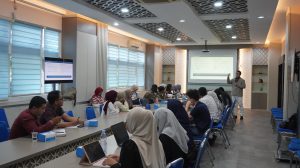 He emphasized that the circular economy extends beyond recycling by focusing on preserving the value of products, materials, and resources for as long as possible through innovation and improved system design. “If you want to understand the circular economy, begin by thinking about how to create less waste. But it is not only about reducing waste—it is also about redesigning systems,” he said.
Prof. Lin further explained that implementing a circular economy should begin with identifying sources of value leakage within an organization, including inefficiencies related to materials, energy, time, and other resources. Based on these findings, organizations can develop strategies to improve efficiency, extend product life cycles, strengthen supply chains, and create more sustainable value.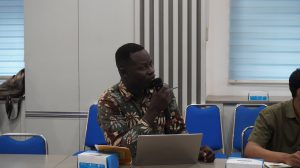
Beyond its industrial applications, Prof. Lin encouraged participants to view the circular economy as a promising area for future research. According to him, many challenges faced by industry can be transformed into relevant research questions that contribute both to academic knowledge and to sustainable business practices, particularly within the ASEAN region.
Through this Visiting Lecturer program, participants gained a comprehensive understanding of the circular economy as an approach to industrial transformation that goes beyond waste reduction by creating sustainable economic value through the redesign of products, processes, and business models.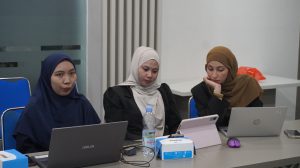
This activity supports Sustainable Development Goal (SDG) 4 (Quality Education) by strengthening academic capacity and international collaboration, SDG 9 (Industry, Innovation and Infrastructure) by promoting innovation-driven industrial transformation, and SDG 12 (Responsible Consumption and Production) by encouraging resource efficiency and waste reduction in economic activities.