

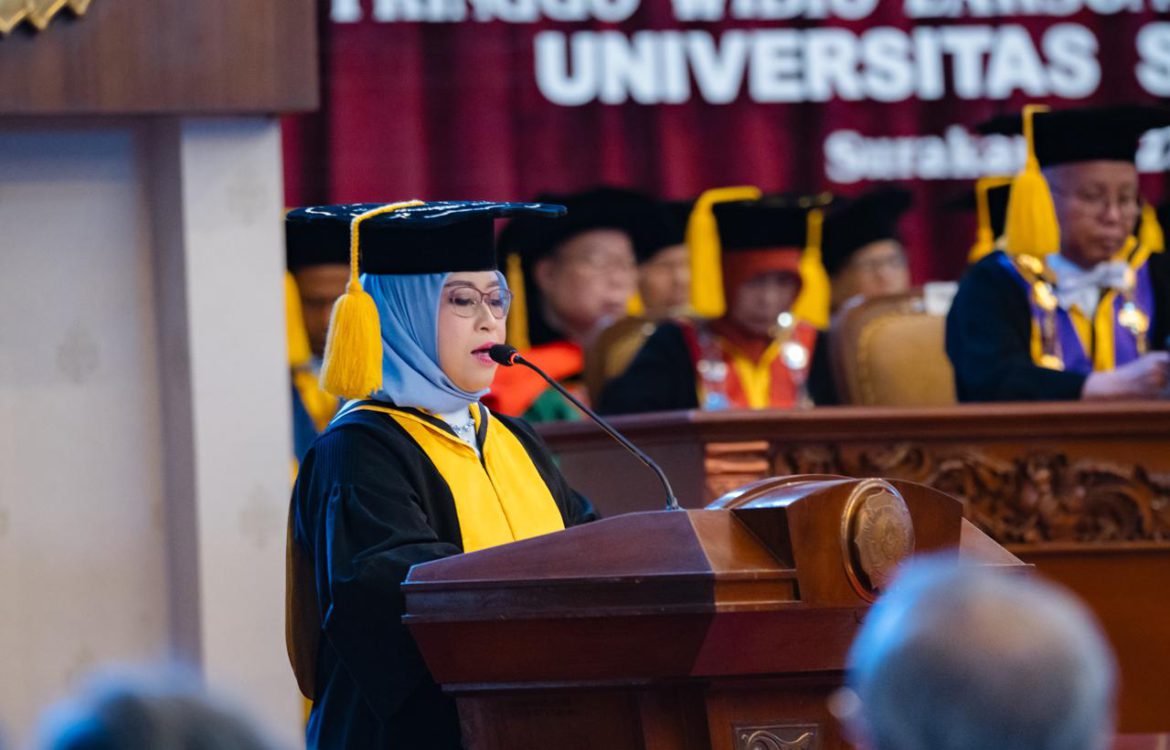
Prof. Dr. Evi Gravitiani Inaugurated as Professor at FEB UNS, Affirms the Strategic Role of Natural Resource Economics in Sustainable Development
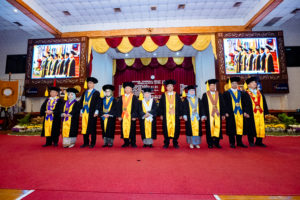
Faculty of Economics and Business (FEB), Universitas Sebelas Maret (UNS), records another distinguished academic milestone. Prof. Dr. Evi Gravitiani, S.E., M.Si., CBEc., is officially inaugurated as Professor of Natural Resource Economics during the UNS Professorial Inauguration Ceremony held at the Auditorium G.P.H. Haryo Mataram UNS on Tuesday (27/1/2026).
This inauguration marks a significant step for FEB UNS in strengthening the advancement of economic scholarship, particularly in the domain of natural resource management and sustainable economic development. Prof. Evi is the only professor from FEB UNS inaugurated at the beginning of 2026, alongside eight other professors from various faculties within UNS.
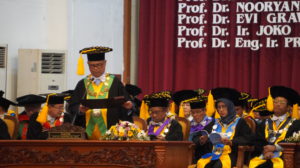
In her inaugural address titled “Natural Resource Economics and the Transformation of Sustainable Economic Development as a Scientific Foundation for the Circular Tourism Model,” Prof. Evi emphasizes the urgency of adopting a natural resource economics approach that is adaptive to global challenges, environmental crises, and the increasing demand for sustainable and inclusive development.
According to her, natural resource management can no longer be understood solely through the lens of economic exploitation. Instead, it must be situated within a long-term sustainability framework that integrates environmental integrity, social equity, and community welfare. The circular tourism model emerges as a relevant conceptual framework to address these challenges.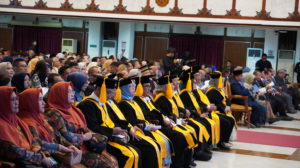
“The transformation of economic development must be grounded in a sustainability paradigm, where the utilization of natural resources generates added value without compromising future generations,” she asserts in her address.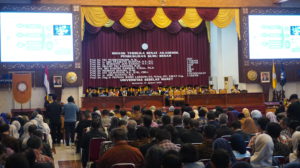
For FEB UNS, Prof. Dr. Evi Gravitiani’s inauguration not only represents institutional pride but also reinforces the faculty’s role in advancing economic scholarship that responds to sustainability, environmental concerns, and development rooted in local potential. Moving forward, the knowledge developed in this field is expected to contribute meaningfully to policymaking processes and sustainable economic development at both national and global levels.
Her appointment as Professor of Natural Resource Economics also aligns with the achievement of the Sustainable Development Goals (SDGs). The academic framework she advances contributes directly to SDG 8 (Decent Work and Economic Growth), SDG 12 (Responsible Consumption and Production), SDG 13 (Climate Action), and SDG 15 (Life on Land) through the strengthening of sustainable economic development paradigms and environmentally responsible natural resource management.