

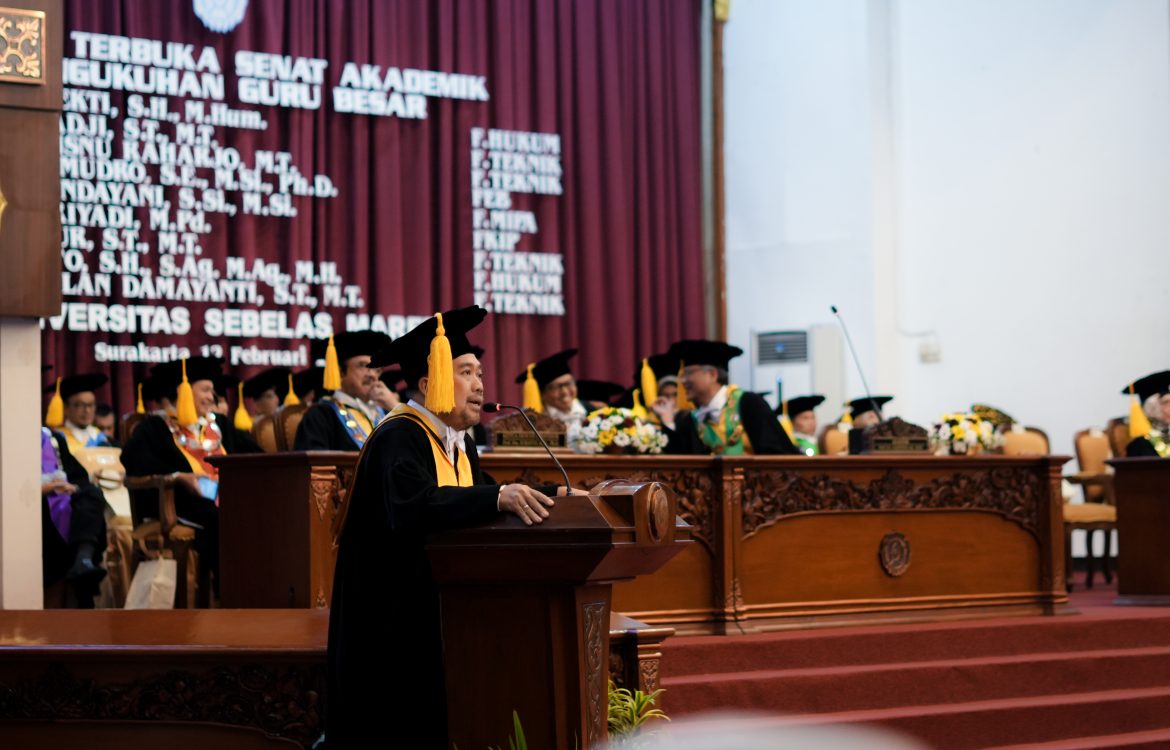
Prof. Bhimo Rizky Samudro Inaugural Address Highlights the Theme of Pseudo-Civilization and Its Impact on National Economic Sovereignty
Prof. Bhimo Rizky Samudro, S.E., M.Si., Ph.D., was formally inaugurated as Professor of Political Economy at the Faculty of Economics and Business (FEB), Universitas Sebelas Maret (UNS), on Wednesday, February 12, 2025, at the GPH Haryo Mataram Auditorium, UNS.
In his inaugural address, Prof. Bhimo raised a critical theme regarding the phenomenon of pseudo-civilization and its implications for national economic sovereignty. His lecture, titled “Pseudo-Civilization and National Economic Sovereignty”, explored how civilization can become superficial when it merely takes the form of systemic and institutional constructs without deeper substance.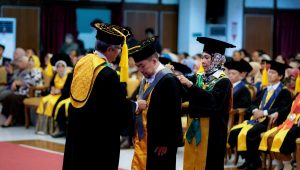
He argued that for Indonesia, the presence of pseudo-civilization has resulted in structural dependency on external factors such as foreign debt, foreign direct investment, and international consulting agencies. This condition has led to a diminished capacity for sovereign economic policymaking and heightened economic uncertainty due to global pressures.
Indonesia, according to Prof. Bhimo, continues to face challenges in harnessing and developing its local potential. National elites often exhibit a stronger inclination toward adopting international economic consensus rather than reinforcing the country’s economic sovereignty—particularly in the context of inter-state economic relations.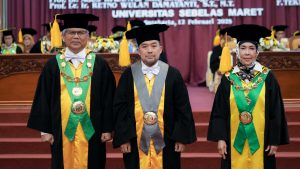
Prof. Bhimo concluded his address by asserting that pseudo-civilization has contributed significantly to dependency and economic uncertainty in developing countries such as Indonesia. Addressing this issue requires strategic efforts to mitigate its adverse effects while simultaneously strengthening national economic sovereignty.
Such transformation—both ideological and operational—demands active engagement at all levels, from individuals to institutions. It is also essential to maintain a careful balance between economic and non-economic dimensions in order to achieve a more equitable and sustainable form of national welfare.