

ICMI Surakarta Hosted National Seminar at UNS: Highlighting the Role of Muslim Communities in Achieving Indonesia Emas 2045
The Indonesian Association of Muslim Intellectuals (ICMI) Surakarta, along with the wider Muslim community, holds a vital role in preparing for and achieving the vision of Indonesia Emas 2045. To ensure its impact is felt by the public, ICMI Surakarta must take an active role and be directly involved in addressing societal needs.
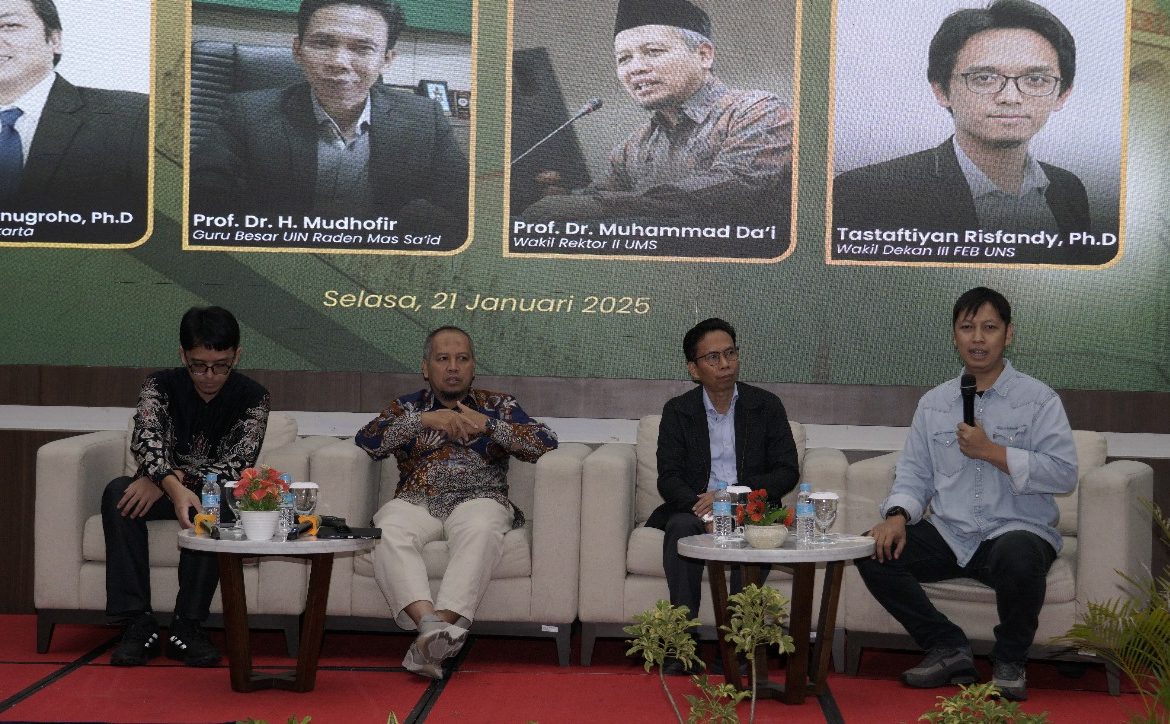
This message was conveyed by Prof. Irwan Trinugroho, Ph.D., Chair of ICMI Surakarta, who is currently also serving as the Vice Rector for Planning, Partnership, Internationalization, and Information UNS, during his opening remarks for the National Seminar and official kickoff of ICMI Surakarta’s activities, on Tuesday, January 21, 2025, at the UNS Tower Ballroom, this national seminar marked the official kick-off of ICMI Surakarta’s programs under its newly appointed 2024–2029 leadership.
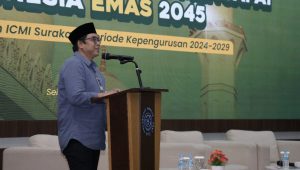 Prof. Irwan further emphasized the significance of documenting and disseminating ICMI Surakarta’s ideas and contributions across various fields through online media, allowing broader access for both the public and key stakeholders. “We have a tremendous asset in the form of highly competent Muslim scholars in Solo. Instead of compiling their ideas into books—because not many people read books nowadays—we will publish their thoughts and ideas must be shared more broadly and published through digital media to reach both the public and policymakers. This is one of the work programs we intend to implement,” said Prof. Irwan.
When it comes to community engagement, he pointed out that numerous local issues—though seemingly modest—can serve as valuable material for reflection and problem-solving among Muslim intellectuals in Solo. Topics like digital transformation, stunting, and other pressing challenges can become the starting point for impactful contributions to society. Prof. Irwan expressed his hope that the current ICMI leadership should focus on concrete and productive actions, ranging from academic forums to the formulation of public policy recommendations that can benefit the wider society.
Discussing various topics under the grand theme of “Socio-Economic Outlook for Indonesia and the Role of Muslim Communities in Achieving Indonesia Emas 2045,” the seminar featured three key speakers offering diverse yet complementary insights. Prof. Mudhofir discussed the role of Muslims in environmental conservation. He argued that scholars need to create thematic interpretations of the Quran that highlight environmental values. This is crucial, considering that many Muslims today do not view environmental care and sustainability as integral to worship or spiritual life. He also stressed the importance of delivering sermons focused on environmental protection and sustainability, supported by environmental advocates who can help spread religious messages related to ecological stewardship.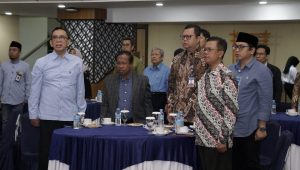
Prof. Muhammad Da’i highlighted the technological and scientific competitiveness gap still present among the Muslim community. He urged a shift in mindset, suggesting that worship should be understood not only as prayer, fasting, or recitation of scripture but also as working, innovating, and studying—activities that consume much of our daily lives. He emphasized the need to empower communities facing employment challenges as a step toward addressing human resource disparities.
Third speaker, Tastaftiyan Risfandy, Ph.D, Vice Dean for Student Affairs and Alumni at FEB UNS, shared actionable insights on reducing poverty and inequality, including solutions like free education, nutritious food programs, and community empowerment through mosques and Islamic financial institutions. He emphasized the critical role of the family as the primary setting for educating and nurturing future generations.
This seminar followed a series of internal ICMI Surakarta discussions on various work programs, covering areas such as education, culture, national character building, collaboration, digital transformation, science, and faith. The event was a collaboration between ICMI Surakarta, UNS, and supported by Bank Syariah Indonesia.