

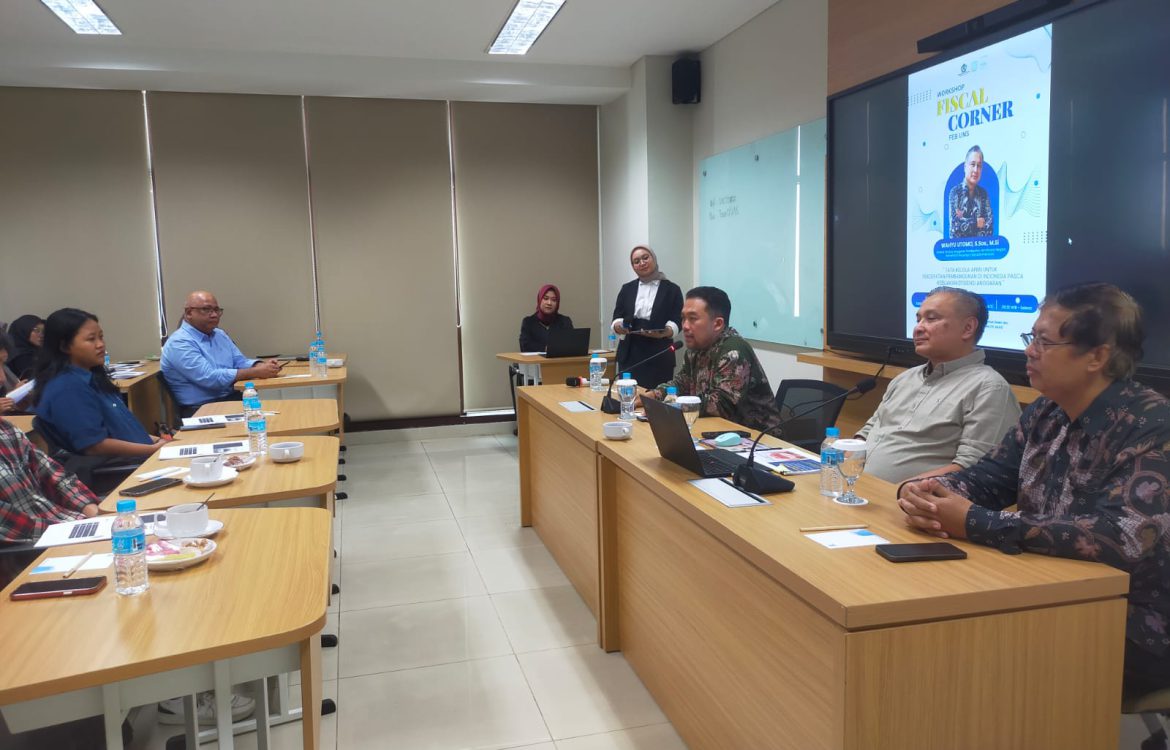
Fiscal Corner FEB UNS Organizes Workshop on State Budget Governance for Accelerating Development in Indonesia Post-Budget Efficiency Policies
The essence of fiscal policy lies in government measures to influence the economy so that it remains stable, grows at a high level, and achieves equitable success. The ultimate goal is prosperity. The prosperity in question entails cross-cutting equity—not only equity among income groups but also among regions and across generations. We must lay the foundation that the State Budget (APBN) builds a strong base for the next generation.
 Based on this objective, the APBN, as an instrument of fiscal policy, must be designed to respond effectively to economic dynamics, address challenges, and optimally support development agendas, so the APBN itself must remain healthy. The APBN is an instrument—if it is not healthy, it is impossible for a country to strongly stimulate the economy and foster widespread prosperity. For this reason, the APBN has three functions: stabilization, allocation, and distribution.
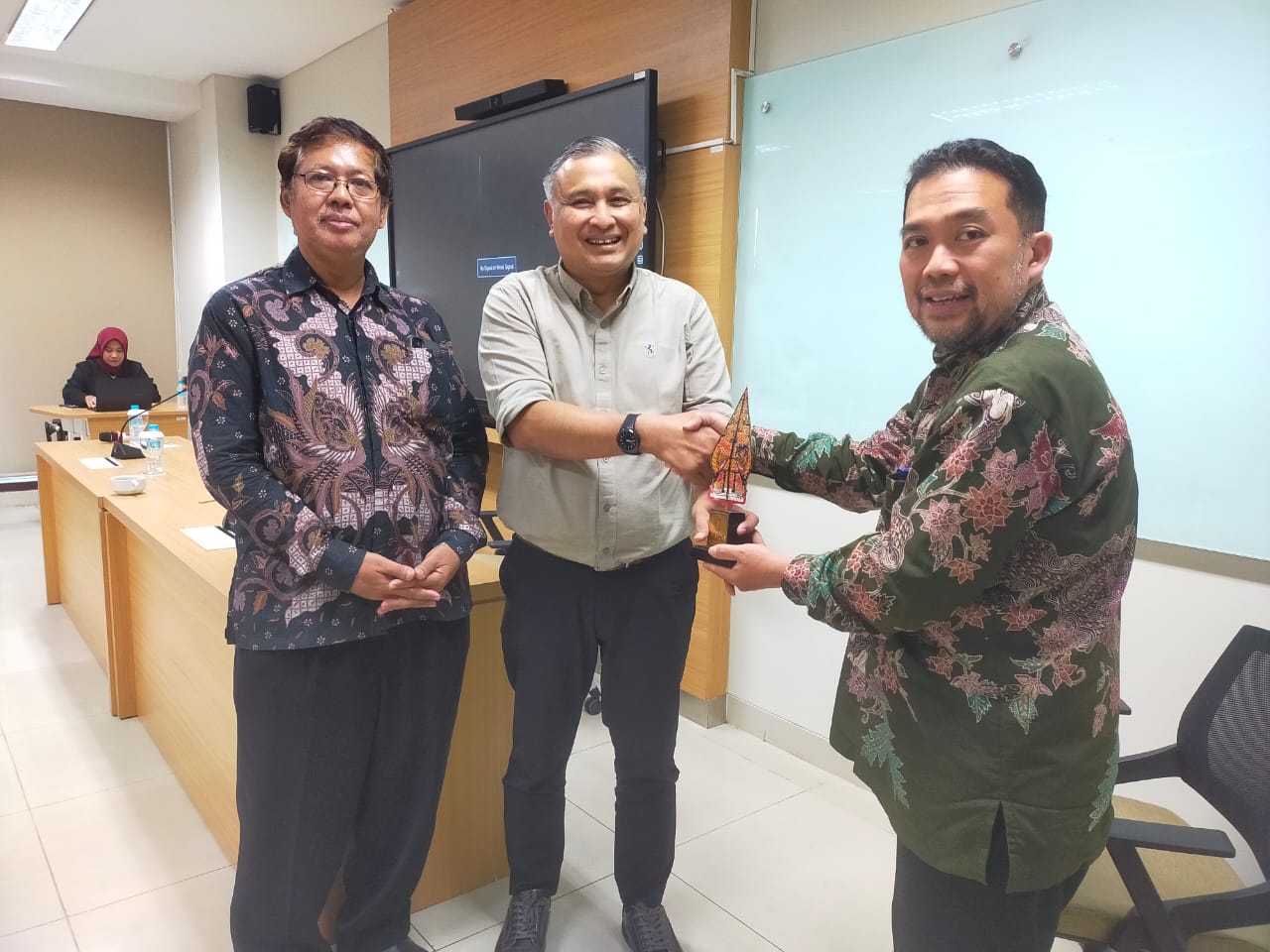
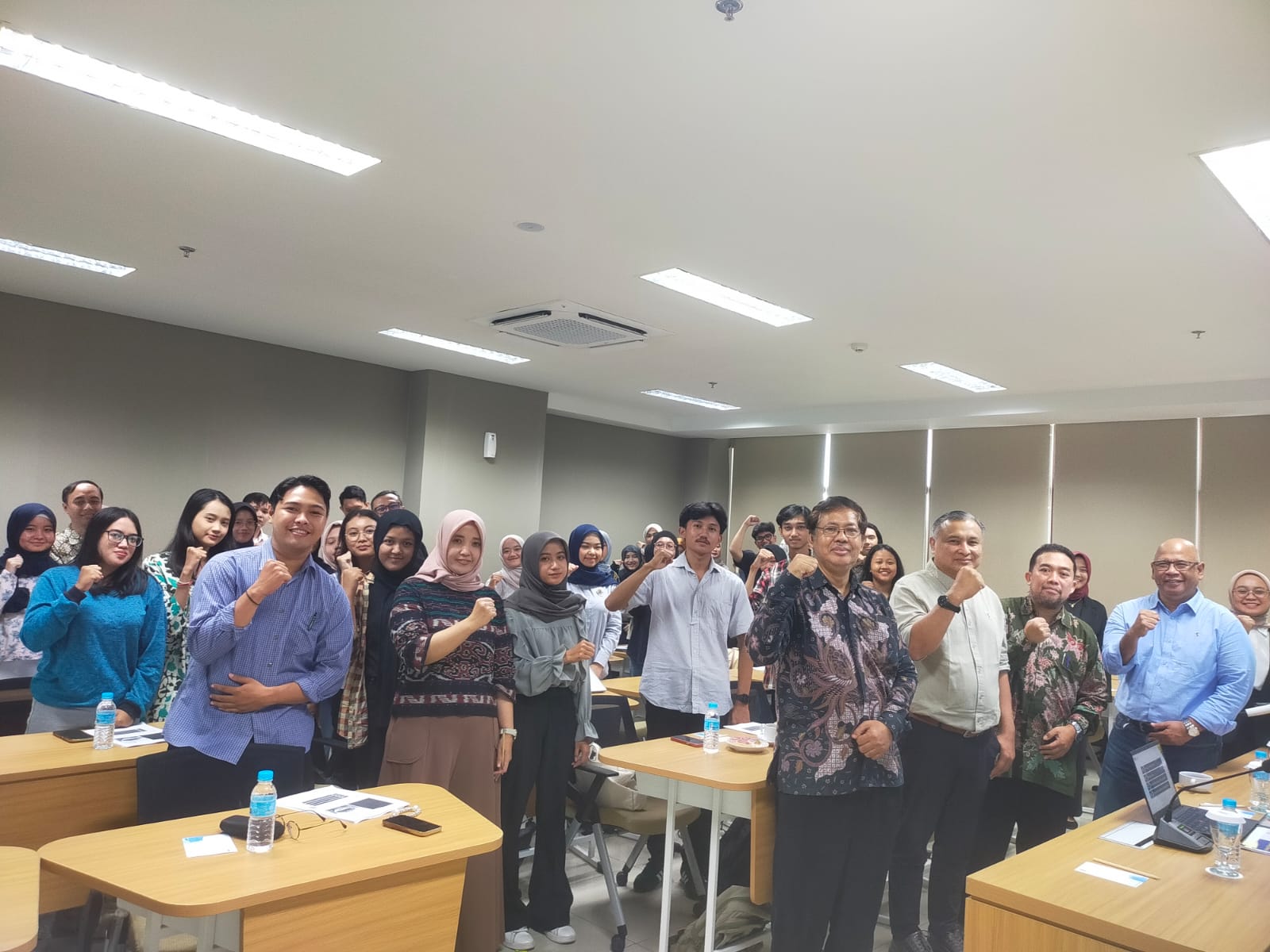
This statement was delivered by Wahyu Utomo, S.Sos., M.Si., Director of the State Revenue and Expenditure Budget Strategy at the Ministry of Finance of the Republic of Indonesia, during the Fiscal Corner Workshop entitled “State Budget Governance for Accelerating Development in Indonesia Post-Budget Efficiency Policies,” held on Saturday, 21 June 2025, at UNS Tower Classroom 3, 5th Floor.
 “In the midst of limited fiscal space, how can we continue to stimulate the economy and support various development agendas for public welfare? The APBN must remain healthy. Indeed, there must now be innovation and adaptation to new work patterns—collaboration with enterprises, leveraging the role of Regional Public Service Agencies (BLU), and the role of State-Owned Enterprises (BUMN),” he conveyed.
To faculty members and students of FEB UNS attending the workshop, Wahyu Utomo explained that to make fiscal policy effective, there are three key principles that must be upheld. The first is that fiscal policy must be proportional. This means that fiscal policy primarily serves to safeguard macroeconomic stability. Public sector responsibilities are driven by the APBN, while other areas should be entrusted to the private sector and BUMN, establishing a mutualistic symbiosis among the APBN, private sector, BUMN, and BLU. All four instruments must work together to strengthen the national economy. This is what is referred to as the macro balance principle.
 The second principle is that fiscal policy must serve as an oversight instrument to ensure policy consistency so that short-term, medium-term, and long-term policies are implemented properly. Policymaking should not only focusing on short-term policy, since pragmatism will undermine long-term strategies instead.
The third principle is the principle of connecting the dots—there must always be a clear linkage between fiscal macro policy, macroeconomic policy, and sectoral policies. This alignment must be maintained, as the absence of such coherence will render the economy unproductive.
It was further explained that in addressing challenges such as geopolitical tensions and climate change, the government will also strengthen structural reforms and economic transformation. These efforts include improving the quality of human resources, developing infrastructure, and adopting digital technologies to enhance Indonesia’s competitiveness in the global market.
 Tax reform and strengthening the financial system are also key priorities, aimed at broadening the tax base and increasing tax compliance. In addition, the government will develop innovative and sustainable financing schemes to support priority programs.
The government has set a target for state revenue at 11.71% to 12.22% of GDP, with state expenditure projected at 14.19% to 14.75% of GDP. The budget deficit will be maintained within the range of 2.48% to 2.53% of GDP to ensure fiscal sustainability and economic stability. With these strategic measures, the government remains optimistic that Indonesia will achieve stable and sustainable economic growth and enhance the welfare of communities throughout the nation.
Inclusive, adaptive, and sustainable fiscal policies as proposed in this workshop are in line with Indonesia’s commitment to supporting the achievement of the SDGs, particularly SDG 8 (Decent Work and Economic Growth), SDG 10 (Reduced Inequality), and SDG 13 (Addressing Climate Change), in order to realize intergenerational prosperity and equitable development for all regions.