

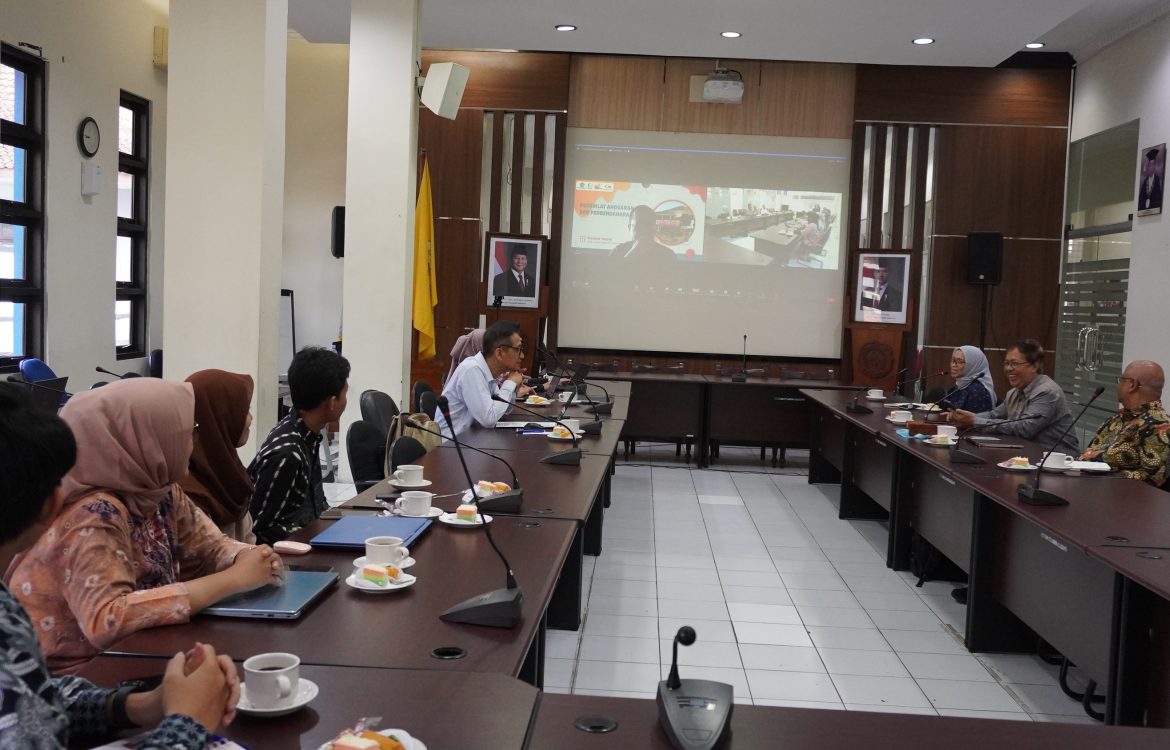
Fiscal Corner FEB UNS Hosted Workshop on Enriching Semester Learning Plans through Integration with the Ministry of Finance Learning Center
Fiscal Corner of the Faculty of Economics and Business (FEB), Universitas Sebelas Maret (UNS), hosted a Workshop on Semester Learning Plans (RPS) Enrichment through Integration with the Ministry of Finance Learning Center (Kemenkeu Learning Center/KLC) on Wednesday, November 13, 2024, in Meeting Room 1, Soeharno TS Building, FEB UNS.
The workshop featured Puji Agus, SST., Ak., M.Ak., CA., from the Center for Education and Training in Budgeting and Treasury, Ministry of Finance, who delivered a presentation on Public Sector Accounting and Government Accounting. The session followed with a moderated discussion led by Dr. Jaka Winarna, M.Si., Ak., a lecturer at FEB UNS.
In the afternoon session, Risky Sulistyanto, S.E., M.M., from the Ministry of Finance’s General Bureau, presented material on the courses Development Planning and Budgeting (PPP) and Regional Financial Analysis (AKD). This session was moderated by Dr. Mulyanto, M.E.
In her opening remarks, Prof. Tri Mulyaningsih, S.E., M.Si., Ph.D., Vice Dean for Academic and Research Affairs at FEB UNS, expressed her appreciation to the Fiscal Corner team, chaired by Dr. Mulyanto, M.E. She emphasized that this workshop aims to ensure that teaching materials at FEB remain up to date and aligned with current developments in the financial sector, particularly those under the authority of the Ministry of Finance.
On this occasion, Prof. Tri expressed her belief that there is much to learn from the Ministry of Finance, which will help enhance the quality of learning materials at FEB. She also noted that the initiative seeks to introduce varied teaching methods to avoid monotonous approaches.
“The aim of this initiative is to diversify teaching methods. Traditionally, learning has been conducted in a classical format, where lecturers explain and students passively listen. Sometimes, the material delivered is no longer relevant. Today’s students learn differently. I believe that we can gain valuable knowledge from Mr. Puji and Mr. Risky so that we can enrich our teaching approaches. We want UNS to move beyond conventional methods toward more collaborative and participatory models,” she explained.
The university has also adopted Key Performance Indicators (IKU) that encourage project-based and case-based learning, with a strong emphasis on collaboration and participation in the classroom. The ultimate goal of this two-day event is for FEB UNS to develop RPS documents that integrate FEB’s existing curriculum with content provided by the Ministry of Finance Learning Center (KLC).
Meanwhile, Dr. Mulyanto, M.E., Chair of Fiscal Corner FEB UNS, reported the progress of ongoing collaboration between FEB UNS and the Ministry of Finance. Fiscal Corner FEB UNS is organizing a series of initiatives divided into two main activities. The first activity involves Focus Group Discussions (FGDs) for drafting RPS documents integrated with KLC content. These FGDs are planned to take place in three sessions. The first session was held on Wednesday, October 30, 2024, followed by the second on Tuesday, November 19, 2024, and the final session is scheduled for Tuesday, December 3, 2024.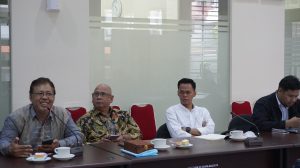
The second activity is the RPS Enrichment Workshop for the Accounting Study Program, focusing on Public Sector Accounting and Government Accounting, and for the Undergraduate Development Economics Program, focusing on Regional Financial Analysis (AKD) and Development Planning and Budgeting (PPP).
“There is a significant amount of material in the KLC that we can adopt and disseminate. We will continue to coordinate with the Ministry of Finance to determine effective ways of transferring knowledge,” he stated.
Dr. Mulyanto further emphasized that the expected output from the RPS Enrichment Workshop for the Accounting and Development Economics Study Programs is a set of integrated RPS documents that can be implemented starting next semester. He also outlined Fiscal Corner’s future direction in collaboration with the Ministry of Finance.
First, there are strategic plans to build a finance-related database and secure access rights from the Ministry for the purpose of academic research, including undergraduate theses, master’s theses, and dissertations.
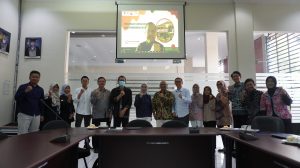 Second, as already outlined, is the development of integrated RPS content. Currently, four prototype courses are being developed: Regional Financial Analysis and Development Planning and Budgeting for the Development Economics Study Program, and Government Accounting and Public Accounting for the Accounting Study Program. In the future, similar efforts will be extended to the Management and Digital Business Programs.
Third, there will be activities such as Kemenkeu Goes to Campus, seminars, and workshops on specific themes, including events held in conjunction with UNS’s anniversary or other Ministry of Finance programs such as State Budget Simulations and research collaborations.
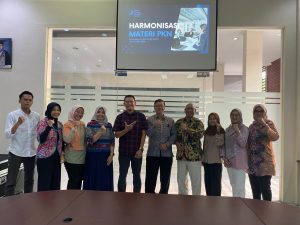 “We hope for the support of all colleagues so that together we can advance FEB by expanding external partnerships. This activity is only the beginning and not the end—there will be continuous improvements and positive developments, with benefits that extend to many parties,” he concluded.
The workshop was attended by lecturers involved in the Fiscal Corner team representing undergraduate study programs at FEB. The following day, further activities were scheduled, including a discussion at Fiscal Corner FEB UNS regarding the dynamics of program and activity planning within the Ministry of Finance, followed by Kemenkeu Corpu Goes to Campus (a guest lecture for the Development Planning and Budgeting course) held in the Soedarah Soepono Auditorium, FEB. The program concluded with a discussion between Ministry of Finance representatives and the FEB Dean’s Office concerning the coordination and harmonization of public financial management materials.